Battery Thresholds Transforming AAA Game Design for Portable Devices
Carlo Peters · Aug 25, 2026
Battery Thresholds Transforming AAA Game Design for Portable Devices
Developers face mounting pressure from battery constraints that limit sustained performance on portable screens, and this reality has prompted systematic shifts in how AAA titles allocate resources during active play. Data from hardware monitoring tools indicate that modern handhelds and tablets typically sustain high-performance modes for under two hours before thermal throttling or power scaling activates, which forces creative teams to embed adaptive systems from the earliest design phases. Research published by the National Renewable Energy Laboratory reveals that graphics-intensive sequences consume up to 45 percent more energy than optimized idle states, prompting studios to integrate real-time power budgeting across CPU, GPU, and memory subsystems.Core Mechanics Behind Battery Thresholds
Portable devices operate within defined energy envelopes that manufacturers establish through firmware controls, and these envelopes dictate maximum draw rates during extended sessions. When power levels drop below preset thresholds, the system automatically reduces clock speeds, lowers display brightness, or scales back particle effects to preserve remaining capacity. Engineers at major hardware firms have documented that lithium-ion cells in current-generation portables lose roughly 15 percent capacity after 500 charge cycles, which compounds the challenge for developers targeting consistent experiences across device lifespans. Studies conducted at the University of Tokyo on mobile SoC architectures show that voltage scaling combined with workload prediction algorithms can extend playtime by 25 to 30 percent without visible quality loss in many scenarios. These findings have encouraged AAA teams to adopt similar predictive models that anticipate player movement patterns and preload only essential assets, thereby trimming unnecessary memory accesses that drain batteries quickly.Design Adjustments in AAA Pipelines
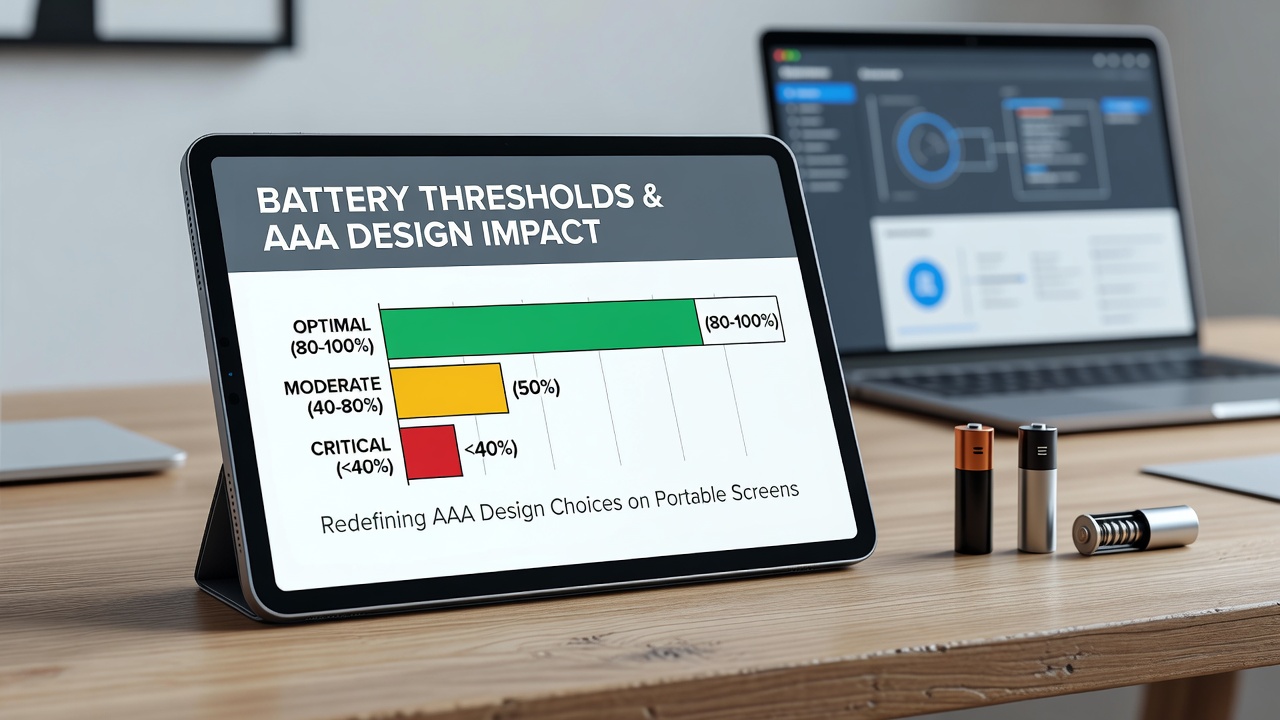
Studios now embed power profiling tools directly into their engines so that level designers receive immediate feedback on estimated consumption for each scene. This integration means that cutscenes featuring dense foliage or complex lighting receive procedural simplification passes when the device reports low battery, while core gameplay loops maintain higher fidelity through selective asset streaming. Observers note that several 2025 releases introduced optional “eco modes” that cap frame rates at 30 fps and disable ray tracing when remaining charge falls below 40 percent, adjustments that emerged directly from field tests across multiple device families. And yet the push extends beyond runtime toggles. Artists and technical directors collaborate on material libraries that include multiple LOD variants tuned for different power budgets, allowing seamless swaps during play without reloading entire environments. Data collected during closed beta programs in early 2026 confirmed that such layered asset strategies reduced average draw by 18 percent on mid-range tablets while preserving visual coherence across sessions.