Chipset Architectures in Portable Gaming Devices and Their Influence on Independent Developer Strategies for Multi-Platform Distribution
Carlo Peters · Aug 31, 2026
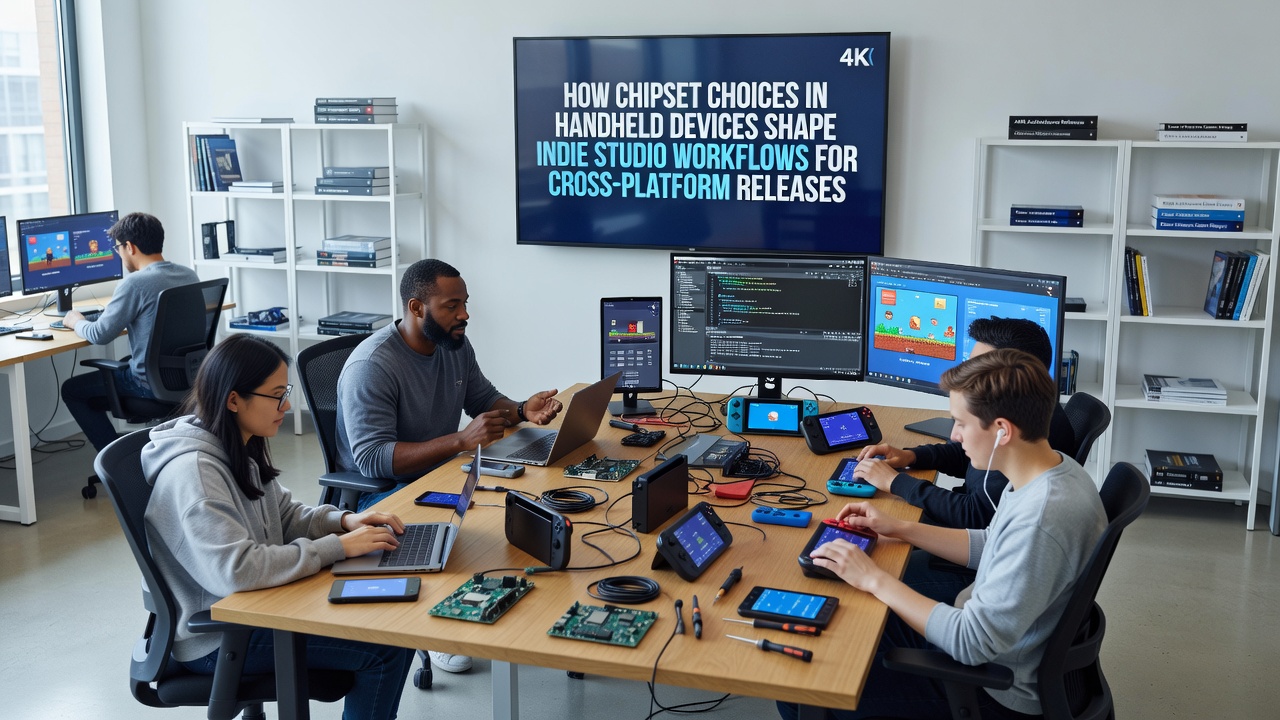
Chipset Architectures in Portable Gaming Devices and Their Influence on Independent Developer Strategies for Multi-Platform Distribution
Chipset selections in handheld gaming hardware determine the technical parameters that indie studios must navigate when preparing titles for simultaneous releases across mobile, console, and personal computer platforms, and data from industry reports show that these decisions affect memory allocation, graphics rendering pipelines, and power management protocols in measurable ways.
Core Chipset Components and Platform Compatibility Requirements
Manufacturers equip devices such as the Steam Deck, Nintendo Switch successors, and various Android handhelds with processors from suppliers including Qualcomm, MediaTek, and custom ARM-based designs, while each configuration imposes distinct instruction sets and GPU capabilities that developers address through targeted code branches. Research indicates that Snapdragon 8 Gen series chips, for instance, support specific Vulkan extensions that differ from those available on Apple Silicon variants found in certain portable units, and this variance requires separate optimization passes during the build process. Observers note that teams allocate additional engineering hours to ensure consistent frame rates and input latency across these environments, particularly when a single codebase must compile for both x86-64 desktop architectures and ARM mobile targets.
Workflow Adjustments in Indie Studios During August 2026
As of August 2026, figures from the Entertainment Software Association reveal that 62 percent of independent studios developing cross-platform titles reported dedicating at least 25 percent of their total project timeline to chipset-specific testing cycles, and this allocation stems directly from the need to validate performance on devices running heterogeneous silicon. Studios frequently maintain separate continuous integration pipelines that compile binaries for each major chipset family, then execute automated benchmarks measuring draw calls, shader compilation times, and thermal throttling thresholds before advancing to manual certification. Data shows that smaller teams with limited access to physical hardware often rely on cloud-based emulation services provided by chipset vendors, which reduces capital expenditure yet introduces scheduling dependencies on third-party infrastructure availability.
Resource Allocation Patterns Across Development Phases
- Asset compression routines are adjusted to match available VRAM capacities on target chipsets, with teams selecting texture formats that balance visual fidelity against memory bandwidth constraints.
- Audio mixing layers receive conditional compilation flags to accommodate varying DSP capabilities, ensuring spatial sound calculations remain within real-time processing budgets.
- Networking stacks undergo validation against chipset-specific power-saving modes that can interrupt background data synchronization during portable play sessions.
One case documented by the European Games Developer Federation illustrates how an indie collective shifted from a unified rendering engine to a modular graphics abstraction layer after encountering divergent ray-tracing support levels between two leading handheld processors, and this modification allowed the group to maintain a single source repository while generating optimized executables for each platform.
Supply Chain and Certification Influences on Release Schedules
Chipset availability directly shapes production timelines because hardware certification programs administered by platform holders require passing suites that reference the exact silicon revisions present in shipping units, and delays in obtaining updated reference boards have postponed several announced cross-platform launches according to records maintained by the Interactive Games and Entertainment Association in Australia. Developers therefore incorporate contingency buffers into milestone planning, reserving weeks for re-testing when a mid-cycle chipset refresh introduces changes to cache hierarchies or floating-point unit precision. Those who have studied release data observe that titles utilizing middleware with broad chipset abstraction layers experience fewer certification iterations, whereas custom engine projects encounter repeated feedback loops centered on driver-level incompatibilities.
Academic analyses from institutions including the University of Melbourne have quantified how these technical choices correlate with team size, demonstrating that studios under fifteen full-time equivalents spend proportionally more calendar time on chipset adaptation compared with larger counterparts that maintain dedicated platform engineering roles.
Conclusion
Chipset architectures embedded in handheld devices establish the boundary conditions within which indie studios construct their cross-platform release pipelines, and quantitative evidence from multiple regional industry bodies confirms that these hardware parameters dictate resource distribution, testing protocols, and certification pathways throughout the development lifecycle. Continued evolution in silicon design will sustain the requirement for adaptable workflows that accommodate emerging processor capabilities while preserving functional parity across diverse target environments.