Chipset Innovations Drive Indie Game Expansion Across Handheld Platforms
Theo Walter · Aug 15, 2026
Chipset Innovations Drive Indie Game Expansion Across Handheld Platforms
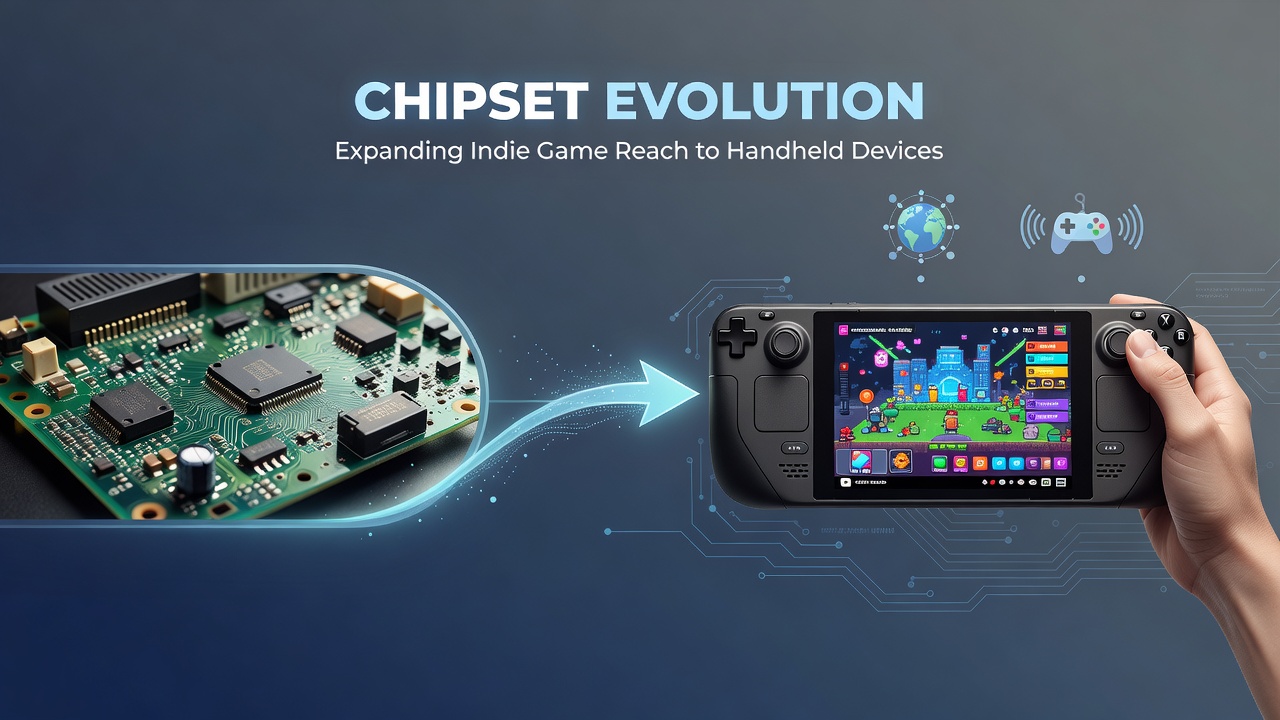
Chipset development has transformed handheld gaming by delivering the processing power and efficiency needed for indie titles to run smoothly on portable hardware. Early mobile processors struggled with even basic 2D games, yet successive generations incorporated dedicated graphics units and optimized cores that support complex 3D environments while maintaining battery life. Data from industry reports shows that integrated graphics performance in mobile chipsets increased roughly tenfold between 2018 and 2025, creating room for smaller studios to target devices beyond traditional consoles and PCs.
Tracing the Technical Progression
Initial handhelds relied on basic ARM-based designs that prioritized power conservation over raw speed, limiting developers to simple sprite-based experiences. Later iterations introduced unified memory architectures and variable clock speeds, allowing games to scale graphics settings dynamically based on available thermal headroom. Observers note that these changes coincided with the rise of systems like the Nintendo Switch and subsequent Android handhelds, where developers began experimenting with more ambitious art styles and physics simulations without requiring dedicated high-end silicon.
By 2023 manufacturers began integrating ray-tracing accelerators and machine-learning cores directly onto the same die, reducing latency between CPU and GPU tasks. This integration proved especially useful for indie teams working with engines such as Unity and Unreal, which could offload particle effects and AI pathfinding to specialized hardware blocks. Research indicates that titles using these features saw frame-rate stability improve by up to 35 percent on mid-range chipsets compared with earlier generations lacking such accelerators.
Lowering Barriers for Independent Creators
Small development teams have historically faced steep hardware requirements when attempting to reach console or PC audiences, but modern chipsets have narrowed that gap. Efficient process nodes below seven nanometers allow longer play sessions on battery power, while improved memory controllers support larger asset loads without forcing aggressive compression. Those who have studied cross-platform workflows report that a single codebase can now target multiple handheld SKUs with minimal additional optimization once core chipset capabilities exceed certain thresholds for draw calls and shader complexity.
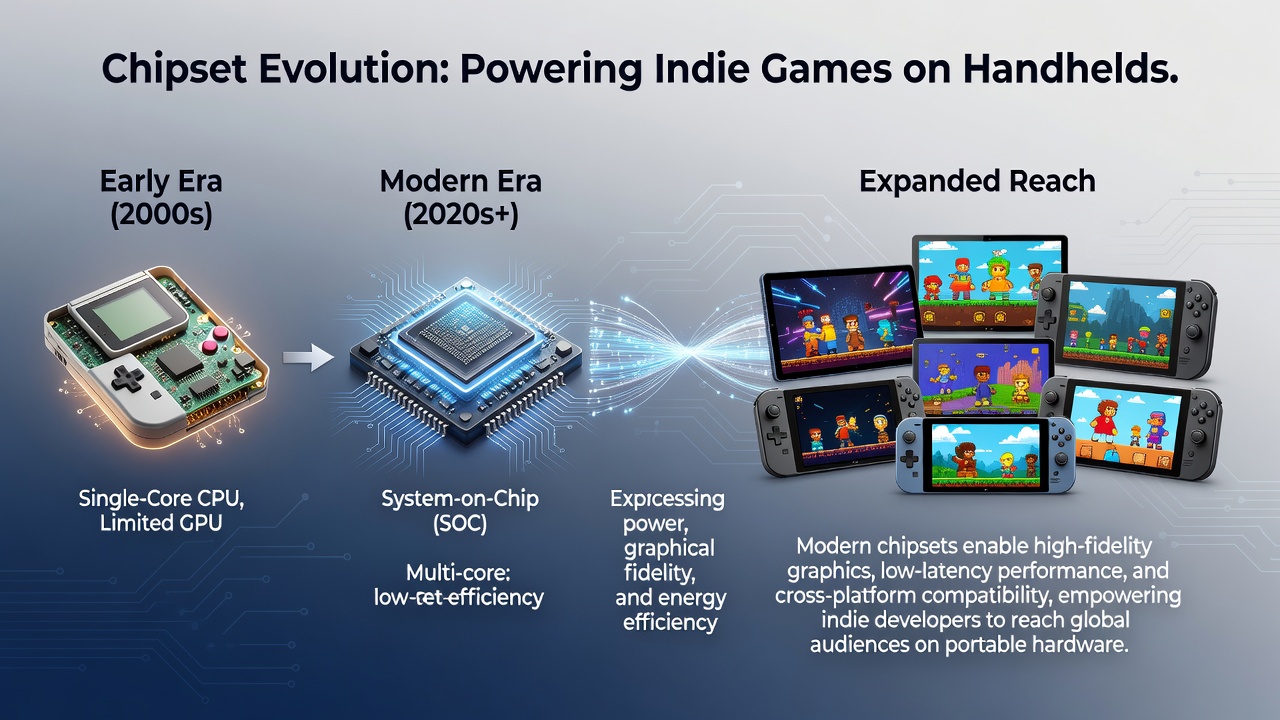
Market figures reveal that handheld shipments incorporating advanced mobile processors surpassed 25 million units annually by mid-2025, expanding the addressable audience for indie releases. Developers can therefore allocate resources toward creative features rather than exhaustive platform-specific ports. In August 2026 several manufacturers are scheduled to introduce chipsets with enhanced neural engines capable of real-time upscaling, further reducing the visual gap between handheld and desktop versions of the same title.
Performance Metrics and Real-World Deployment
Benchmarks compiled by academic researchers demonstrate that recent Snapdragon and Dimensity variants sustain 60 frames per second in moderately detailed scenes at 1080p resolution while drawing under eight watts. These numbers matter because they align closely with the thermal envelopes of fanless handhelds, eliminating the need for aggressive throttling that previously disrupted gameplay. Indie studios have leveraged this consistency to implement features such as procedural generation and multiplayer synchronization that once demanded more powerful desktop hardware.
Case studies from university game labs illustrate how teams reduced build times by reusing the same rendering pipelines across PC, console, and handheld targets after confirming chipset support for required instruction sets. The shift also encouraged experimentation with higher-fidelity audio and physics, since dedicated DSP blocks handle those workloads without competing for main CPU cycles. According to data released by the Entertainment Software Association, indie titles accounted for 42 percent of new handheld releases in 2025, up from 28 percent three years earlier.
Future Directions in Portable Silicon
Upcoming architectures emphasize heterogeneous computing, combining high-performance and efficiency cores with dedicated graphics and AI silicon on a single package. This approach allows developers to assign tasks intelligently, preserving battery life during exploration segments while ramping up performance for combat or cinematic moments. Industry analysts project that by 2027 most new handheld chipsets will support hardware-accelerated mesh shading, enabling more detailed environments without increasing polygon counts beyond current memory limits.
Collaboration between chipset vendors and engine providers continues to streamline certification processes, shortening the time from prototype to storefront release. Those tracking supply-chain reports note that increased production capacity at advanced nodes has lowered per-unit costs, making premium handheld hardware more accessible to consumers in emerging markets. Such accessibility directly benefits indie developers seeking broader distribution without additional marketing spend.
Conclusion
Chipset evolution has steadily expanded the technical foundation available to indie creators, allowing their work to reach players through an ever-growing range of portable devices. Continued refinements in power efficiency, graphics capability, and integration will likely sustain this trend, supporting richer experiences on hardware that remains convenient and affordable for wider audiences.