Console Benchmarks Steering Indie Game Port Strategies for Mobile and PC Environments
Erik Lange · Sep 14, 2026
Console Benchmarks Steering Indie Game Port Strategies for Mobile and PC Environments
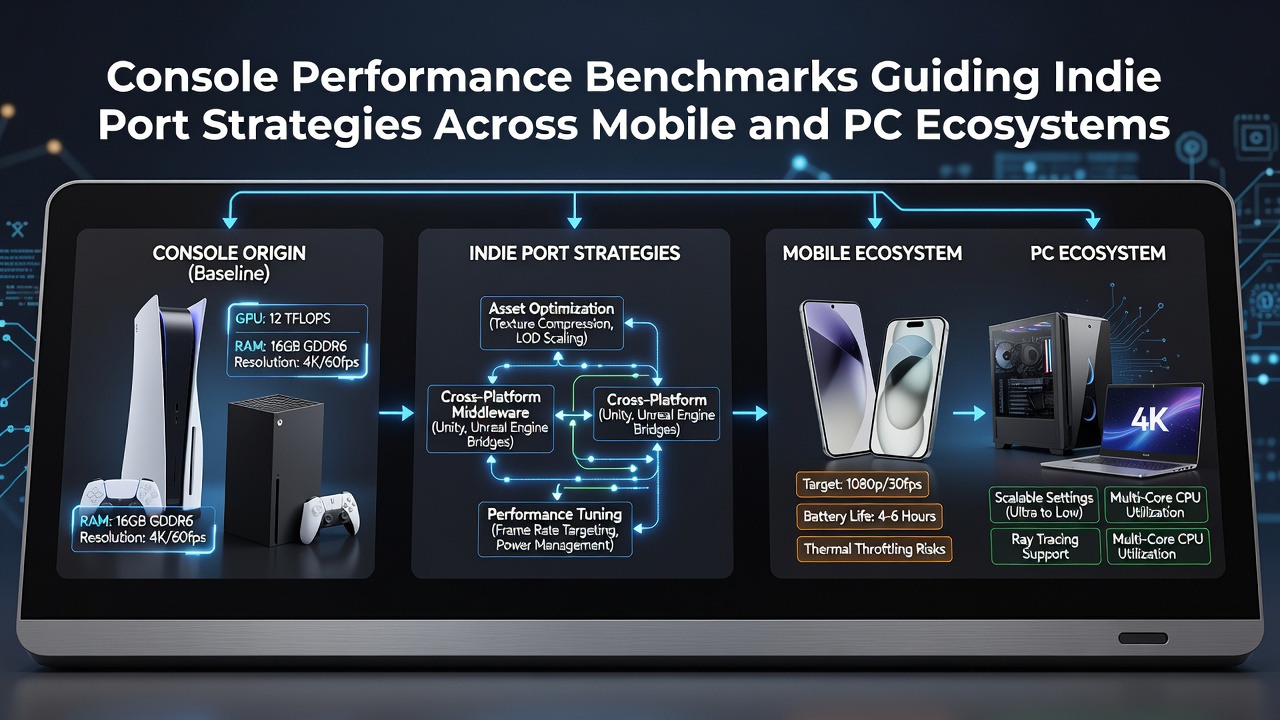
Console performance benchmarks provide measurable data on frame rates, memory allocation, and thermal limits that indie developers reference when adapting titles across platforms. These metrics establish baselines for hardware expectations, allowing teams to map console results onto mobile chipsets and varied PC configurations. Research from industry reports indicates that such benchmarks reduce trial-and-error during porting cycles while maintaining consistent gameplay fidelity. Developers examine console data from systems like the PlayStation 5 and Xbox Series X to identify peak loads in rendering pipelines and physics calculations. This information translates into guidelines for scaling particle effects, draw distances, and AI complexity when targeting smartphones or laptops with integrated graphics. Figures from cross-platform projects reveal that early benchmark analysis cuts optimization time by aligning resource demands with available hardware tiers.Benchmark Categories Driving Port Decisions
Performance testing breaks down into several measurable areas that directly influence port planning. Frame rate stability under load serves as one primary indicator, while memory bandwidth usage determines texture and asset compression needs. Thermal throttling patterns on consoles highlight similar risks on mobile devices where sustained play sessions generate heat buildup. Those who track these categories note that PC ports benefit from modular settings that let users adjust quality levels to match their system specifications.
Data collected during console certification processes supplies quantitative targets that indie studios apply to other ecosystems. For instance, maintaining 60 frames per second at 1080p resolution on console hardware sets expectations for equivalent performance on high-end mobile processors released after 2024. Studies compiled by the Entertainment Software Association show how these targets guide feature prioritization when budgets limit full parity across devices.
Mobile Ecosystem Adaptations
Mobile ports require careful translation of console benchmark results because of differences in power delivery and display refresh rates. Developers compare console GPU utilization rates against mobile equivalents to decide which visual effects remain viable without draining battery life. Memory footprint measurements from console runs inform decisions about level streaming and asset unloading sequences that prevent crashes on devices with 4GB or 6GB RAM limits.
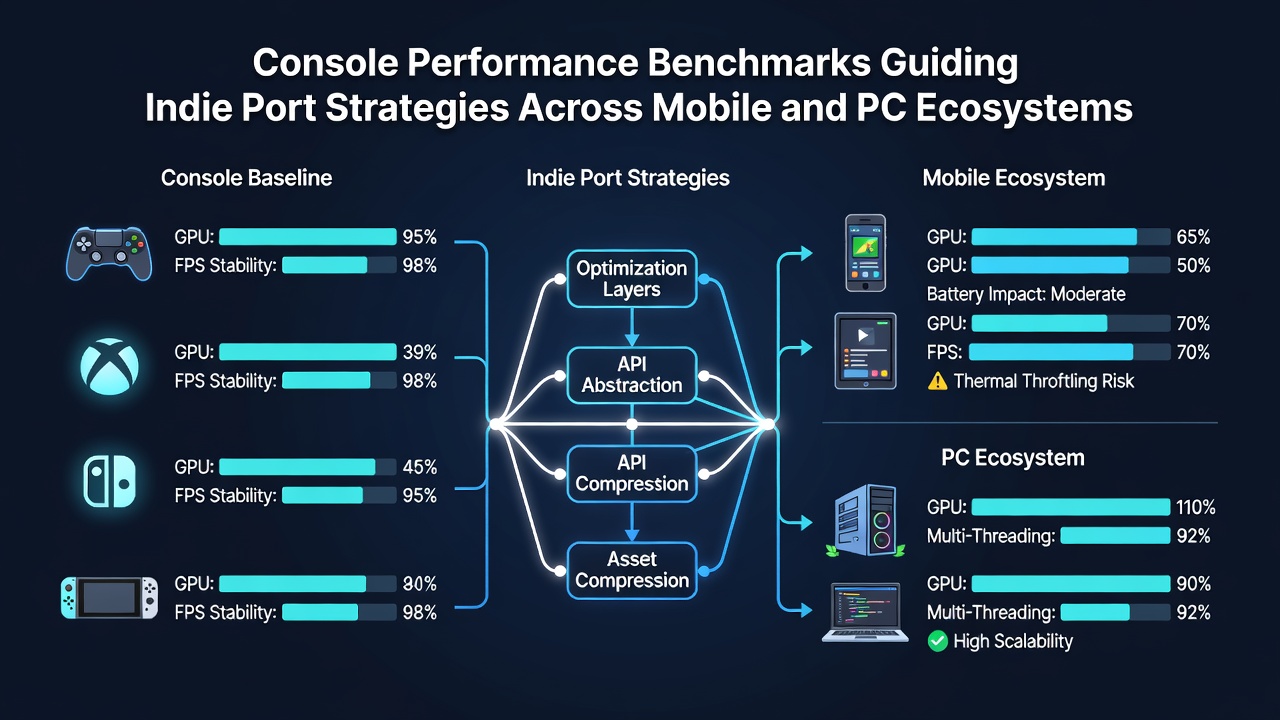
September 2026 brought updated benchmark suites from console manufacturers that incorporated new metrics for ray tracing efficiency and variable rate shading. Indie teams incorporated these figures into mobile testing regimens, adjusting shader complexity to stay within thermal envelopes observed on handheld hardware. Reports from the European Games Developer Federation highlight how such updates prompted reevaluation of post-processing chains in several upcoming releases.
PC Platform Considerations
PC ports leverage console benchmarks as reference points while accounting for wider hardware variability. Minimum specification requirements often derive from console performance floors, ensuring baseline playability on mid-range graphics cards. Developers map console CPU thread utilization data onto PC processor models to determine threading strategies that avoid bottlenecks on systems with fewer cores.
Variable refresh rate support and upscaling technologies receive calibration based on console frame pacing measurements. This approach allows consistent presentation across monitor types without introducing input lag that exceeds console controller response times. Academic analysis from Canadian research institutions has documented how these mappings improve player retention metrics in ports that reach Steam and Epic storefronts.
Integration of Cross-Platform Tools
Engine middleware now incorporates console benchmark datasets that streamline porting workflows. Automated profiling tools compare real-time metrics against established console thresholds and flag deviations during development builds. Teams apply these alerts to adjust draw call budgets and lighting models before certification submissions.
Shared asset pipelines benefit from benchmark-driven compression standards that maintain visual parity while fitting within mobile storage constraints. Observers note that this standardization reduces duplication of effort across separate platform branches. Industry associations continue to publish updated guidelines that incorporate fresh console data releases throughout each development cycle.
Conclusion
Console performance benchmarks function as foundational references that shape indie port strategies across mobile and PC ecosystems. Quantitative data on frame delivery, memory usage, and thermal behavior supplies concrete targets that developers translate into platform-specific optimizations. Continued collection of these metrics supports efficient adaptation of titles while preserving intended gameplay experiences across hardware generations.