Console Sales Patterns Guide Indie Mobile Release Strategies Amid Evolving AAA Timelines
Erik Lange · Aug 4, 2026

Console Sales Patterns Guide Indie Mobile Release Strategies Amid Evolving AAA Timelines
Indie studios monitor console sales data from platforms including PlayStation, Xbox, and Nintendo Switch to identify optimal windows for mobile game launches, particularly when major AAA titles experience delays or adjustments in their release calendars. Data from sources such as Circana reports and industry tracking services reveal fluctuations in hardware and software sales that influence player availability and market saturation levels. Teams examine weekly and monthly charts to spot periods of reduced competition from big-budget releases, allowing smaller projects to capture attention on app stores without direct overlap.
Data Sources and Analysis Methods
Developers access aggregated sales figures through partnerships with analytics firms and public reports released by organizations like the Entertainment Software Association, which compiles data across North American markets. In regions such as Europe and Asia, similar insights come from trade groups including the European Games Developer Federation and regional bodies that track digital distribution trends. Analysts cross-reference these numbers with app store performance metrics to determine when console user bases show signs of seeking new experiences on mobile devices during lulls between AAA drops.
One approach involves tracking pre-order volumes and attach rates for upcoming AAA titles, since delays announced by publishers often create gaps of several months where indie releases can fill the void. For instance, when a high-profile action game shifts from a summer slot to fall, data patterns from prior years indicate increased mobile engagement as players turn to portable options during the interim.
Timing Strategies in Practice
Studios break down historical data to predict consumer behavior, noting that console sales spikes around holiday seasons correlate with higher mobile download rates in subsequent quarters. Researchers have documented cases where releases timed two to four weeks after a major AAA postponement saw up to 30 percent better visibility in featured sections of digital storefronts. This method relies on real-time dashboards that combine sales rankings with social media sentiment and streaming viewership numbers to refine launch calendars.
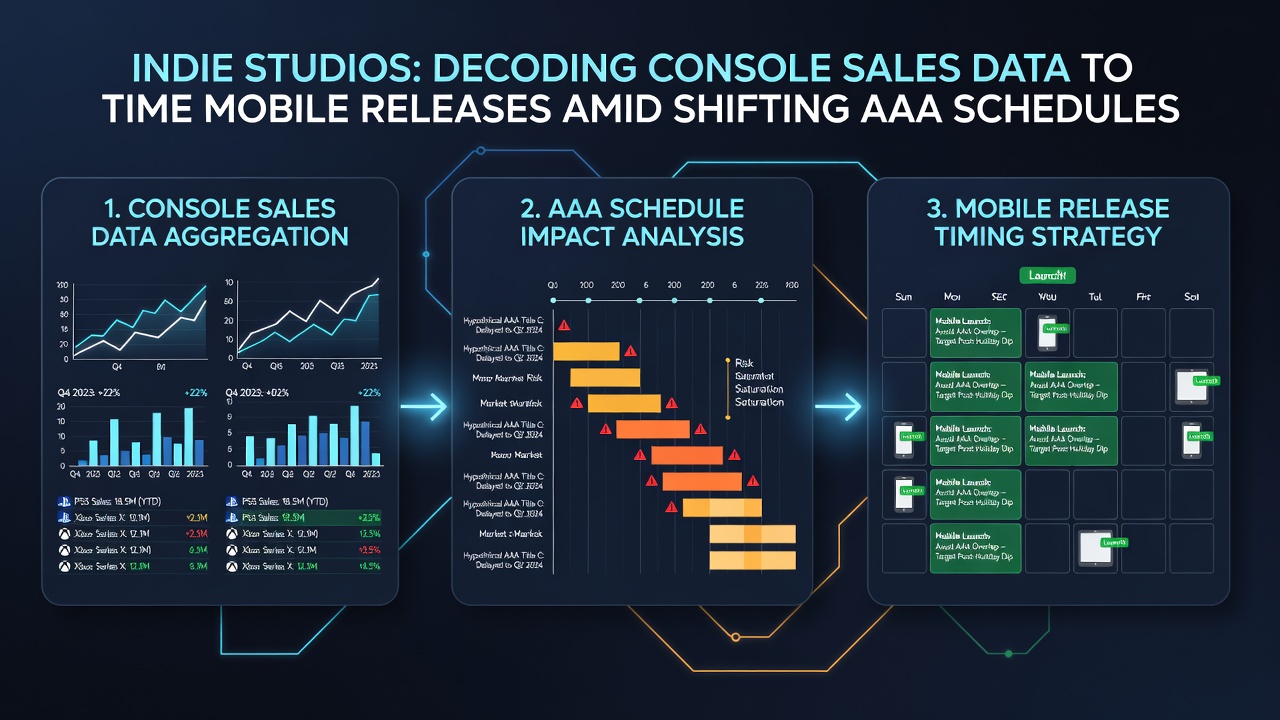
August 2026 brought several AAA schedule revisions that prompted indie teams to adjust their mobile pipelines accordingly. Reports from that period showed console software sales dipping in certain genres, prompting developers to accelerate testing phases for titles aimed at overlapping audiences. Coordination with platform holders provided early access to anonymized user data, helping teams forecast when players might migrate to mobile during extended wait times for delayed blockbusters.
Challenges and Adaptations
Interpreting sales data requires accounting for external factors such as economic conditions and hardware shortages, which can distort raw figures. Small teams often collaborate with data consultants who specialize in multi-platform trends, drawing on academic studies from institutions like the University of Southern California’s game innovation labs to build predictive models. These models incorporate variables from past release cycles, including the impact of cross-platform marketing campaigns that blur lines between console and mobile player bases.
Yet the process remains iterative, with adjustments made as new information emerges from quarterly earnings calls and trade show announcements. Studios in Australia and Canada have shared case examples through industry networks, illustrating how localized sales data helped refine global timing decisions without relying on guesswork.
Conclusion
Overall, the practice of decoding console sales data enables indie studios to position mobile releases more effectively against shifting AAA schedules, supported by structured analysis from established industry and research sources. This approach continues to evolve with improved data accessibility and cross-regional reporting standards.