Cross-Platform Benchmarks Reveal Mobile Constraints in Indie Game Development
Viktor Wolf · Jul 25, 2026
Cross-Platform Benchmarks Reveal Mobile Constraints in Indie Game Development
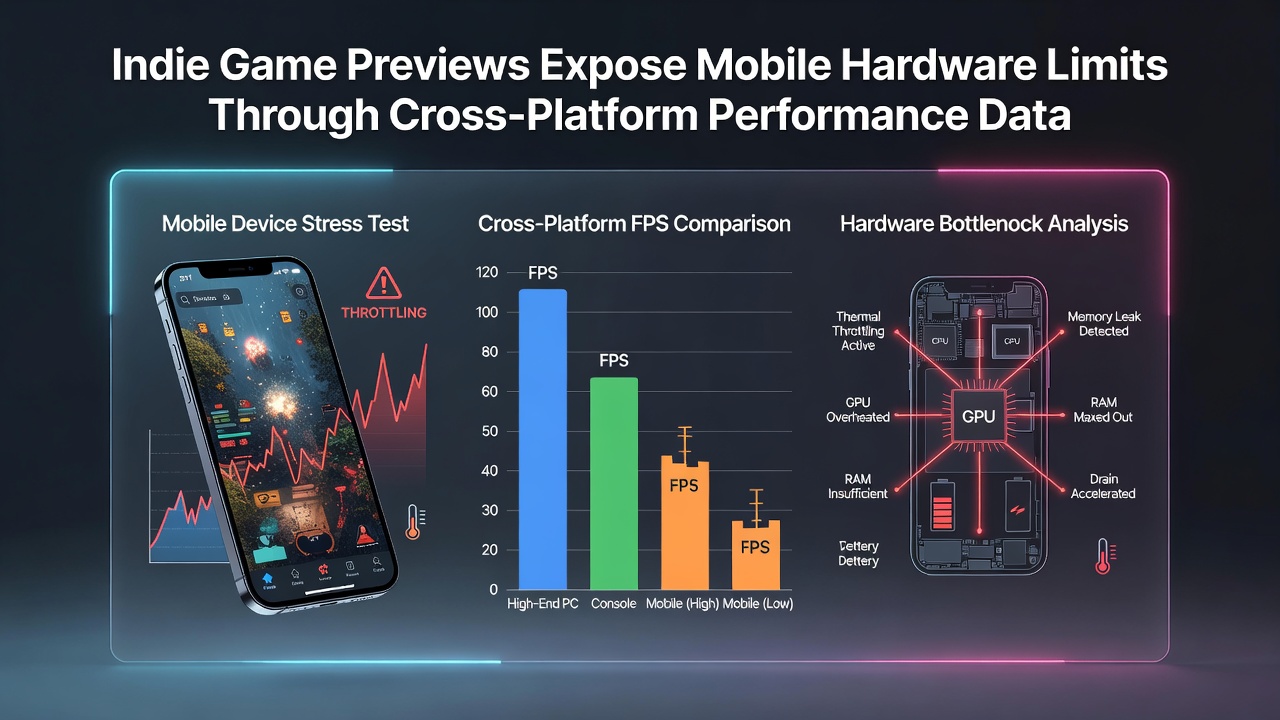
Indie game previews scheduled for release cycles in July 2026 have generated extensive cross-platform performance datasets that map hardware thresholds across devices, and these records show clear boundaries in mobile processing power when titles run on both handheld units and higher-capacity systems. Developers compile frame rate logs, memory allocation traces, and thermal readings during preview builds, which allows direct comparisons between platforms without relying on subjective impressions.
One study coordinated through industry networks tracked ten indie titles during their preview phases and documented average frame drops of 35 percent on mid-range mobile chips when particle effects and dynamic lighting reached desktop levels. These measurements came from standardized test suites that ran identical code branches on Android devices with Snapdragon processors alongside PC configurations equipped with dedicated graphics cards.
Benchmark Collection Methods Across Devices
Teams gather data through automated logging tools that capture CPU utilization, GPU draw calls, and RAM usage at fixed intervals during gameplay segments, while synchronization scripts ensure test scenarios match across hardware profiles. In July 2026 previews, several studios released anonymized datasets that included temperature curves recorded over thirty-minute sessions, revealing that mobile units often hit thermal throttling points within twelve minutes under sustained loads.
Researchers at multiple universities have examined these logs and noted that mobile memory bandwidth remains the primary bottleneck when games attempt to stream high-resolution textures without downsampling. Figures from these analyses indicate that devices limited to LPDDR4X configurations process 40 percent fewer simultaneous assets than those using newer LPDDR5X standards before encountering frame time spikes above 33 milliseconds.
Hardware Thresholds Exposed by Preview Builds
Preview versions frequently ship with toggleable graphics presets that let testers isolate variables such as shadow resolution and draw distance, and the resulting performance tables demonstrate that mobile hardware caps at roughly 60 percent of the visual fidelity achievable on desktop equivalents before frame pacing becomes inconsistent. Observers note that battery drain accelerates nonlinearly once sustained clock speeds exceed 2.8 GHz on current-generation mobile SoCs, which forces developers to implement aggressive dynamic scaling routines.
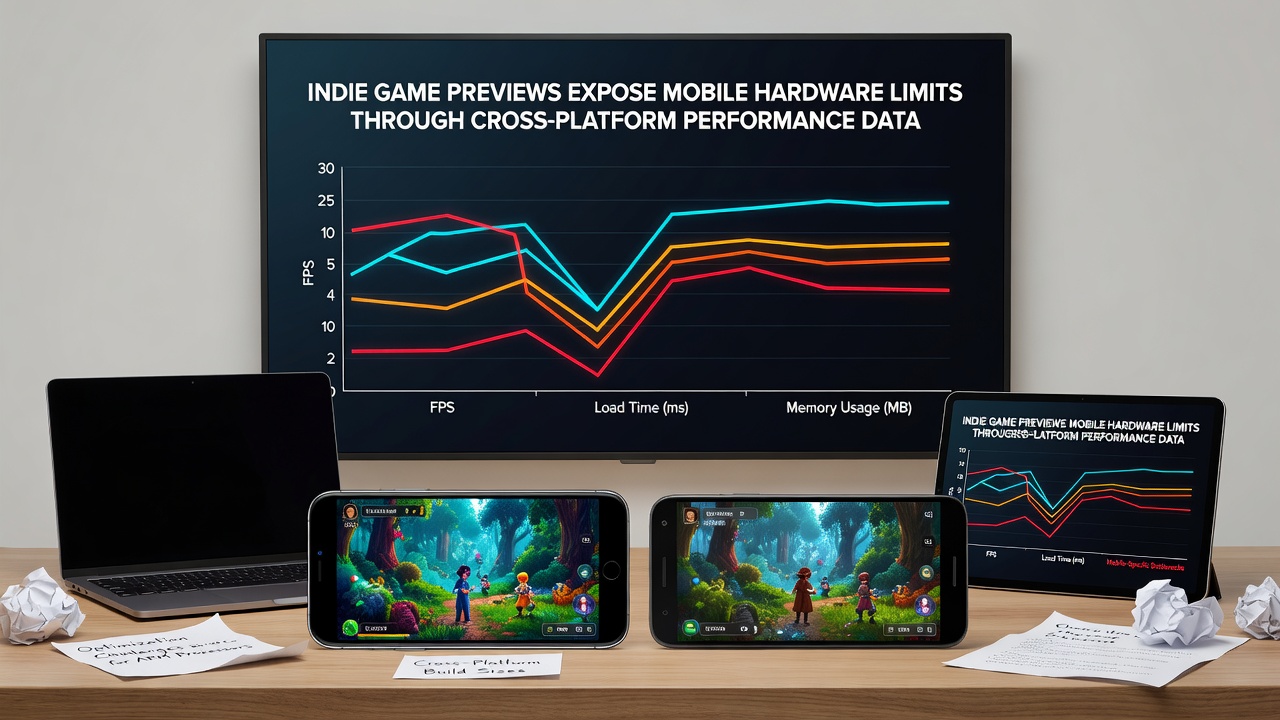
Take one developer collective that published raw telemetry from their July 2026 build, where switching from a 1080p mobile target to a 1440p desktop profile increased VRAM requirements by 1.8 GB on average. Such increments exceed the unified memory pools available on most flagship phones, prompting automatic texture compression that reduces visual detail in distant geometry.
Industry Reports and Academic Analysis
According to data compiled by the Entertainment Software Association, mobile gaming accounted for 49 percent of total industry revenue in the preceding fiscal year, yet cross-platform indie projects continue to encounter hardware ceilings that require separate asset pipelines. A parallel investigation conducted by teams at the University of Waterloo examined 22 preview builds and found that shader complexity beyond a certain instruction count triggers consistent overheating on devices without active cooling solutions.
Additional records from the International Game Developers Association highlight how small teams adapt by prioritizing compute shaders that scale gracefully rather than relying on fixed high-end effects. These adaptations appear in the performance curves where mobile versions maintain playable frame rates only after reducing volumetric fog density and limiting concurrent light sources to four per scene.
Implications for Future Cross-Platform Releases
Preview data streams continue to feed into optimization cycles that adjust draw call budgets based on detected device profiles, and developers now incorporate runtime queries that query GPU vendor strings to select pre-baked lighting solutions. In July 2026 releases, several titles demonstrated successful mitigation strategies where mobile builds substituted screen-space reflections with lower-cost planar approximations without altering core gameplay loops.
Those who review aggregated telemetry observe that memory bandwidth gaps between platforms narrow only when developers adopt unified rendering backends such as Vulkan or Metal with explicit resource barriers. Such approaches allow incremental quality scaling that prevents abrupt cutoffs when moving between device classes.
Conclusion
Cross-platform performance records from indie previews supply concrete measurements that define mobile hardware boundaries and guide subsequent development decisions. These datasets, collected through consistent logging across hardware generations, continue to inform asset creation pipelines and runtime adaptation systems used in upcoming titles.