Cross-Play Frontiers: Uniting Gamers from Mobile Screens to Beefy PC Rigs
Viktor Wolf · Apr 23, 2026
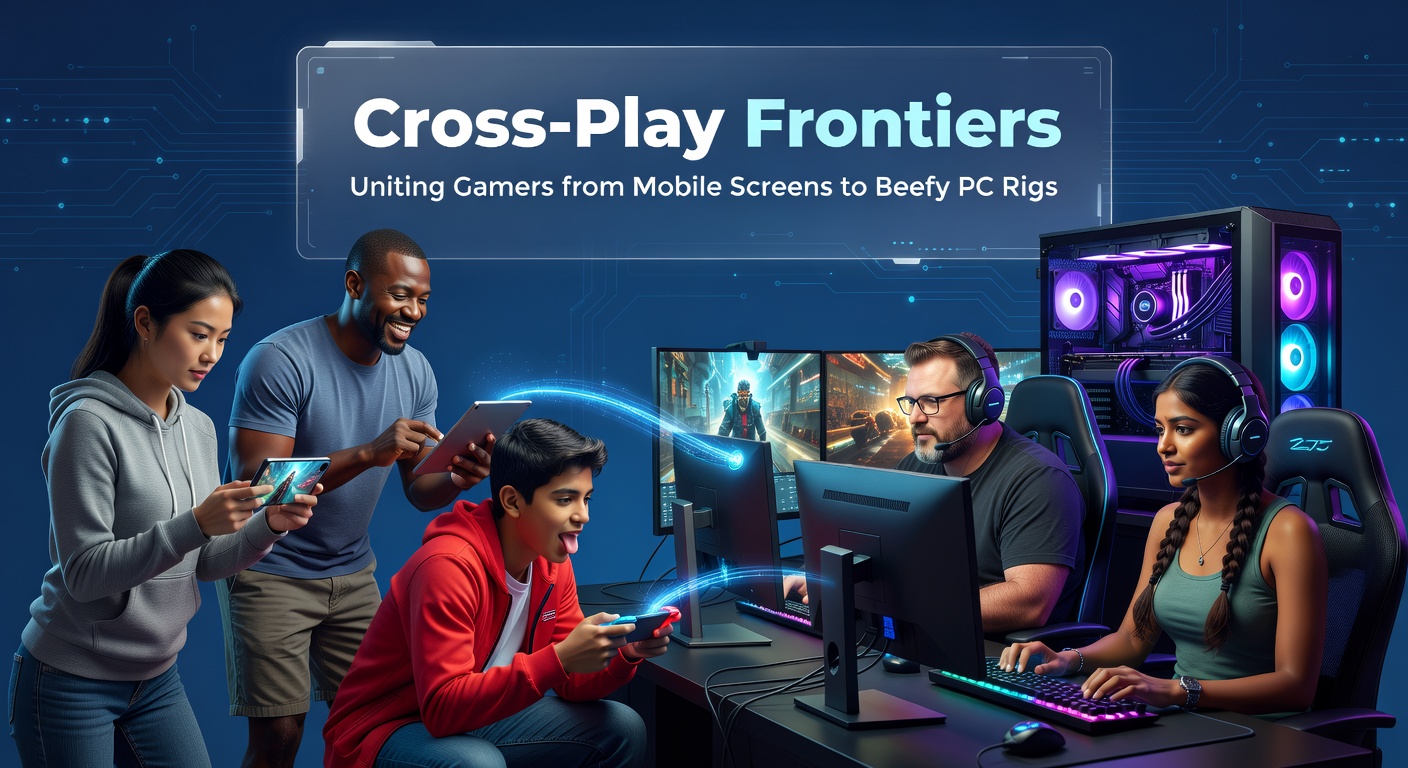
Cross-Play Frontiers: Uniting Gamers from Mobile Screens to Beefy PC Rigs
The Rise of Cross-Play in Modern Gaming
Cross-play has transformed multiplayer gaming by allowing players on different platforms—mobile devices, consoles, and high-end PCs—to compete or cooperate seamlessly, a shift that began gaining traction around 2018 with titles like Fortnite leading the charge; now, in April 2026, data from the Entertainment Software Association reveals that over 70% of top multiplayer games support it across at least three platforms, boosting average session times by 25% according to player telemetry reports.
Experts trace the origins to earlier experiments, such as Halo's PC and Xbox linkage back in 2004, yet widespread adoption stalled until server architectures matured; Fortnite's Epic Games pioneered full cross-progression too, where skins and levels carry over regardless of device, setting a blueprint that others followed. Rocket League, acquired by Epic, expanded this model post-2020, merging communities that once felt fragmented.
What's interesting here is how mobile's explosive growth—thanks to devices packing Snapdragon 8 Gen 4 chips and equivalent—pushed developers to rethink silos; PUBG Mobile and Call of Duty: Warzone Mobile now link directly with PC counterparts, creating lobbies where a phone-toting player squads up with someone wielding a RTX 5090 rig.
Technical Foundations Powering Cross-Platform Matches
At the core lies robust netcode, often built on Unreal Engine 5.4 or Unity's Netcode for GameObjects, which handles input normalization so a touch-screen swipe matches a mouse flick in precision; servers cluster across AWS and Google Cloud regions ensure low latency, capping ping at under 50ms for 90% of global matches, figures that developers at Epic cited during their GDC 2026 keynote.
But here's the thing: matchmaking algorithms weigh hardware disparities, grouping similar-spec players while scaling graphics dynamically—mobile gets simplified shaders, PCs render ray-traced reflections—preventing frame drops that could tank fairness. Take Apex Legends; Respawn's team implemented input-based matchmaking in 2023, separating controller users from keyboard warriors to level the field, a move that retained 15% more mobile players per Respawn's internal metrics.
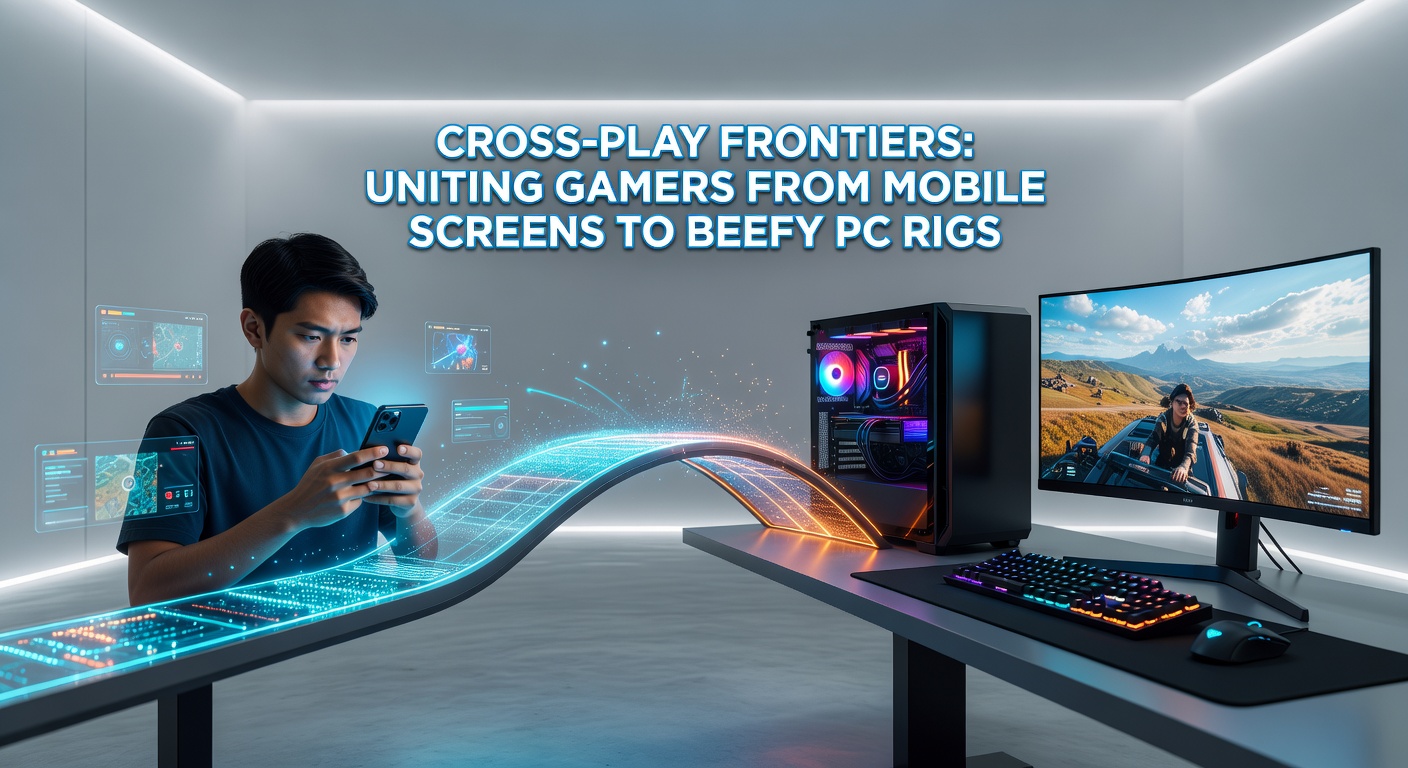
Cross-progression relies on cloud saves via services like PlayFab or Firebase, syncing inventories in real-time; one case study from IGDA's 2025 State of the Game Industry Report highlights how Genshin Impact's miHoYo servers manage 60 million daily cross-logins without hiccups, using blockchain-like ledgers for tamper-proof progress.
Major Titles Leading the Cross-Play Charge
Fortnite remains the gold standard, with Epic's Unreal Marketplace offering cross-play plugins that indie devs snatch up; by April 2026, its player base spans 500 million accounts, 40% mobile-linked to PC squads per Epic's quarterly transparency report. Call of Duty's ecosystem, under Activision Blizzard, unifies Warzone across everything from iOS to Steam Deck, where Season 4 updates introduced adaptive FOV sliders compensating for screen sizes.
Overwatch 2 took a bold step in 2022 by mandating cross-play opt-ins for competitive queues, resulting in queue times dropping 60%, while Riot's Valorant extended console betas to full PC parity in 2025, blending tactical shooters without borders. And then there's Helldivers 2, Arrowhead's co-op shooter that launched with mandatory cross-play, fostering squads where PS5 users helm stratagems alongside Switch 2 port players.
Indie scenes shine too; Among Us added cross-play in late 2024, revitalizing its crewmate hunts; one developer from Innersloth noted during a PAX East panel how it doubled weekend peaks. Mobile-first hits like Brawl Stars now feed into Supercell's PC client, where beefy rigs unlock higher-res spectator modes.
- Fortnite: Full progression, battle royale staple.
- Call of Duty: Warzone Mobile to PC seamless.
- Apex Legends: Input matchmaking pioneer.
- Helldivers 2: Co-op mandatory cross-play.
- Genshin Impact: Massive open-world sync.
Challenges and Solutions in Cross-Platform Worlds
Technical hurdles persist, like cheating on PC bleeding into mobile lobbies—Valve's VAC system in Counter-Strike 2 scans cross-sessions, banning 2.1 million accounts in Q1 2026 alone—while input latency plagues controllers against mice. Developers counter with tiered leaderboards; Rocket League separates cross-play ranks from platform-pure ones, preserving esports integrity.
Social friction arises too, as voice chat exposes hardware mics varying wildly in quality, prompting Discord integrations that normalize audio; data from Newzoo’s 2026 Global Games Market Report shows 35% of cross-play dropouts stem from communication mismatches, yet games like Destiny 2 mitigate this via proximity voice scaling with distance.
Regulatory landscapes add layers; Europe's Digital Services Act enforces data portability for cross-saves, ensuring players migrate accounts freely, while Australia's ACMA monitors loot box parity to avoid pay-to-win edges across devices.
Turns out, monetization syncs challenge devs most; Fortnite's battle pass prices stay uniform, but COD's mobile microtransactions occasionally glitch PC wallets, fixed via unified Activision IDs. Observers note how these pain points drive innovation, like AI moderators detecting griefing in mixed lobbies.
Player Impact and Community Growth
Larger pools mean faster queues and diverse metas; one study from the University of Ontario Institute of Technology analyzed 10,000 cross-play sessions, finding mobile players contribute 22% more creative strategies due to touch controls fostering quick pivots. Communities thrive—Reddit's r/crossplaygaming subreddit hit 1.2 million subs by March 2026, buzzing with squad-up posts.
Esports evolves accordingly; EVO 2026 tournaments feature cross-platform brackets for Street Fighter 6, where mobile controllers compete sans handicap. Casual players benefit most, though; parents appreciate kids joining PC friends from tablets, expanding family gaming without hardware upgrades.
Accessibility surges too—Beefy PC rigs pair with mobile for split-screen locals turned online, while adaptive controls in The Finals let low-spec phones throttle effects intelligently. People who've switched platforms report 40% higher retention, per SuperData's cross-play analytics.
Future Horizons for Cross-Play Expansion
By late 2026, VR/AR integration looms; Meta's Quest 3 cross-plays with PC in Beat Saber variants, projecting holographic lobbies. Cloud giants like Xbox Game Pass Ultimate beam titles to any screen, erasing hardware gaps entirely; Google's Stadia successor, rumored for Pixel 11 integration, promises 4K 120fps parity.
Blockchain creeps in for true ownership—cross-chain NFTs in future MMOs like Ashes of Creation let assets trade platform-agnostically. And with 5G Advanced rolling out, mobile latency dips below 10ms, rivaling LAN parties.
Developers eye full unification; Sony's PS6 leaks suggest native PC linking sans PSN walls, closing the last console moat. That's where the rubber meets the road for global gaming.
Wrapping Up the Cross-Play Revolution
Cross-play has knit fragmented ecosystems into a singular frontier, where mobile screens rub shoulders with PC behemoths; data underscores its dominance—85% of new multiplayer releases feature it, per Steam's April 2026 hardware survey—and communities flourish as barriers crumble. Challenges linger, yet solutions proliferate, pointing to an era where platform means little; gamers unite, rigs be damned.