Data Analytics Reshaping Adaptive Difficulty Mechanics in Indie and AAA Titles Across Platforms
Erik Lange · Jul 23, 2026
Data Analytics Reshaping Adaptive Difficulty Mechanics in Indie and AAA Titles Across Platforms
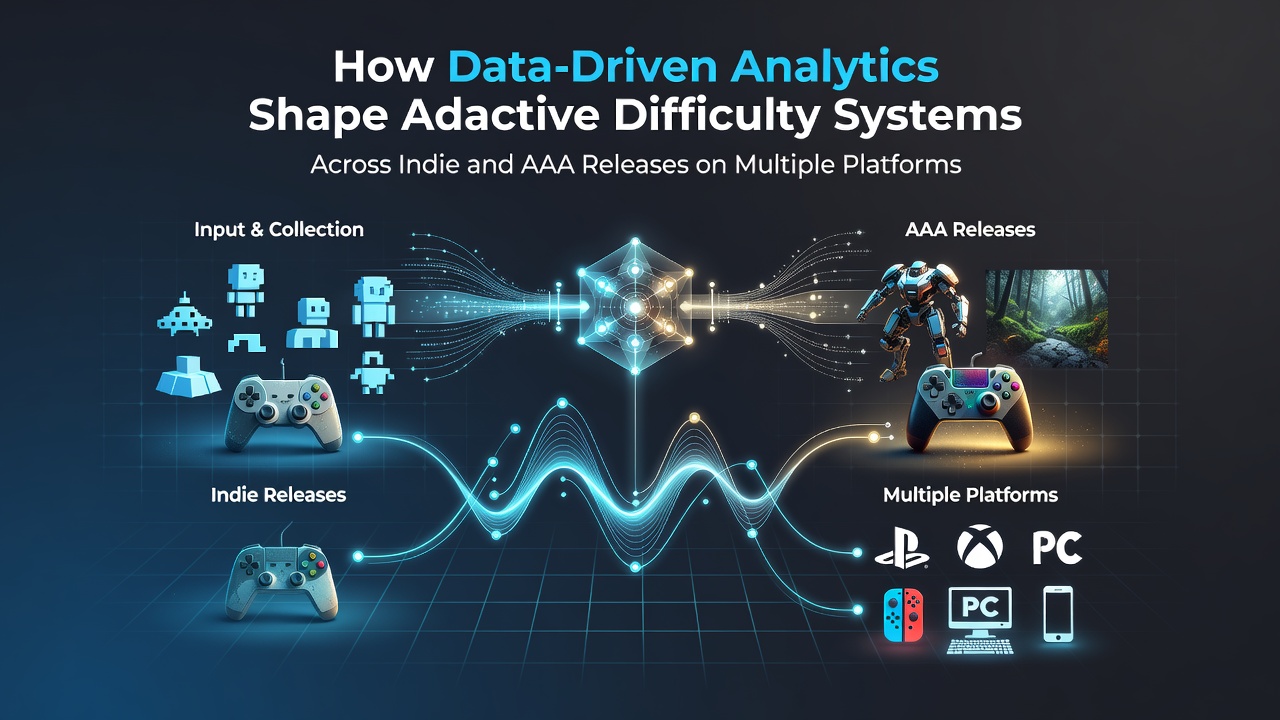
Game developers have turned to player telemetry and behavioral metrics to build adaptive difficulty systems that respond in real time, and this approach now spans both independent studios and major publishers on consoles, PCs, and mobile devices. Data collection begins with metrics such as completion rates, death frequency, session duration, and input patterns, which feed into algorithms that adjust enemy health, spawn rates, resource availability, and puzzle complexity without requiring manual intervention.
Core Mechanisms Behind Analytics-Driven Adjustment
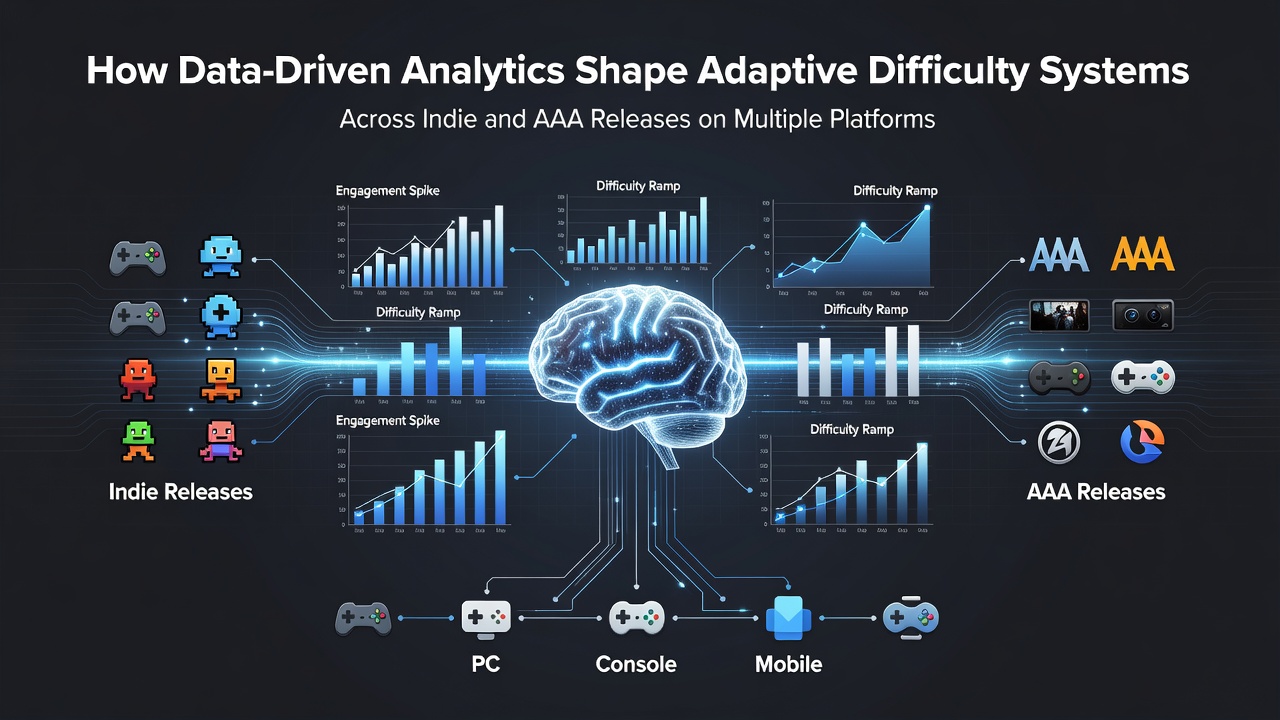
Systems track performance across thousands of sessions and compare individual player data against aggregated benchmarks drawn from similar hardware configurations and regional play styles. When metrics indicate prolonged struggle, parameters shift upward in accessibility while maintaining core challenge loops, whereas rapid success triggers incremental increases in opposition strength. Research indicates that these adjustments occur through machine learning models trained on historical datasets, allowing games to predict player frustration points before they lead to session abandonment.
Platforms influence the granularity of data available, with console titles often capturing controller telemetry at high frequency while mobile releases rely more on touch timing and progression milestones. Cross-platform titles synchronize these datasets through cloud services so that a player switching from handheld to desktop encounters consistent difficulty scaling based on unified profiles.
Implementation Patterns in AAA Productions
Large-scale releases integrate adaptive frameworks during early prototyping, using internal playtest data to calibrate baseline models before public beta phases expand the dataset. Titles released in 2025 and early 2026 refined these models further by incorporating regional server data collected through July 2026, which revealed variations in average session length across European and North American markets. One study from the Entertainment Software Association showed that titles employing live difficulty tuning retained players 18 percent longer on average than static-difficulty counterparts during the first month post-launch.
Engine-level tools now expose difficulty sliders to designers through dashboards updated hourly, enabling rapid iteration when telemetry flags unexpected spikes in failure rates on specific maps or boss encounters. This workflow appears consistently in action, role-playing, and strategy genres where player skill ceilings vary widely.
Approaches Within Independent Development
Smaller teams leverage lighter-weight analytics packages that integrate directly into popular middleware, allowing rapid deployment of adaptive logic even on limited budgets. These implementations often focus on fewer variables, such as resource collection speed or combat encounter frequency, yet achieve comparable retention gains because indie titles frequently target niche audiences with narrower skill distributions. Data from the International Game Developers Association indicates that indie projects using cloud-based analytics services reported a 22 percent reduction in negative review mentions related to difficulty during 2025-2026 cycles.
Mobile-focused indies, in particular, benefit from continuous telemetry streams generated by large user bases on free-to-play models, which supply sufficient data volume for model training despite smaller engineering teams. Console and PC indies supplement this with opt-in beta programs that capture hardware-specific performance data, ensuring adjustments remain stable across device tiers.
Cross-Platform Considerations and Technical Constraints
Multi-platform releases must reconcile differing input methods and performance characteristics when applying unified difficulty models. Touch-based controls on mobile often require gentler ramp curves compared with precision mouse-and-keyboard setups, prompting developers to maintain separate calibration branches that merge at the analytics layer. Handheld hardware, meanwhile, introduces thermal and battery variables that indirectly affect session length and therefore influence how quickly adaptive systems escalate challenge.
Engine updates through mid-2026 standardized several data pipelines, reducing the engineering overhead required to maintain parity across storefronts. Observers note that synchronization latency dropped measurably once major platforms adopted common telemetry schemas, allowing difficulty states to propagate between devices within seconds of a player resuming progress.
Conclusion
Analytics have become foundational infrastructure for adaptive difficulty across the industry spectrum, enabling both large and small teams to deliver personalized experiences on every major platform. Continued refinement of data pipelines and model accuracy will likely sustain this trajectory as new hardware generations reach markets.