Esports Tournaments Drive Indie Hardware Innovation Through Unexpected Feedback Loops
Theo Walter · Jul 18, 2026
Esports Tournaments Drive Indie Hardware Innovation Through Unexpected Feedback Loops
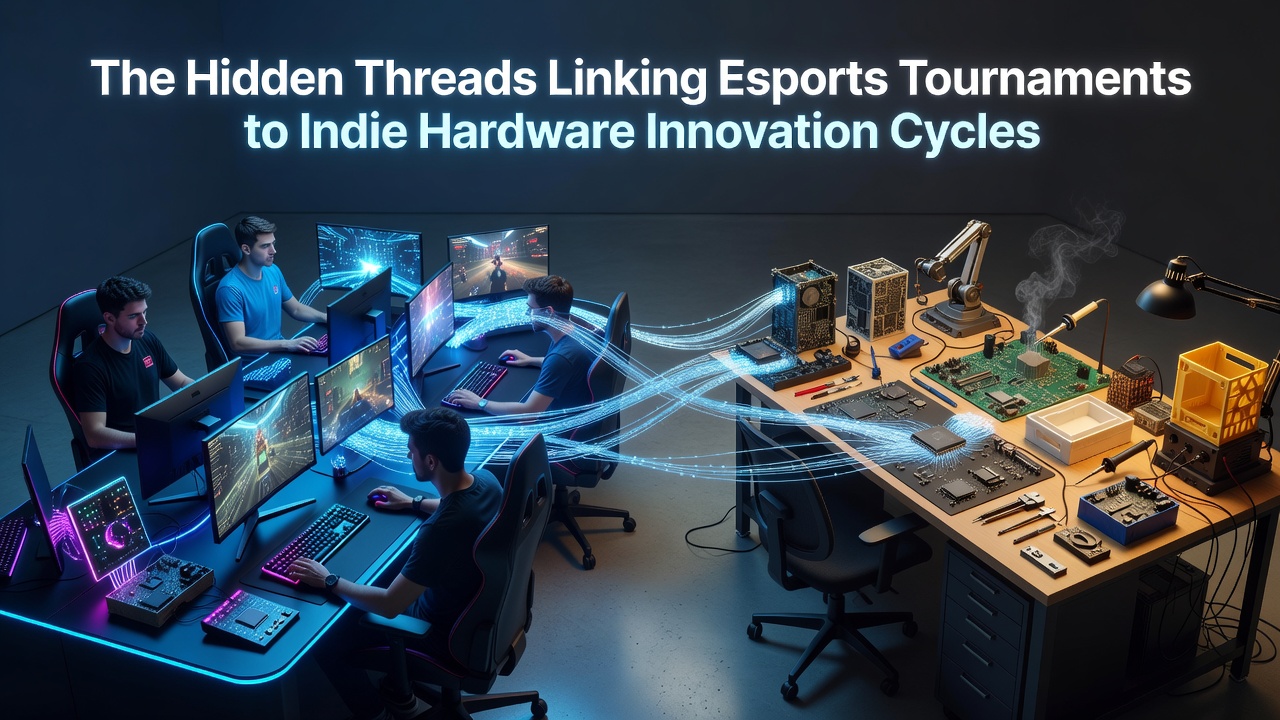
Esports tournaments have expanded rapidly in scale and technical requirements, creating measurable demand for hardware that meets precise performance thresholds while remaining adaptable for smaller development teams. Data from industry reports indicate that global viewership for competitive gaming events reached new peaks in 2025, with preliminary figures for July 2026 events already projecting further growth in regions including North America and Asia-Pacific markets. These gatherings often spotlight equipment capable of sustaining consistent frame rates and minimal input lag under intense conditions, patterns that observers note have influenced subsequent design choices among independent hardware creators.
Tournament Specifications Shape Component Priorities
Competitive play demands hardware configurations that prioritize stability across extended sessions, a requirement documented in multiple event technical briefs. Organizers of major leagues specify standards for input devices and display refresh rates that exceed typical consumer baselines, yet these specifications filter downward through supply chains. Independent developers frequently examine tournament hardware logs and performance telemetry to identify components that deliver reliable results without relying on premium fabrication processes. Research from academic sources shows that such analysis has accelerated iterations in areas like thermal management systems and modular connectivity options, allowing smaller manufacturers to produce variants suited for diverse use cases.
Take the case of peripheral manufacturers who analyzed latency data from 2024-2025 championship series, then refined sensor technologies for their next product lines. Those adaptations appeared in devices released during early 2026 cycles, demonstrating direct transfer of tournament-derived constraints into production models. Figures from trade associations reveal that units incorporating these refinements accounted for measurable portions of indie hardware sales in subsequent quarters.
Cross-Platform Adaptations Emerge From Event Feedback
Events held across multiple continents generate datasets that highlight compatibility challenges between high-end tournament rigs and more accessible platforms. Participants and support staff report instances where custom firmware tweaks, originally developed for specific competition environments, found their way into indie hardware revisions. This transfer occurs because developers monitor post-event analyses published by regional organizers, extracting insights on power efficiency and signal integrity that apply beyond elite settings.
What's interesting here is how these threads connect without direct collaboration between large esports bodies and small hardware studios. A study conducted through European research institutions documented several instances where open-source drivers released after Australian and Canadian tournaments informed subsequent board designs by independent firms. The result appears in hardware that supports seamless transitions between wired and wireless modes while maintaining tournament-grade polling rates, features now appearing in mid-tier product releases.
Data Patterns Reveal Cyclical Innovation Waves
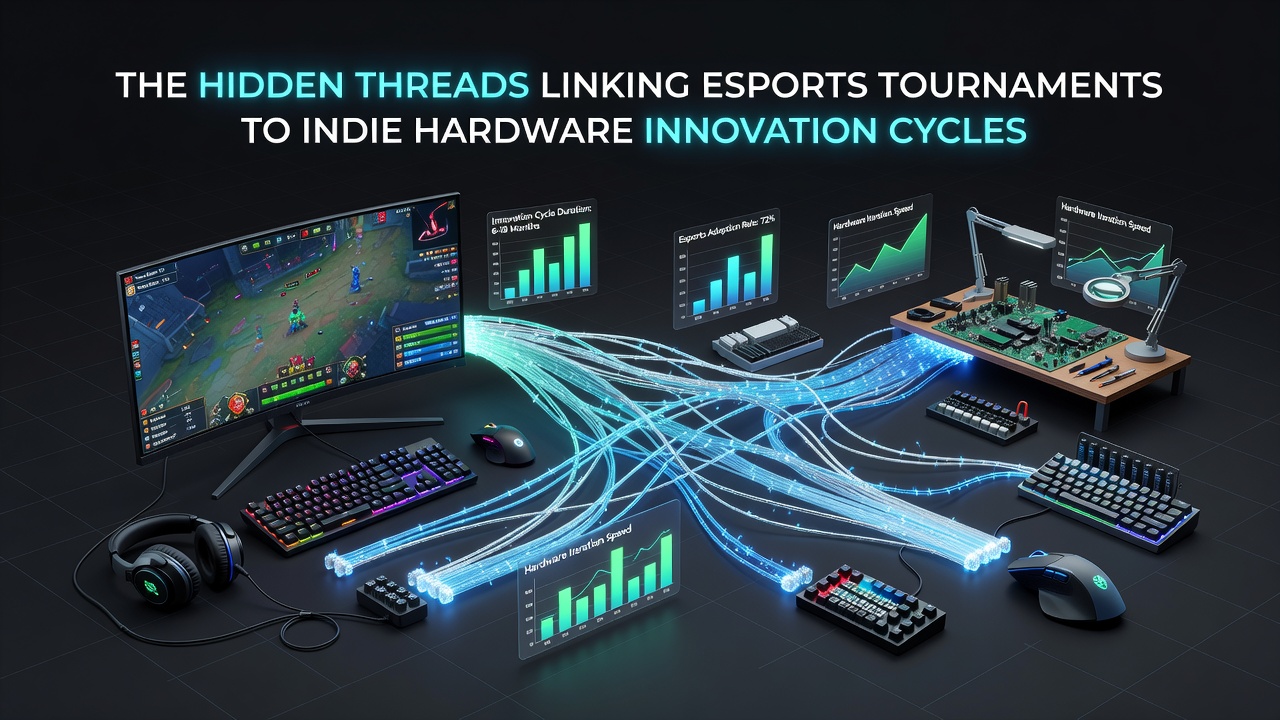
Longitudinal tracking of hardware announcements shows recurring intervals where features first validated in tournament environments reappear in indie catalogs within 12 to 18 months. According to records maintained by North American gaming associations, memory controller optimizations and display interface upgrades follow this timeline most consistently. July 2026 tournament schedules have already generated preliminary telemetry that aligns with this pattern, suggesting upcoming hardware cycles will incorporate similar refinements focused on multi-device synchronization.
Observers note that indie teams often leverage tournament footage and technical breakdowns shared publicly by event partners. These resources supply concrete benchmarks that guide component selection, reducing trial-and-error phases during prototyping. Evidence from university-led analyses indicates that such access correlates with shorter development timelines and higher rates of successful market entry for specialized input devices and compact form-factor systems.
Regional Variations Influence Global Hardware Trends
Differences in infrastructure across hosting regions contribute distinct pressures on hardware requirements. Events in markets with variable network conditions prompt innovations in adaptive buffering and fallback protocols, elements that independent developers later incorporate into consumer-facing products. Reports compiled by international trade groups highlight how these regional adaptations have contributed to broader availability of hardware that functions reliably across inconsistent connectivity environments.
Yet the flow remains bidirectional in measurable ways. Indie hardware releases sometimes appear at secondary tournament circuits first, where their performance under real competitive loads provides validation data used by larger manufacturers. This reciprocal movement sustains the cycle without requiring centralized coordination, as documented in case examples from multiple 2025-2026 events.
Conclusion
The connections between esports tournaments and indie hardware innovation cycles rest on documented patterns of specification sharing, performance data analysis, and iterative refinement. Events scheduled through July 2026 continue to generate the telemetry and technical requirements that feed these loops, while independent developers apply extracted insights to produce accessible alternatives. External references such as reports from the Entertainment Software Association and studies published through Canadian research networks confirm the measurable influence tournament environments exert on subsequent hardware development timelines and feature priorities. These threads persist through open channels of technical documentation and market observation rather than formal partnerships.