Frame Pacing Mechanics in Mobile Multiplayer Titles and Their Role in Competitive Equity
Viktor Wolf · Aug 18, 2026
Frame Pacing Mechanics in Mobile Multiplayer Titles and Their Role in Competitive Equity
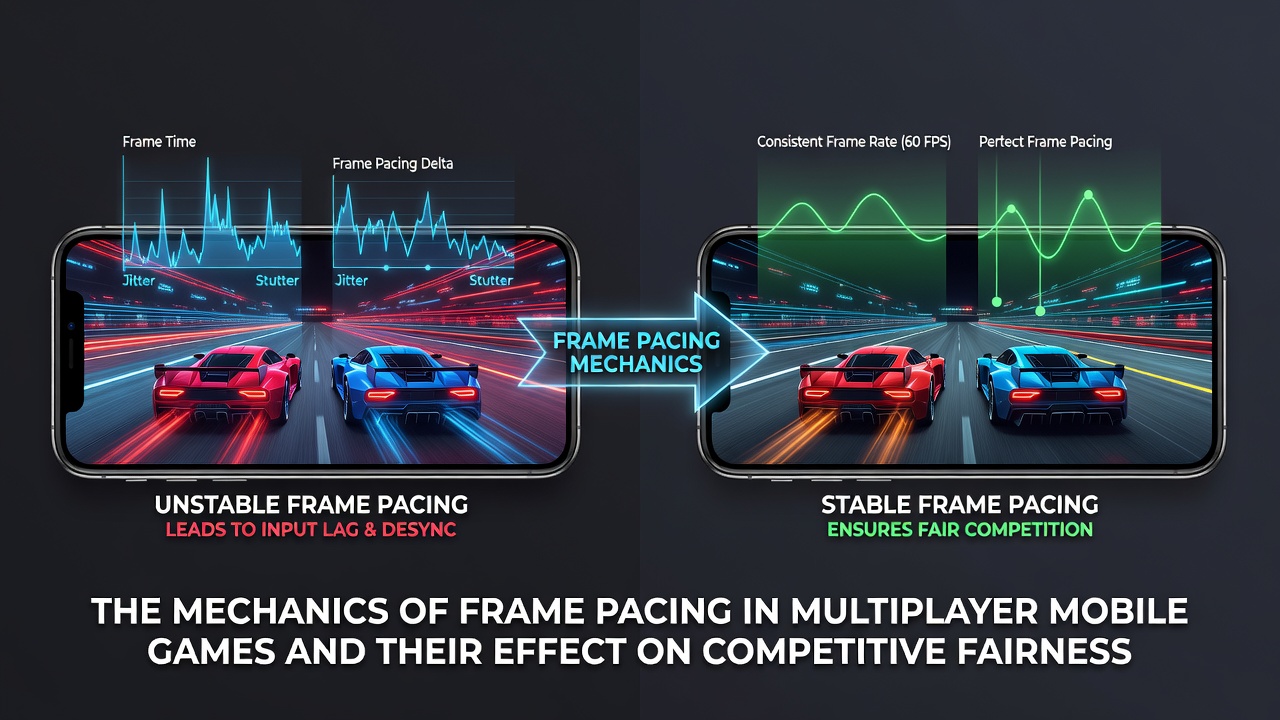
Frame pacing refers to the consistent timing between rendered frames in a game engine, and developers track this metric separately from average frame rates because irregular intervals create perceptible hitches even when overall frames per second remain high. In multiplayer mobile environments the issue compounds because each device processes network packets, physics calculations, and rendering threads under varying thermal and power constraints. Researchers at institutions studying interactive systems note that deviations as small as 4 milliseconds can shift the perceived timing of player actions in fast-paced genres like battle royales and real-time strategy titles.
Core Technical Processes Behind Frame Delivery
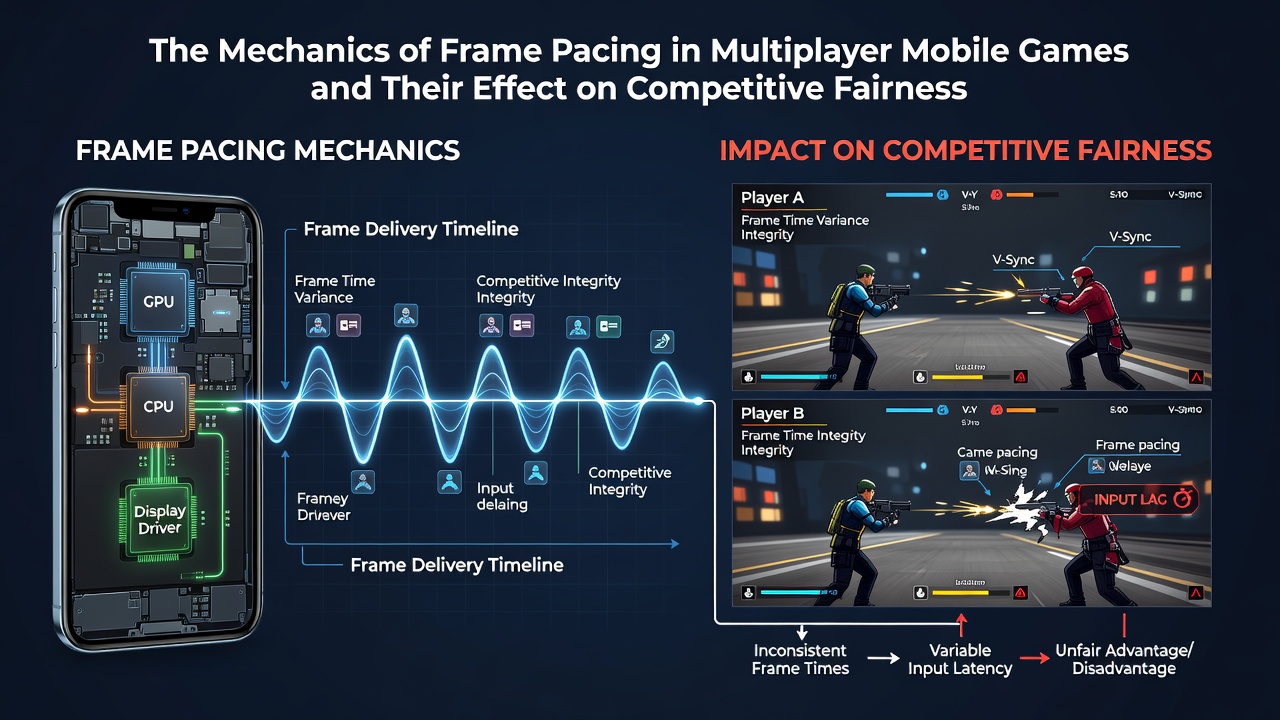
Game engines schedule frames through a main loop that gathers input, updates simulation state, and submits draw calls to the GPU, yet mobile chipsets dynamically adjust clock speeds based on battery levels and temperature readings. When the loop encounters delays from garbage collection or shader compilation the pacing interval stretches, and subsequent frames must compensate by shortening their own windows to maintain average rates. Data from device telemetry collected across thousands of sessions shows that Snapdragon and Dimensity processors exhibit different recovery patterns after these spikes, with some models locking into lower performance states for several seconds afterward.
Network synchronization layers add another variable because client predictions must align with server authoritative states, and any frame that arrives late forces the game to either extrapolate further or snap the view to corrected positions. Observers note that games using lockstep or rollback netcode handle these corrections differently, with rollback implementations sometimes masking pacing problems at the cost of visual artifacts during reconciliation.
Mobile Hardware Constraints and Their Influence
Smartphones operate under strict thermal envelopes compared with dedicated gaming hardware, so sustained workloads trigger frequency scaling that directly affects frame consistency. Battery saver modes further restrict GPU and CPU performance, creating situations where two players on identical device models experience different pacing simply because one has enabled power optimization. Studies tracking session data from August 2026 indicate that mid-range devices released in 2025 showed measurable improvements in sustained pacing after driver updates, yet flagship models still maintained tighter intervals during extended matches.
Screen refresh rates also interact with pacing logic because variable refresh displays attempt to match output to the rendered frame interval, and mismatches produce tearing or duplicated frames. Game developers often tie their simulation timestep to a fixed interval while allowing rendering to run asynchronously, a technique that reduces but does not eliminate visible stutter when the GPU cannot keep up.
Effects on Player Performance and Match Outcomes
Competitive fairness hinges on equal opportunity for reaction and execution, and inconsistent frame pacing alters the window during which players can issue inputs or observe opponent movement. In titles where milliseconds determine whether a shot lands or a dodge succeeds, devices delivering steadier frame intervals effectively grant more predictable response timing. Figures from competitive event organizers reveal that participants using devices with sub-8-millisecond frame time variance recorded higher accuracy metrics in aim-heavy scenarios than those experiencing spikes above 16 milliseconds.
Matchmaking systems rarely account for hardware pacing profiles, so players queue together regardless of device capability. This creates scenarios where one competitor operates under smoother conditions while another contends with periodic hitches that disrupt muscle memory and timing predictions. Industry reports from the Entertainment Software Association document ongoing efforts to standardize performance baselines, yet adoption remains voluntary across studios.
Current Mitigation Approaches and Industry Standards
Engine updates introduced in 2025 incorporated adaptive timestep scaling that detects prolonged frame intervals and temporarily reduces simulation complexity to restore pacing. Mobile-specific optimizations such as asynchronous compute pipelines allow the CPU to prepare the next frame while the GPU finishes the current one, narrowing the gap between target and actual delivery times. Tournament organizers in several regions now require participants to submit device performance logs before events, allowing bracket adjustments based on measured consistency rather than raw hardware specifications.
Research from the Canadian Centre for Digital Media Innovation examined rollback implementations across multiple titles and found that tighter server tick rates combined with client-side frame prediction reduced the visibility of pacing-induced disadvantages. Developers continue testing dynamic resolution scaling that trades visual fidelity for steadier intervals, though results vary by art style and genre demands.
Conclusion
Frame pacing operates as a foundational layer beneath average frame rate metrics, and its consistency directly shapes how inputs translate into on-screen outcomes within mobile multiplayer contexts. Hardware differences, thermal throttling, and network reconciliation all contribute to variance that matchmaking systems have yet to fully normalize. As data collection expands and engine tools mature, measurable improvements in delivery stability continue to appear across device tiers, supporting more uniform competitive conditions without requiring players to upgrade hardware.