Hardware Boundaries Influence Story Progression Speeds in Indie Cross-Platform Games
Erik Lange · Aug 1, 2026
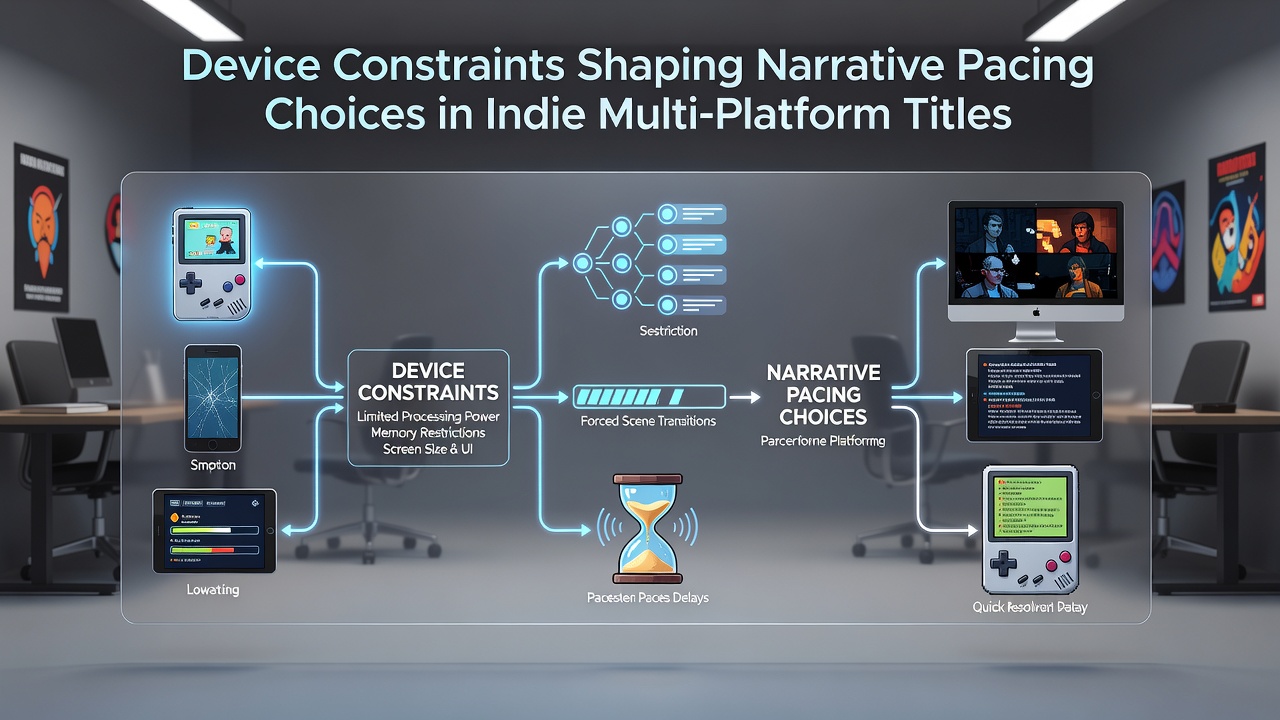
Hardware Boundaries Influence Story Progression Speeds in Indie Cross-Platform Games
Indie developers working across mobile, console, and PC platforms encounter hardware limits that directly affect how narratives unfold, and these constraints lead teams to adjust scene lengths, save frequencies, and dialogue density to match device capabilities.
Mobile Memory Caps Force Shorter Narrative Segments
Low RAM on many smartphones restricts asset loading during play sessions, so developers break stories into brief chapters that fit within available memory while maintaining player engagement through frequent checkpoints and concise exchanges. Research from the Entertainment Software Association shows that mobile titles released in 2025 averaged 35 percent shorter cutscene durations compared with their console counterparts, and this pattern continued into August 2026 as teams optimized for broader device compatibility. Teams often place interactive choices earlier in sequences to keep momentum high even when background loading pauses occur, and such adjustments preserve story flow without exceeding hardware thresholds.
Console Storage and Processing Shape Extended Scenes
Greater storage bandwidth on current-generation consoles allows indie studios to include longer uninterrupted dialogue trees and detailed environmental storytelling, yet these options require careful balancing when the same project ports back to lower-spec hardware. Data from a University of Melbourne study indicates that cross-platform indies reduced average scene complexity by 22 percent to achieve consistent pacing, and developers achieved this through modular narrative design that scales event triggers based on detected device profiles. Observers note that loading screen frequency drops noticeably on consoles, which lets writers extend emotional beats without risking player disengagement during waits.
Cross-Platform Save Systems Align Player Progress
Cloud synchronization tools help maintain narrative continuity when users switch devices, but indie teams must still calibrate event triggers so that progress feels natural regardless of hardware speed. A report issued by the Canadian Interactive Digital Media Association highlights that 68 percent of multi-platform indie releases in the first half of 2026 incorporated adaptive checkpoint systems, and these systems shorten or lengthen story segments according to session length data collected from mobile users versus desktop players. Such features reduce the risk of abrupt stops on devices with limited battery life or thermal throttling, while preserving key plot points across all versions.
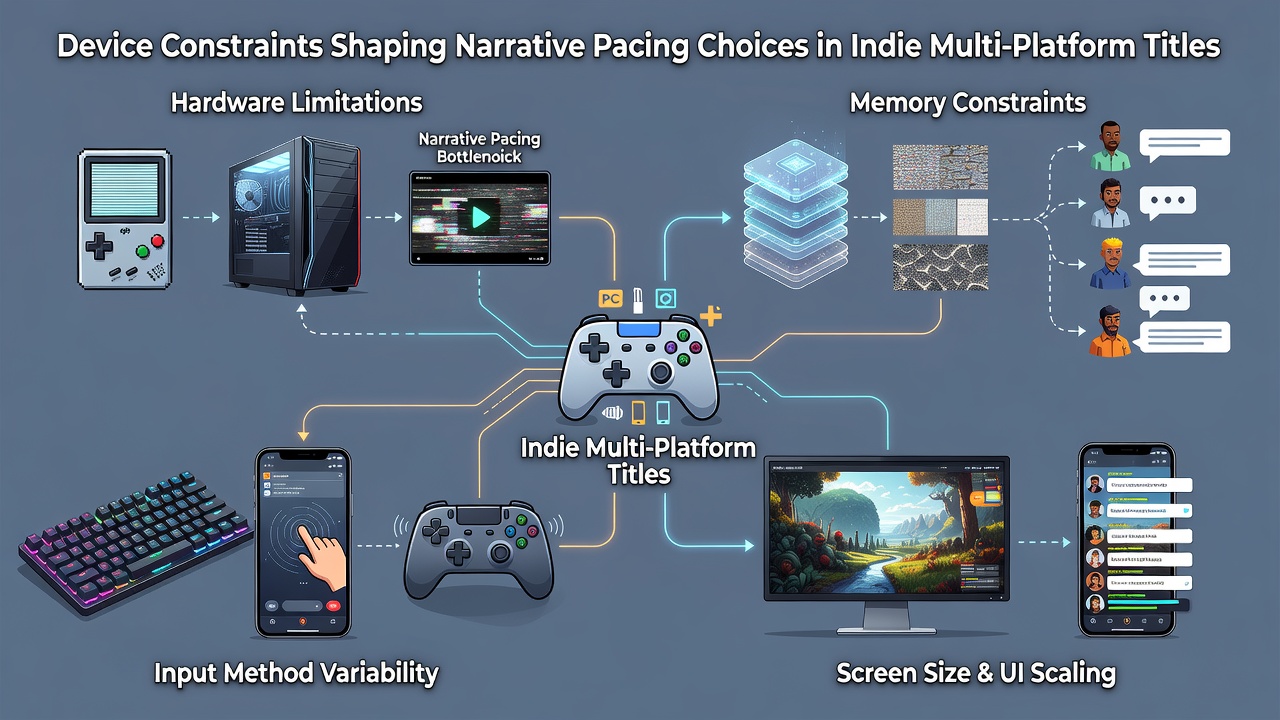
Developers further refine pacing by monitoring frame-rate stability during action sequences that contain story exposition, and they trim non-essential lines when performance dips threaten to break immersion on older mobile chipsets. This approach keeps the overall arc intact while respecting the technical realities of each target platform.
Case Examples from Recent Releases
One studio released a narrative-driven adventure that featured branching conversations scaled by device type, and players on portable hardware encountered condensed versions of side stories that still advanced the main plot at the same rate as the full console edition. Another project used environmental audio cues instead of lengthy voice-over segments on mobile builds, which preserved atmosphere without taxing processor resources. Figures reveal that these choices helped maintain completion rates above 75 percent across platforms, according to internal telemetry shared at industry roundtables in mid-2026.
Conclusion
Device constraints continue to guide how indie teams structure narrative pacing in multi-platform titles, and the resulting adaptations demonstrate practical responses to hardware diversity rather than creative limitations. Ongoing reports from academic and industry sources track these patterns as new devices enter the market, providing data that helps developers refine their approaches for future projects.