Hardware Specifications Drive Shifts in Console Recommendations and Indie Mobile Release Schedules
Erik Lange · Aug 27, 2026
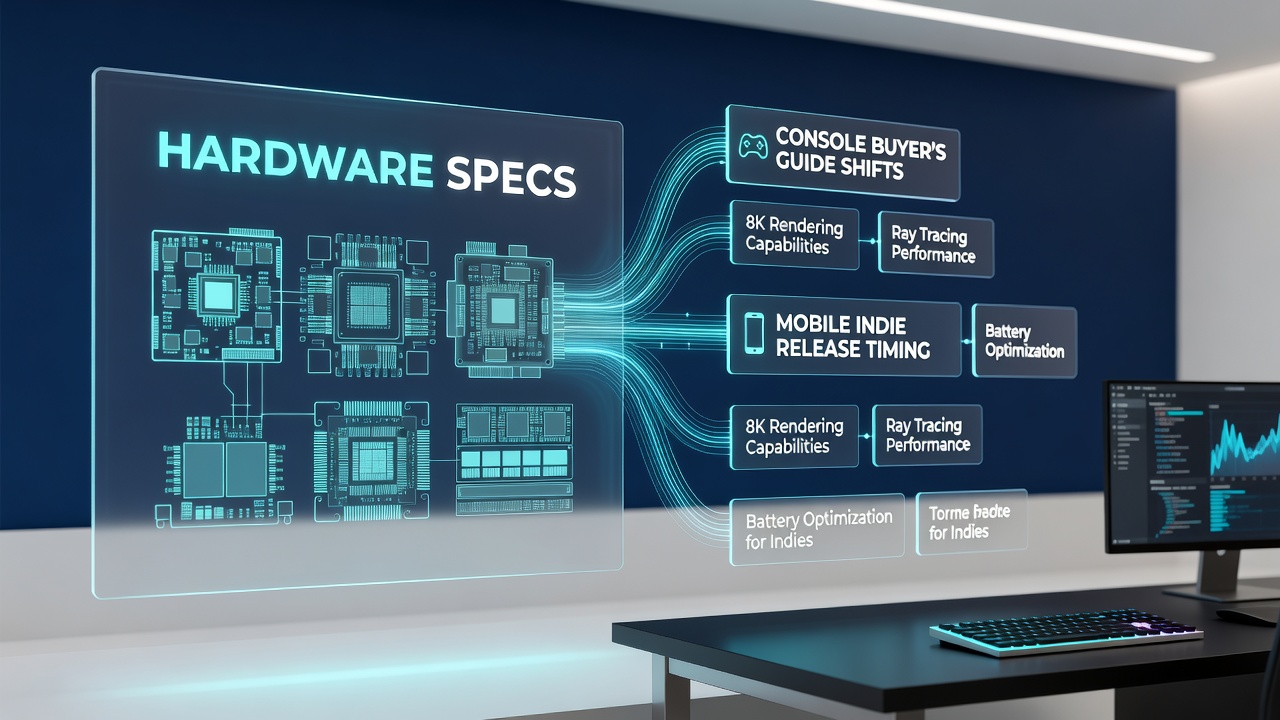
Hardware Specifications Drive Shifts in Console Recommendations and Indie Mobile Release Schedules
Hardware specifications form the foundation for changes in consumer advice on console purchases, while they also influence when independent developers schedule mobile game launches, and industry data from 2025 through August 2026 shows consistent patterns tied to processor speeds, memory capacities, and graphics capabilities across major platforms. Analysts track these elements because they determine which systems appear in updated buyer guides, and they set technical thresholds that mobile studios must meet before pushing titles to market.
Console Hardware Evolution and Buyer Guide Adjustments
Processors and storage options in recent console generations prompted revisions to recommendation lists, as the PlayStation 5 and Xbox Series X introduced solid-state drives with read speeds exceeding 5 GB per second, whereas earlier models relied on mechanical drives that capped performance at lower levels. Research from the Consumer Technology Association indicates that these upgrades shifted advice toward newer hardware for users seeking faster load times, and similar updates appeared in European Union technology assessments that compared cross-platform compatibility. Observers note that memory configurations, such as the 16 GB unified RAM in current systems versus 8 GB in predecessors, directly affect how guides categorize value for different user profiles, while graphics processing units capable of 4K rendering at 60 frames per second now anchor premium recommendations.
Buyer's guides from major retailers incorporated these metrics because they correlate with measurable improvements in frame rates and visual fidelity, and data from multiple market reports show increased emphasis on backward compatibility features that leverage higher bandwidth connections. One study released by a Canadian research institute highlighted how console manufacturers adjusted retail strategies around these specifications, which in turn altered the timing of promotional campaigns that reference updated performance benchmarks. Those who follow hardware cycles recognize that each new architecture release triggers fresh evaluations in consumer resources.
Mobile Chipset Thresholds and Indie Release Windows

Independent studios align mobile game launches with the availability of compatible chipsets because devices equipped with Snapdragon 8 Gen series or equivalent processors from other regions support advanced rendering techniques that earlier hardware could not sustain at stable frame rates. Figures from industry organizations reveal that release clusters often occur after major chipset announcements, such as those in the first half of 2026, when developers gain access to improved neural processing units for features like dynamic lighting and physics simulations. These timing decisions reflect hardware availability rather than arbitrary schedules, and they appear consistently in data tracked by global app distribution platforms.
Memory limits on mobile devices continue to shape development pipelines, as titles requiring more than 6 GB of RAM typically wait for broader adoption of newer handsets before widespread distribution. Australian trade group analyses show that studios monitor adoption rates of devices with expanded storage and faster RAM to avoid performance complaints that could affect initial reception. What's interesting is how these constraints create predictable windows, where releases cluster around periods when mid-range hardware reaches sufficient market penetration to support the intended experience without heavy optimization compromises.
Interconnections Between Console and Mobile Hardware Trends
Cross-platform development tools now incorporate benchmarks from both console and mobile ecosystems, which allows teams to adjust project scopes based on shared technical requirements like ray tracing support or variable refresh rate handling. Research indicates that specifications in one segment often preview capabilities that migrate to the other, and this migration influences when mobile indies finalize builds that mirror console-level fidelity. Observers point to unified development environments that reference hardware roadmaps from multiple manufacturers, creating synchronized planning cycles visible in 2026 release calendars.
Storage and connectivity standards further link these areas because high-speed wireless protocols adopted in consoles enable seamless cloud features that mobile titles later replicate once device radios catch up. Data shows that buyer guides increasingly reference these overlapping capabilities when advising on ecosystem choices, and similar considerations appear in mobile release strategies that account for cross-device progression systems. Those tracking these developments see hardware as the underlying driver that coordinates advice and timing across categories.
Conclusion
Hardware specifications continue to determine the structure of console buyer resources and the cadence of indie mobile releases through measurable performance thresholds and adoption patterns, with evidence from multiple regions confirming these relationships hold steady into August 2026 and beyond. The patterns emerge from concrete technical capabilities rather than external factors, and they guide both consumer information and development timelines in predictable ways.