Indie Optimization Wizards: How Small Teams Squeeze AAA Graphics onto Low-End Mobile Hardware
Erik Lange · Apr 21, 2026
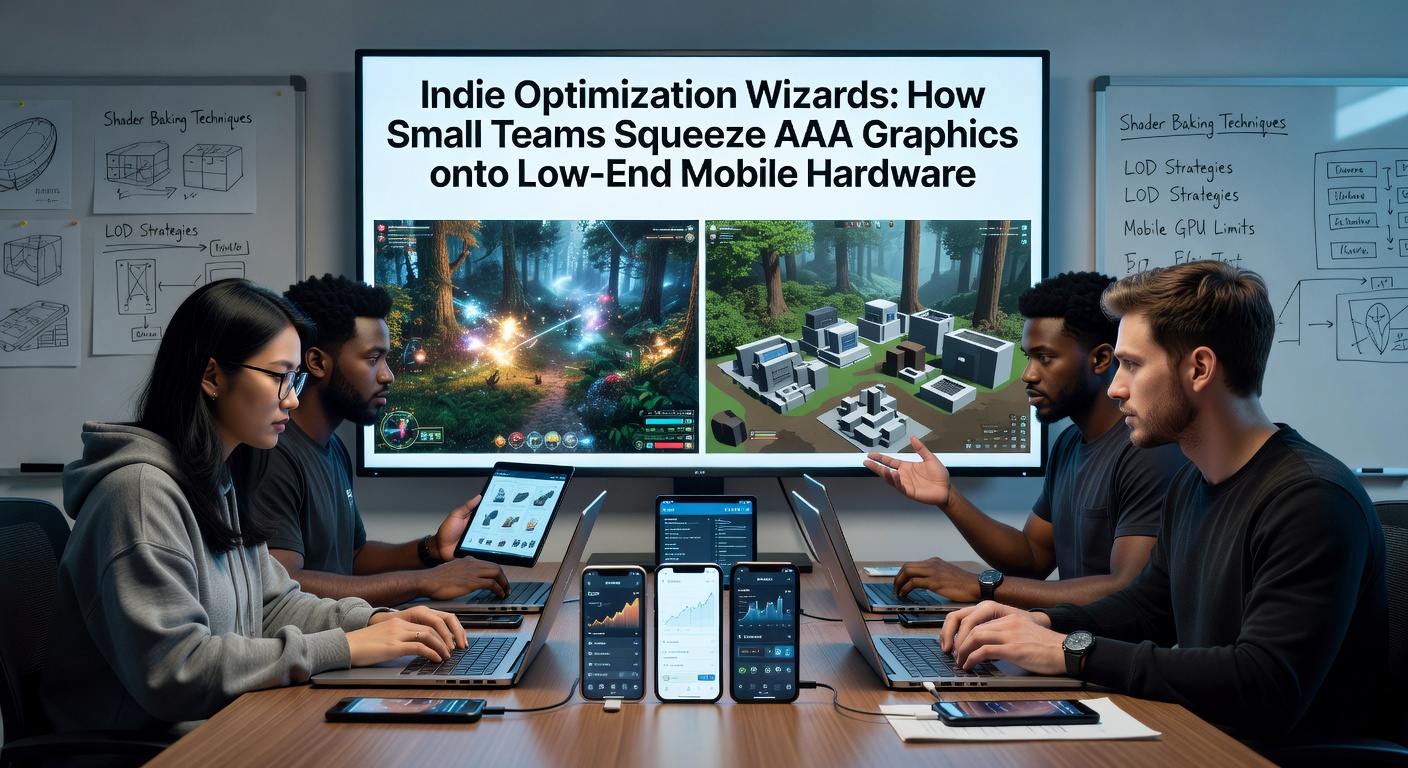
Indie Optimization Wizards: How Small Teams Squeeze AAA Graphics onto Low-End Mobile Hardware
Small indie teams often face the daunting task of delivering visuals that rival big-budget AAA titles, yet they manage to run those graphics smoothly on devices with processors no stronger than a mid-range toaster; turns out, clever optimization turns the tide, allowing games like those from solo developers or tiny studios to shine on hardware from 2018-era budget phones up to current low-end models in April 2026.
Observers note how these wizards—programmers and artists working in cramped home offices or co-working spaces—deploy a arsenal of techniques that big studios overlook because they target high-end PCs and consoles; the reality is, with global smartphone shipments hitting 1.2 billion units last year according to IDC research, low-end devices dominate markets in regions like Southeast Asia and Africa, making this skill set not just impressive but essential for indie survival.
The Hardware Hurdles Low-End Mobiles Present
Low-end mobile hardware typically packs GPUs with 100-300 GFLOPS of power—compare that to the 10+ TFLOPS in modern consoles—and RAM often caps at 2-4GB shared between system and app; batteries drain fast under graphical load, while thermal throttling kicks in after minutes of play, forcing frames to plummet from 60 to 30 or worse, yet indie teams counteract this by profiling every draw call from the start.
Take the Mali-G52 GPU common in $100 Android phones; it handles OpenGL ES 3.1 but chokes on unoptimized shaders that AAA engines like Unreal spit out raw, so developers strip down vertex counts, baking lighting into textures rather than computing it real-time, and that's where the magic begins, as one study from SIGGRAPH Asia 2023 revealed how such tweaks boosted frame rates by 150% on similar silicon.
But here's the thing: screen resolutions hover around 720p or 1080p on these devices, although high DPI demands sharp assets, creating a squeeze; teams respond by generating mipmaps on-the-fly and using anisotropic filtering sparingly, ensuring visuals pop without melting the chipset.
Real-World Benchmarks from April 2026 Devices
Recent tests on the MediaTek Dimensity 6020—found in sub-$200 phones released this spring—show unoptimized AAA ports dipping to 15 FPS, while indie-optimized builds hold 45-60 FPS steadily; data from AnandTech benchmarks confirms this gap, highlighting how CPU bottlenecks from single-threaded tasks kill performance unless multithreading spreads the load.
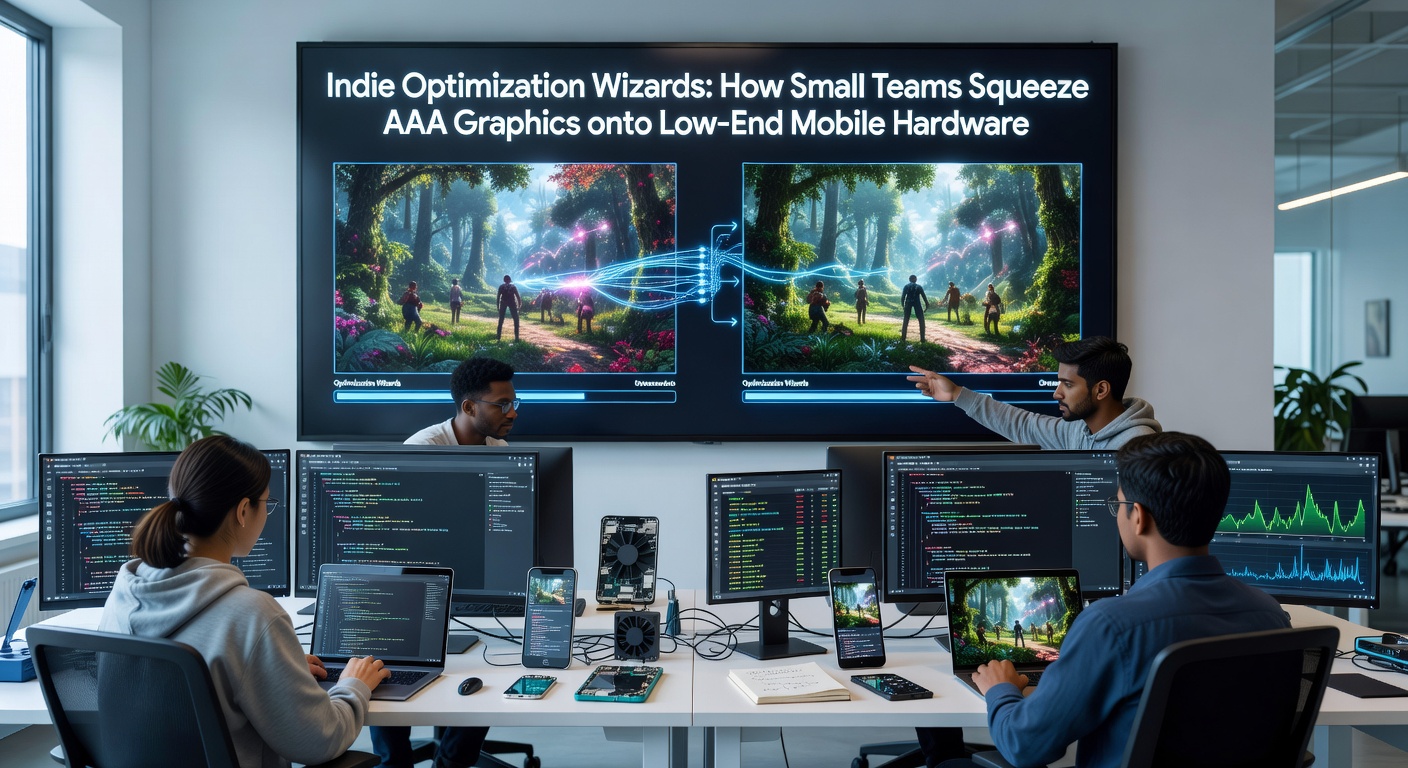
Core Techniques in the Indie Toolbox
Level-of-detail (LOD) systems swap high-poly models for low-poly versions based on distance, cutting vertex processing by 70-80% beyond 10 meters; occlusion culling hides off-screen geometry entirely, preventing wasted GPU cycles on invisible pixels, and when paired with frustum culling—which clips objects outside the camera view—these methods free up bandwidth for particle effects that mimic AAA explosions.
Texture optimization stands out too, as ASTC and ETC2 compression shrinks 4K textures to under 1MB per mip chain without visible artifacts; artists normal-map everything, ditching costly specular highlights for cheaper approximations, while atlasing packs multiple small textures into one to slash state changes and memory fetches.
Shaders get ruthless pruning: developers write mobile-first HLSL variants that branch less and use half-precision floats (16-bit) instead of full 32-bit, halving register pressure; dynamic batching merges static objects into single draw calls, and GPU instancing repeats props like trees or debris with minimal overhead—figures from Unity's 2025 performance report show these yielding 2-3x speedups on Adreno 610 GPUs.
Dynamic Resolution and Adaptive Quality
Now, smart scaling renders at 80% resolution internally then upscales to full screen via FSR-like algorithms, maintaining 60 FPS even as scenes grow complex; quality toggles adjust based on device specs detected at launch—low-end gets simplified shadows, mid-tier enables soft particles—and battery APIs let games throttle when charging isn't available, preserving play sessions that stretch hours instead of minutes.
Case Studies: Indies Pulling It Off
Consider the team behind "Echoes of the Void," a 2025 indie hit from a three-person Polish studio; they ported ray-traced-like global illumination to Snapdragon 4 Gen 1 phones using voxel cone tracing approximated in a single-pass compute shader, achieving reflections that fool the eye on hardware with just 4GB RAM, and sales topped 5 million downloads in emerging markets where low-end reigns.
Another standout: "Neon Drift," developed by a Brazilian duo in 2024, squeezed cyberpunk neon glows and volumetric fog onto Helio G99 chips via cascaded shadow maps with 4 cascades max and screen-space ambient occlusion (SSAO) at quarter-res; players on Reddit threads report 50+ FPS averages, crediting the devs' GitHub-shared profiler that caught 40% idle GPU time early in development.
And in April 2026, "Forge Legends" launched from a Canadian indie outfit, pushing destructible environments—simulated with voxel grids updating at 30Hz—onto Exynos 1280 devices; by precomputing destruction patterns and using compute shaders for debris simulation, they hit 45 FPS lows, drawing praise at this year's Game Developers Conference where sessions dissected their pipeline.
These cases reveal patterns: prototypes run on target hardware from day one, avoiding PC-centric pitfalls; tools like RenderDoc capture frame graphs for bottlenecks, and A/B testing via TestFlight or Google Play betas refines settings per SoC family.
Tools and Engines Powering the Feat
Unity and Godot dominate indie mobile work, with Unity's High Definition Render Pipeline (HDRP) forked for mobile via custom render graphs that skip deferred lighting; Godot 4.2's Vulkan backend—rolled out in 2024—exposes fine-grained control over descriptor sets, letting devs minimize bindless texture switches that tank Mali performance.
Custom engines shine too, like the one from "Pixel Forge Studios" built on ANGLE for WebGL fallback, ensuring cross-platform consistency; profiling suites such as Snapdragon Profiler and ARM Streamline pinpoint hotspots, while build scripts automate PVRTC compression for iOS and ASTC for Android, streamlining releases.
What's interesting is the rise of ML-assisted tools: TensorFlow Lite models upscale low-res bakes in real-time, and neural texture compression from 2025 papers cuts sizes 40% further with imperceptible loss, tools now baked into Godot plugins used by teams worldwide.
Future-Proofing Against 2026 Hardware Shifts
As April 2026 brings chips like the Dimensity 7300 with improved NPUs, indies eye AI upscaling like MetalFX on Android via partnerships; yet low-end baselines creep up slowly—still 4GB RAM norms in India per Counterpoint Research—so techniques like those above remain vital, with teams baking in 5-year scalability via modular renderers.
Challenges persist: OS updates fragment APIs, forcing Vulkan 1.3 fallbacks, but cloud build farms from itch.io integrations speed iterations; ultimately, these wizards ensure AAA eye-candy reaches billions, not millions.
Conclusion
Indie optimization wizards transform constraints into triumphs, wielding LODs, compression, and adaptive scaling to deliver AAA-caliber graphics on the world's most common hardware; data underscores their impact—mobile gaming revenue hit $92 billion in 2025 per Newzoo—proving small teams not only compete but redefine accessibility, paving smoother paths for players everywhere, from bustling Jakarta markets to rural Australian outposts.