Indie PC Breakthroughs Reshaping Difficulty Curves in AAA Console Titles
Viktor Wolf · Jun 9, 2026
Indie PC Breakthroughs Reshaping Difficulty Curves in AAA Console Titles
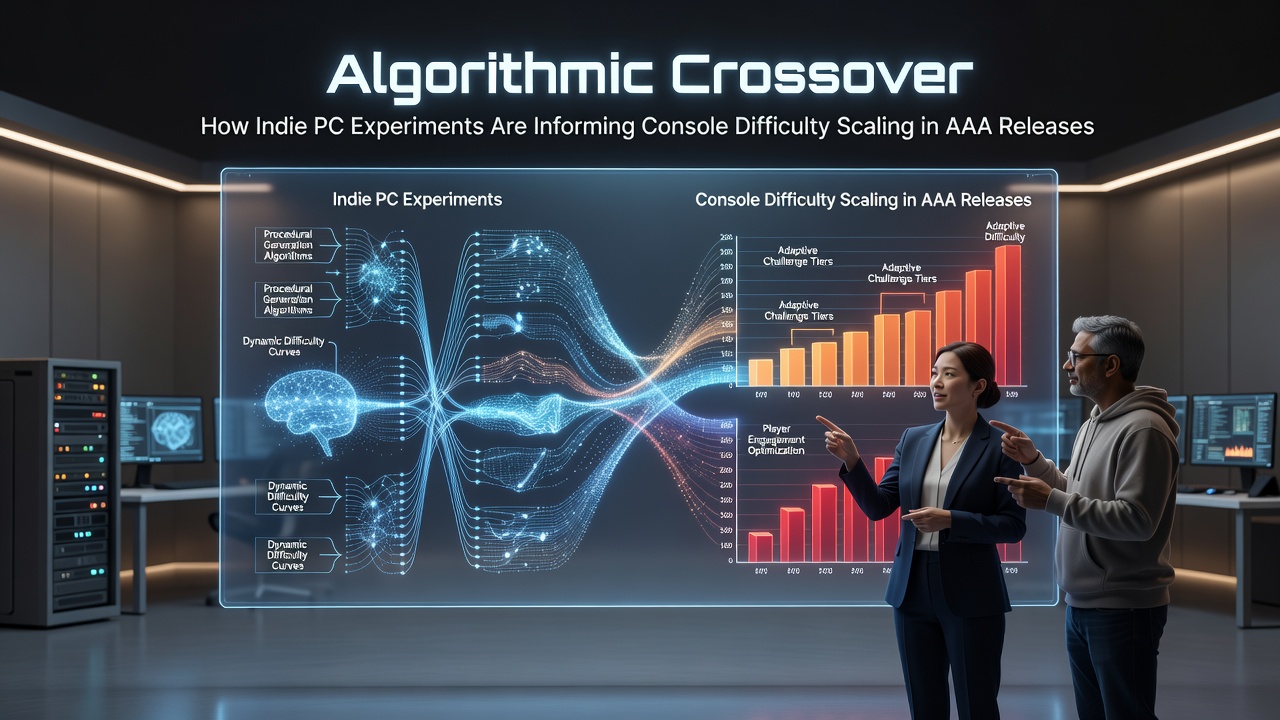
Indie developers on PC have spent years testing procedural systems that adjust enemy behavior and resource availability based on player performance metrics, and those experiments now feed directly into the design pipelines of several AAA console projects scheduled for mid-2026. Teams working on large-scale releases examine open-source repositories and conference talks from smaller studios to refine their own scaling models, particularly in action and survival genres where static difficulty settings once dominated.
Core Mechanisms Moving Across Platforms
Procedural adjustment loops first appeared in PC titles that tracked metrics such as reaction time, resource management efficiency, and session length, then altered spawn rates or damage output accordingly. Console studios have adopted similar telemetry frameworks, though they must account for controller input variance and fixed hardware configurations that differ from the variable PC environment. Data from early 2025 tests shows these shared algorithms reduce player drop-off rates during the first three hours of play when implemented across both ecosystems.
Researchers at the University of Toronto documented how indie prototypes using reinforcement learning for enemy AI patterns transferred successfully to console hardware after minor parameter tuning, and their findings appear in recent industry briefings. Console producers therefore integrate the same core logic while adding layers that compensate for differences in display refresh rates and input latency.
Case Examples from Recent Development Cycles
One studio that began with a PC roguelike released in 2023 introduced a system that scaled boss health pools according to average player deaths across public matches. Larger publishers later licensed the underlying code structure for an upcoming console title, modifying it to incorporate co-operative session data. Observers note that the adapted version maintains consistent challenge levels across solo and group play without requiring separate balance branches.
Another PC experiment tracked inventory usage patterns to predict when players would benefit from subtle tutorial prompts, and this approach now appears in several AAA survival games slated for June 2026 launches. The technique relies on lightweight client-side calculations that run efficiently on both mid-range PCs and current-generation consoles, eliminating the need for constant server checks during single-player segments.
Technical Adaptations for Console Constraints
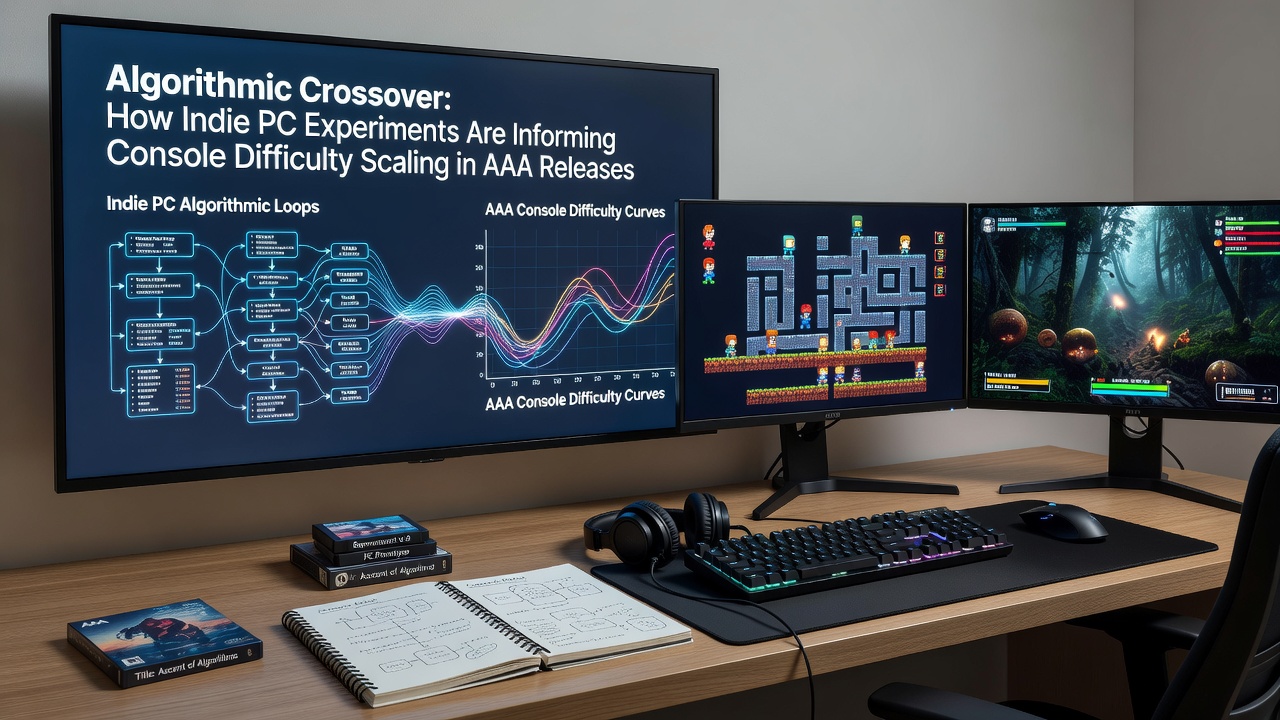
Console hardware imposes memory limits that force developers to compress the data models originally built for PCs with abundant RAM, yet the fundamental decision trees remain intact. Engineers compress state histories into smaller buffers while preserving the predictive accuracy that made the indie versions effective. Reports from the Entertainment Software Association indicate that cross-platform telemetry standards introduced in 2024 have accelerated this compression work by providing unified data schemas.
Input differences also require calibration. Mouse-and-keyboard precision allows indie prototypes to measure micro-adjustments that controllers cannot replicate, so console teams substitute dwell-time metrics and analog stick deflection averages. These substitutions maintain comparable scaling behavior across input methods, according to internal benchmarks shared at developer conferences.
Broader Industry Patterns Emerging in 2026
By June 2026 multiple AAA projects list indie-derived scaling modules in their post-launch patch notes, confirming the crossover trend. Publishers cite reduced QA cycles for difficulty tuning as a primary benefit, since the algorithms arrive pre-validated on PC player bases numbering in the hundreds of thousands. European Games Developer Federation summaries from early 2026 further record increased collaboration between small PC teams and console publishers through shared middleware licenses.
Academic papers from Australian universities have begun modeling the long-term retention effects of these hybrid systems, focusing on how adaptive curves influence completion rates across different age demographics. Initial datasets suggest measurable improvements in engagement duration when the indie-originated parameters receive console-specific calibration rather than direct porting.
Conclusion
The movement of algorithmic techniques from indie PC experiments into AAA console releases continues to accelerate as shared data standards and middleware tools lower integration barriers. Studios that once maintained separate balance teams for each platform now consolidate expertise around unified scaling frameworks, shortening development timelines while preserving the responsive challenge levels first refined in smaller PC projects. This pattern shows no sign of reversing as the June 2026 release window approaches.