Inside the Specs: How Console Hardware Dictates Indie Game Boundaries
Erik Lange · Aug 11, 2026
Inside the Specs: How Console Hardware Dictates Indie Game Boundaries
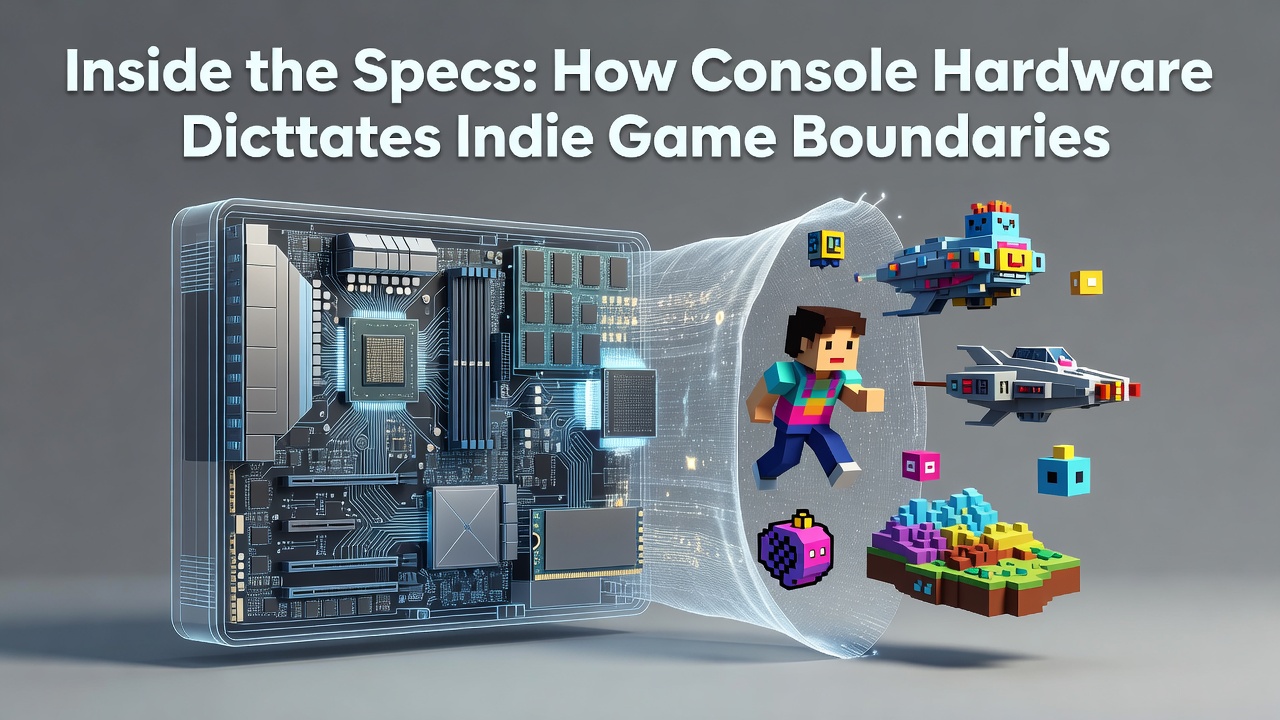
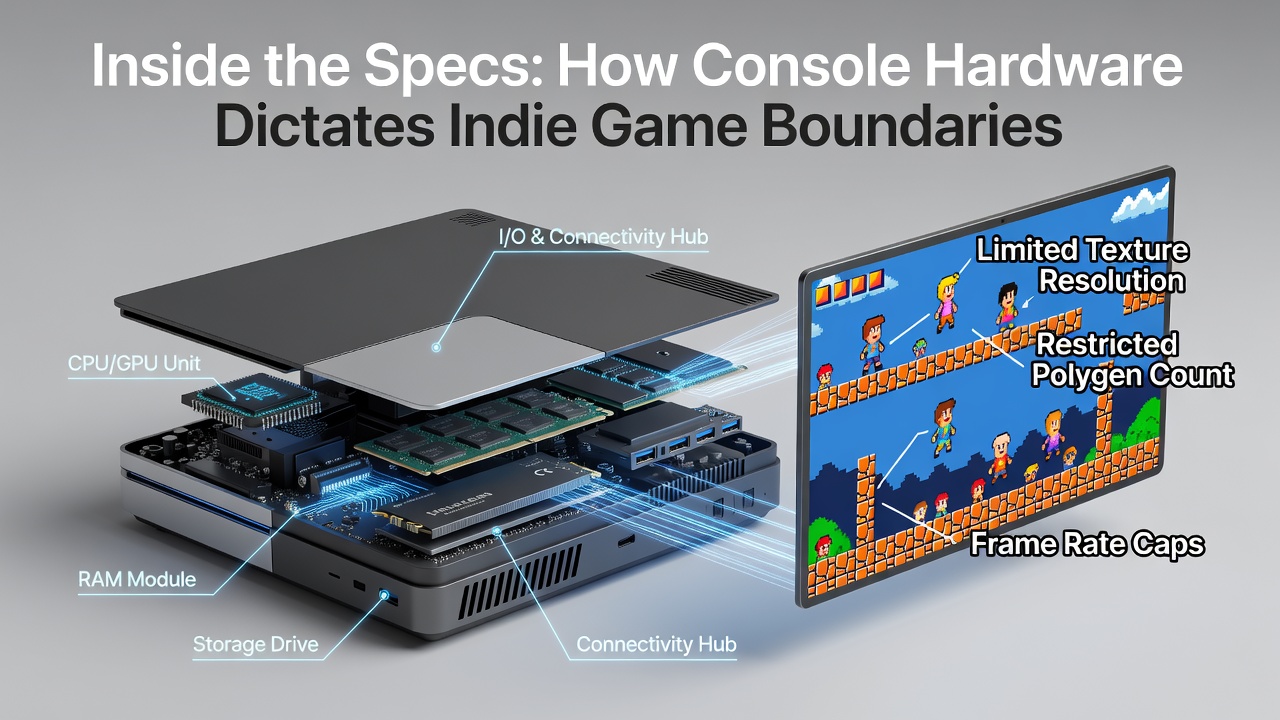
Console hardware specifications establish clear parameters for indie developers who target platforms like PlayStation 5, Xbox Series X, and Nintendo Switch, because memory pools, processor cores, and graphics units impose direct limits on asset complexity, simulation depth, and rendering techniques that teams must accommodate from the earliest design stages.
Core Hardware Limits Shape Project Scope
Indie studios frequently begin projects by mapping their creative goals against the fixed resources available on each console generation, and data from industry reports shows that RAM allocation often determines whether a game can support large open worlds or must rely on smaller, segmented environments instead. Researchers at the Entertainment Software Association have documented how developers adjust scope once they encounter the 16GB unified memory on current-generation machines, while earlier generations forced even tighter choices around texture resolution and particle effects. Those constraints push teams toward procedural generation systems or stylized art styles that reduce polygon counts without sacrificing visual impact, and the same pattern repeats across multiple release cycles.
Processing Power and Simulation Trade-offs
CPU and GPU clock speeds further narrow the range of mechanics that fit comfortably inside indie budgets, because real-time physics calculations or AI pathfinding routines consume cycles that might otherwise support additional gameplay systems. Studies from the Interactive Games and Entertainment Association in Australia reveal that developers routinely scale back enemy counts or simplify collision detection when targeting the Switch's lower thermal envelope, while the same project can expand those features on higher-end consoles through platform-specific builds. Observers note that these adjustments happen early in pre-production, and the resulting design decisions carry through to final versions that ship on multiple devices simultaneously.
Texture streaming and draw call budgets create additional friction points that indie teams address through custom middleware or asset optimization pipelines, and figures from cross-platform projects indicate that games built around dense foliage or intricate character models often require significant rework when ported from PC prototypes to consoles. The reality is that each hardware revision brings incremental gains, yet the fundamental boundaries remain predictable enough that experienced developers plan around them rather than fight them after the fact.
Memory Configurations and Cross-Platform Strategies
Unified memory architectures on modern consoles allow indie developers to move data between CPU and GPU without explicit copies, yet the total pool still caps the number of simultaneous systems that can remain active, according to technical breakdowns published by the European Games Developer Federation. Teams therefore prioritize which elements receive the largest allocations, and this hierarchy directly influences whether a title emphasizes narrative delivery, combat depth, or environmental interaction. One studio that shifted from high-resolution character models to lower-detail versions with enhanced animation trees discovered measurable improvements in frame stability across target platforms, and similar trade-offs appear consistently in post-mortem reports shared at industry conferences.
Storage bandwidth and load times add another layer of constraints, because indie games that rely on seamless world transitions must compress assets aggressively or preload sections in the background, and the 2026 mid-cycle hardware updates have not eliminated these pressures entirely. Developers working on August 2026 titles continue to test against the same baseline requirements that governed earlier releases, while adding quality-of-life improvements that fit within existing limits rather than exceeding them.
Art Direction and Technical Compromises
Stylized visuals often emerge as a direct response to hardware ceilings, and multiple successful indie releases demonstrate how limited polygon budgets encourage creative direction that stands out from photorealistic AAA productions. Research compiled by Canadian academic groups tracking game technology shows that teams using cel-shading or low-poly aesthetics achieve higher frame rates while maintaining artistic coherence, and these choices also reduce the time spent on optimization passes later in development. The pattern holds across genres, from platformers to narrative adventures, because the underlying resource equation remains consistent regardless of thematic focus.
Conclusion
Console hardware specifications continue to define the practical boundaries for indie game development through measurable limits on memory, processing, and storage that influence every stage from concept to release. Developers respond by adapting scope, art direction, and technical systems to fit those parameters, and the resulting projects demonstrate how hardware realities shape creative output across the industry. Data from multiple regional sources confirms that these dynamics remain stable even as new hardware iterations arrive, and future projects will likely follow the same established patterns of constraint-driven innovation.