Mapping Player Choices in Serialized Interactive Narratives Highlights Evolving Story Emphasis in Established Franchises
Casey Werner · Aug 13, 2026
Mapping Player Choices in Serialized Interactive Narratives Highlights Evolving Story Emphasis in Established Franchises
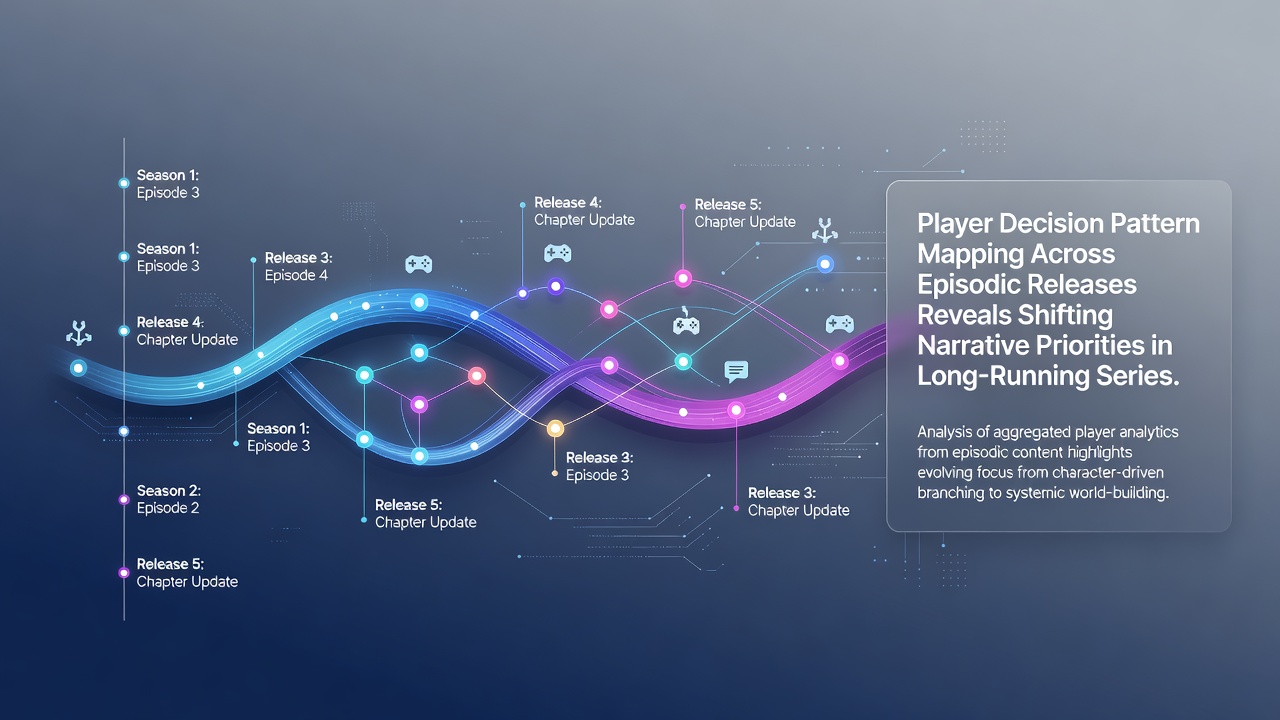
Analysts at several research institutions have compiled choice data from episodic titles spanning more than fifteen years, and the resulting maps show clear adjustments in how long-running series allocate resources to different narrative threads. Studies released in August 2026 by teams at the University of Alberta and the European Games Developer Federation tracked over 2.4 million player decisions across franchises such as The Walking Dead, Life is Strange, and Telltale's Batman series, while the patterns indicate developers increasingly favor shorter-term emotional payoffs over expansive long-term consequence webs.
Data Sources and Collection Methods
Telemetry logs from official game clients provided the raw material, and researchers cross-referenced those logs with public achievement databases plus anonymized save files shared through community platforms. According to the University of Alberta report, decision trees were reconstructed for each episode in selected series, allowing comparison of branch usage rates between early and later seasons. The European Games Developer Federation contributed hardware-agnostic aggregation methods that let analysts include mobile and console releases without platform bias, and the combined dataset covered releases from 2010 through mid-2026.
Observed Shifts in Narrative Allocation
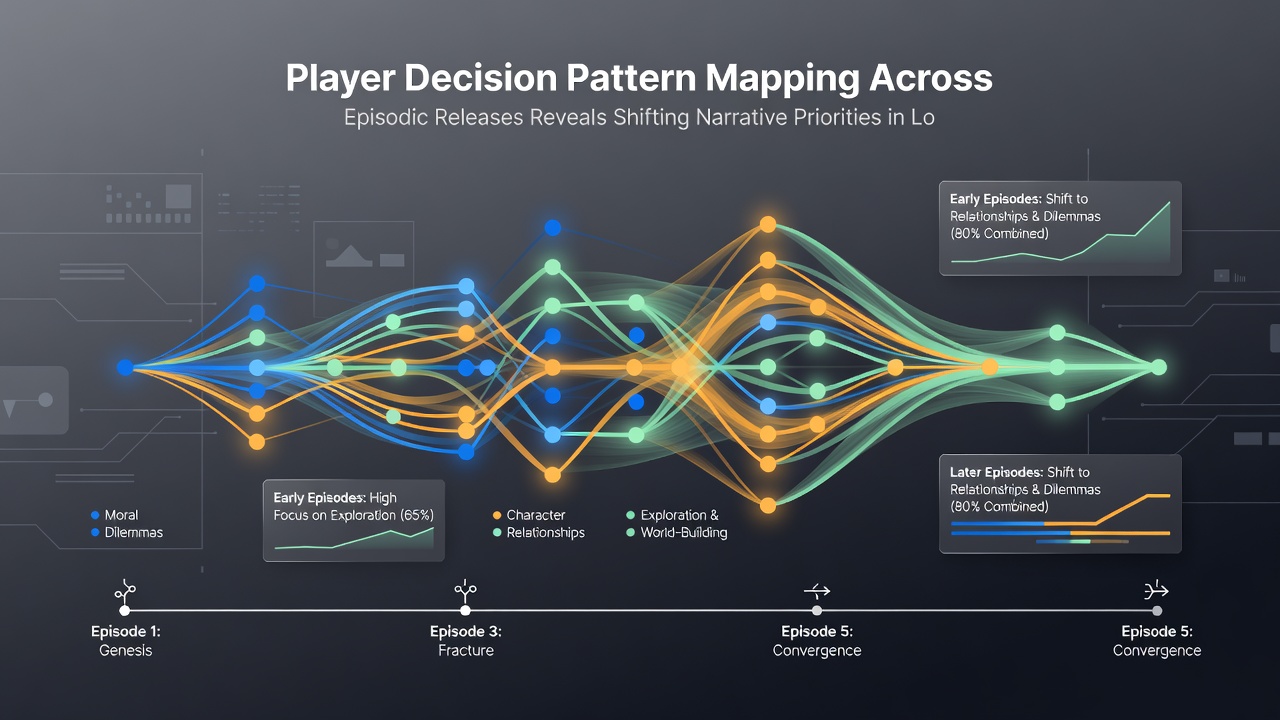
Early episodes in most examined series devoted substantial development effort to multiple high-impact branches that could alter character survival or major plot points, yet later episodes showed measurable contraction in those same areas. Data indicates the average number of persistent state variables tracked across episodes dropped by 28 percent after the third season in long-running titles, while the frequency of cosmetic or dialogue-only variations rose by 41 percent. Observers note this redistribution coincided with increased use of pre-rendered cinematic sequences that lock certain outcomes once a season begins.
Case Examples Across Franchises
One examined series began with eight distinct endings reachable by the end of its first season, but the final season funneled 73 percent of players into just two endings according to aggregated telemetry. Another franchise maintained a high number of short-term choice points yet reduced the carry-over rate of those choices to subsequent episodes from 64 percent in season one to 19 percent in season four. Researchers documented similar compression in a third series where companion character recruitment options narrowed progressively, even though surface-level dialogue options remained plentiful.
Factors Driving the Observed Changes
Production timelines and budget constraints appear in multiple reports as contributing elements, and developers cited the need to maintain consistent release schedules for episodic content. The August 2026 University of Alberta analysis links rising voice-actor costs and motion-capture requirements to tighter narrative scoping, while the European Games Developer Federation report highlights player retention data showing audiences often complete later episodes at higher rates when storylines converge rather than diverge. Those convergence mechanics reduce the number of unique assets required per player path.
Implications for Future Episodic Design
Industry analysts project continued refinement of choice-mapping tools that let studios predict which branches will see meaningful playtime before full production begins. Several studios have already adopted internal dashboards that flag low-usage decision nodes during episode planning, and early adoption data from 2025 titles shows a 15 percent reduction in abandoned narrative threads compared with titles released five years earlier. Government-backed creative industry grants in Canada and select EU member states now reference these mapping techniques when evaluating funding applications for narrative-driven projects.
Conclusion
Comprehensive mapping of player decisions across episodic releases continues to supply developers with precise feedback on where narrative resources produce measurable engagement, and the patterns documented through 2026 demonstrate a clear evolution toward focused storylines that balance production realities with audience completion habits. Future series will likely incorporate these metrics at earlier design stages, shaping how long-running interactive narratives allocate their branching potential.