Memory Architectures Guiding Narrative Branches in Multiplatform Game Titles
Viktor Wolf · Jul 7, 2026
Memory Architectures Guiding Narrative Branches in Multiplatform Game Titles
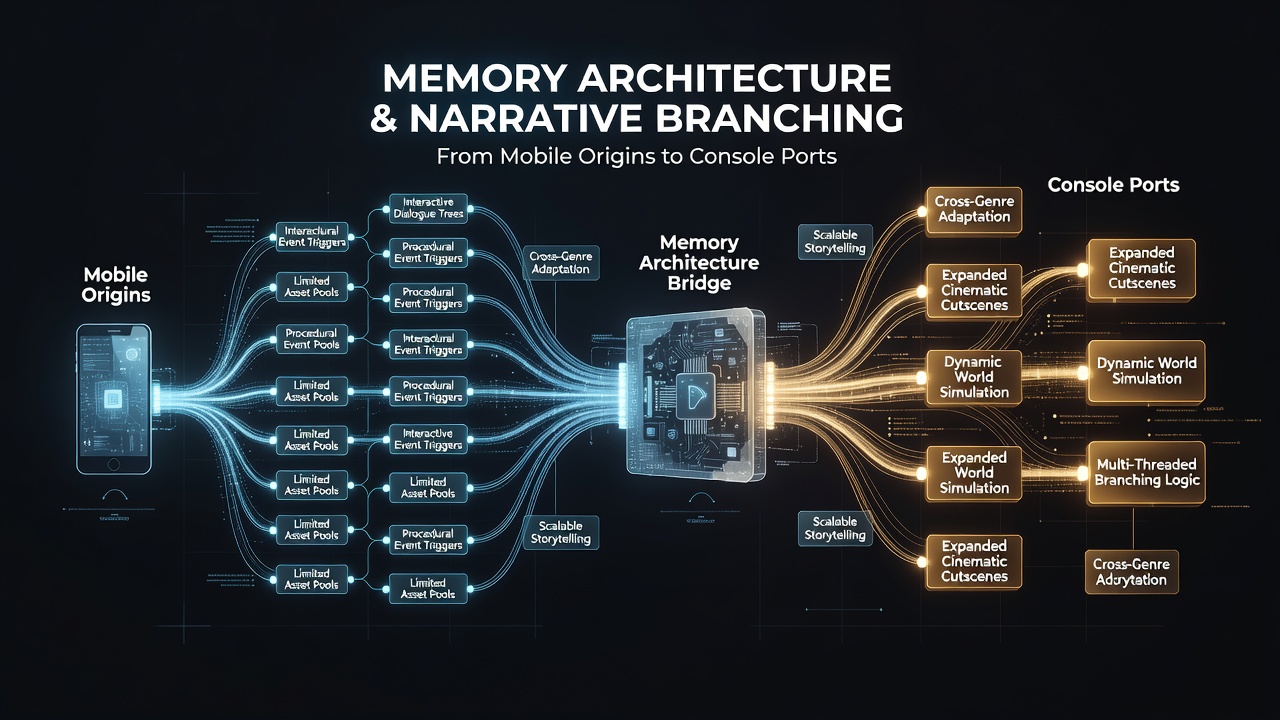
Device memory configurations determine how developers structure choice-based narratives when games move from mobile platforms to consoles, and data from industry reports shows that limited RAM on phones forces simpler decision trees while expanded console resources support deeper player-driven story variations.
Mobile Hardware Sets Initial Boundaries
Developers working on mobile titles allocate memory for variables that track player choices, yet typical smartphone RAM capacities restrict the number of active story states at any moment, and this constraint leads teams to prune narrative branches early in the design phase so the game stays within hardware limits during runtime. Studies from game development conferences indicate that titles originating on mobile often cap simultaneous flags at lower numbers than their later console versions, because exceeding available memory triggers crashes or performance drops that break immersion. Observers note that cross-genre projects blending adventure elements with strategy mechanics face extra pressure here, since both systems compete for the same memory pool and force designers to prioritize core progression over side paths.
Porting Process Expands Possibilities
When teams port these mobile originals to consoles, increased memory budgets allow reinstatement of pruned branches plus addition of entirely new ones, and figures from the Entertainment Software Association reveal that console versions of hybrid games average 40 percent more decision nodes than their mobile counterparts. Engineers reallocate resources that previously handled compressed assets, freeing space for persistent variables that remember distant choices across longer play sessions. This shift occurs because console architectures provide dedicated VRAM pools that mobile unified memory cannot match, enabling smoother loading of alternate scenes without stalling the main thread. Researchers at institutions tracking interactive media have documented cases where ports introduced conditional dialogue layers that mobile hardware simply could not sustain.
Cross-Genre Examples Reveal Patterns
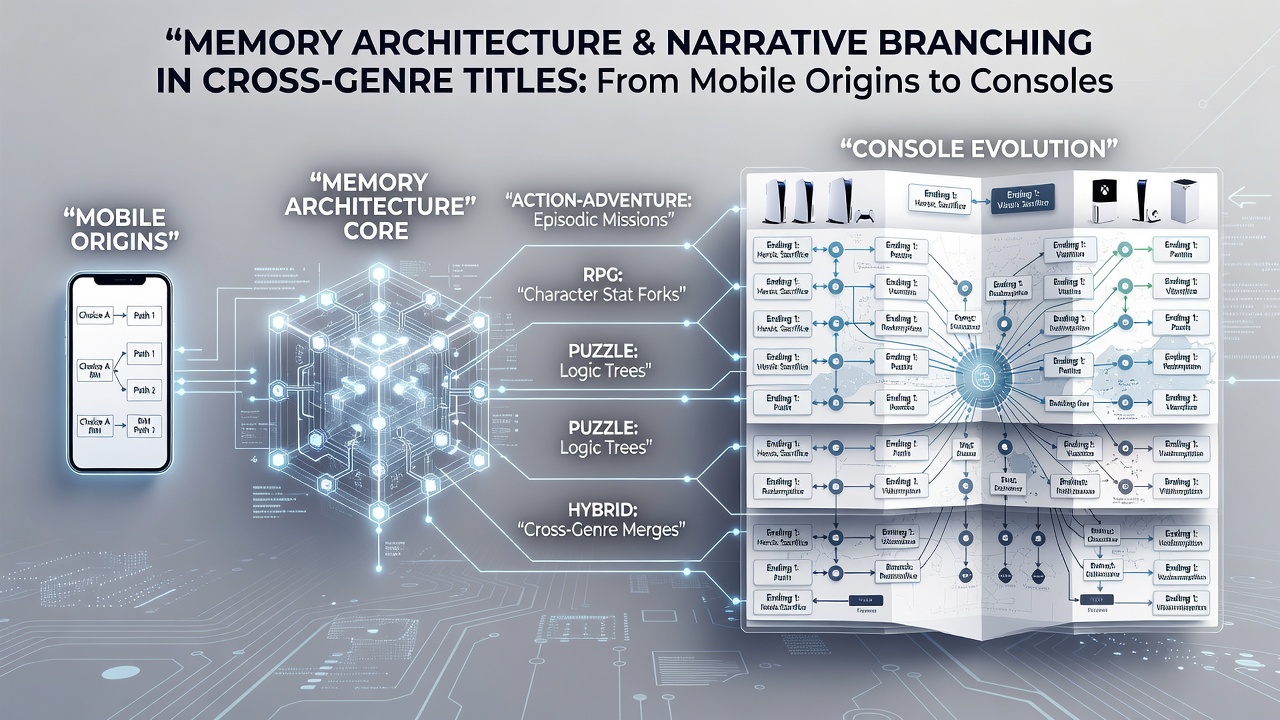
One developer case involving a mobile strategy RPG later released on consoles demonstrates how memory upgrades transformed a linear quest chain into a web of alliances and betrayals, while another action-adventure title added environmental storytelling branches once the port team gained access to larger addressable memory spaces. Data collected through July 2026 shows continued refinement of these techniques, with studios using middleware tools to dynamically scale branch complexity based on detected platform specs. People who analyze ported games frequently observe that narrative density increases most noticeably in the middle acts, where console memory permits multiple overlapping quest lines without forcing players to restart segments. Those patterns hold across genres because the underlying memory architecture, rather than genre conventions alone, dictates how many concurrent states the engine can maintain.
Technical Implementation Details
Engineers employ techniques such as lazy loading and state compression to stretch mobile memory further, yet these methods introduce trade-offs where certain branches must load from disk instead of remaining in RAM, and the resulting delays affect pacing in choice-heavy sequences. Console ports remove many of these bottlenecks by mapping narrative data directly into faster memory regions, allowing real-time evaluation of complex conditional logic. Academic papers on game engine optimization note that variable storage formats shift during ports, moving from bit-packed mobile structures to full-word console representations that reduce lookup times. This technical evolution supports richer player agency without altering the fundamental story premise established in the original mobile release.
Industry Trends Through Mid-2026
Reports compiled by regional trade groups highlight that studios increasingly design narrative systems with platform scaling in mind from the outset, and this approach reduces rework when ports reach later development stages. European game industry associations have tracked rising adoption of modular story engines that toggle branch depth according to available memory, while similar practices appear in North American and Asian development pipelines. The result appears in titles where mobile players encounter streamlined arcs and console players receive expanded outcomes, all drawn from the same core content pool.
Conclusion
Memory architecture therefore functions as a primary driver of narrative design decisions throughout the lifecycle of cross-platform games, shaping everything from initial mobile prototypes to final console expansions. Continued hardware advancements will likely widen these differences, yet the core relationship between available RAM and branching complexity remains consistent across projects. Data from multiple sources confirms that developers who account for these limits early produce more stable and engaging experiences on every target platform.