Performance Tradeoffs in Porting Console Mechanics to Touchscreen Interfaces for Indie Studios
Carlo Peters · Jul 28, 2026
Performance Tradeoffs in Porting Console Mechanics to Touchscreen Interfaces for Indie Studios
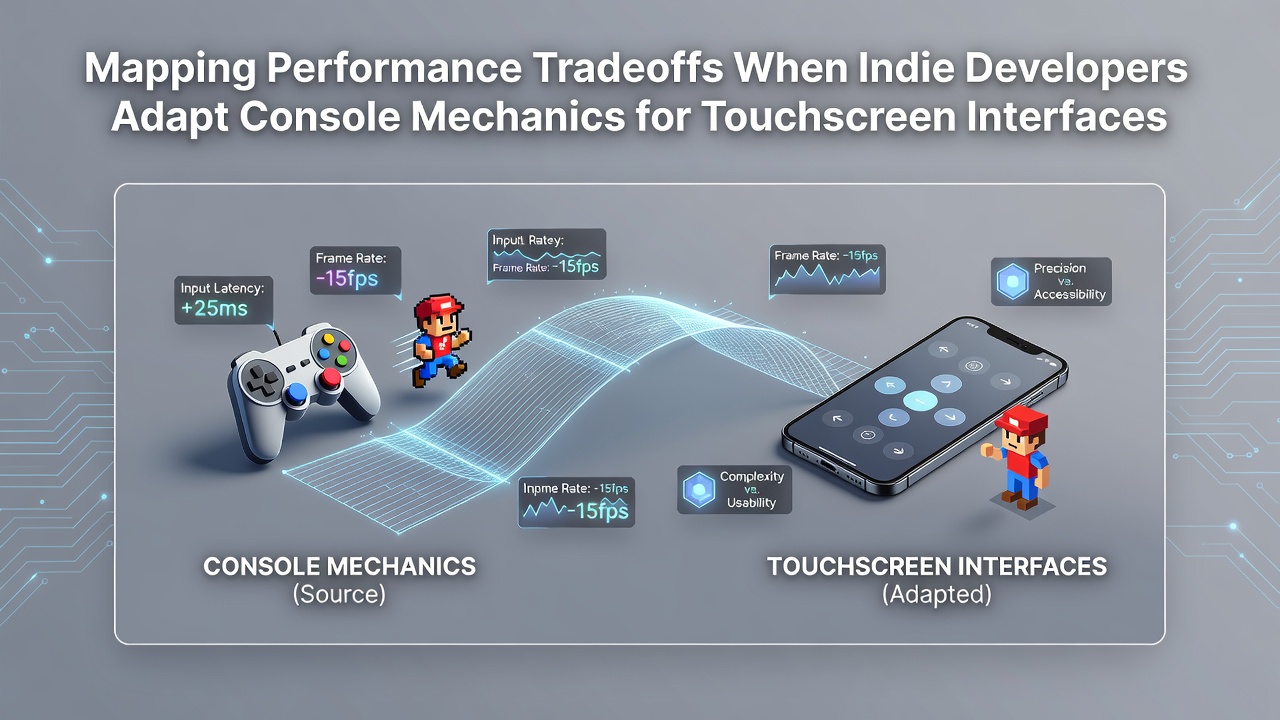
Indie developers encounter distinct performance challenges when they translate console control schemes into touchscreen equivalents, and these adjustments often require careful balancing of input systems against hardware constraints on mobile devices. Research from the Entertainment Software Association indicates that porting projects in 2025 frequently involved redesigning analog stick movements into swipe gestures or virtual pads, which introduced measurable increases in CPU overhead during real-time processing.
Core Mechanics and Initial Adaptation Steps
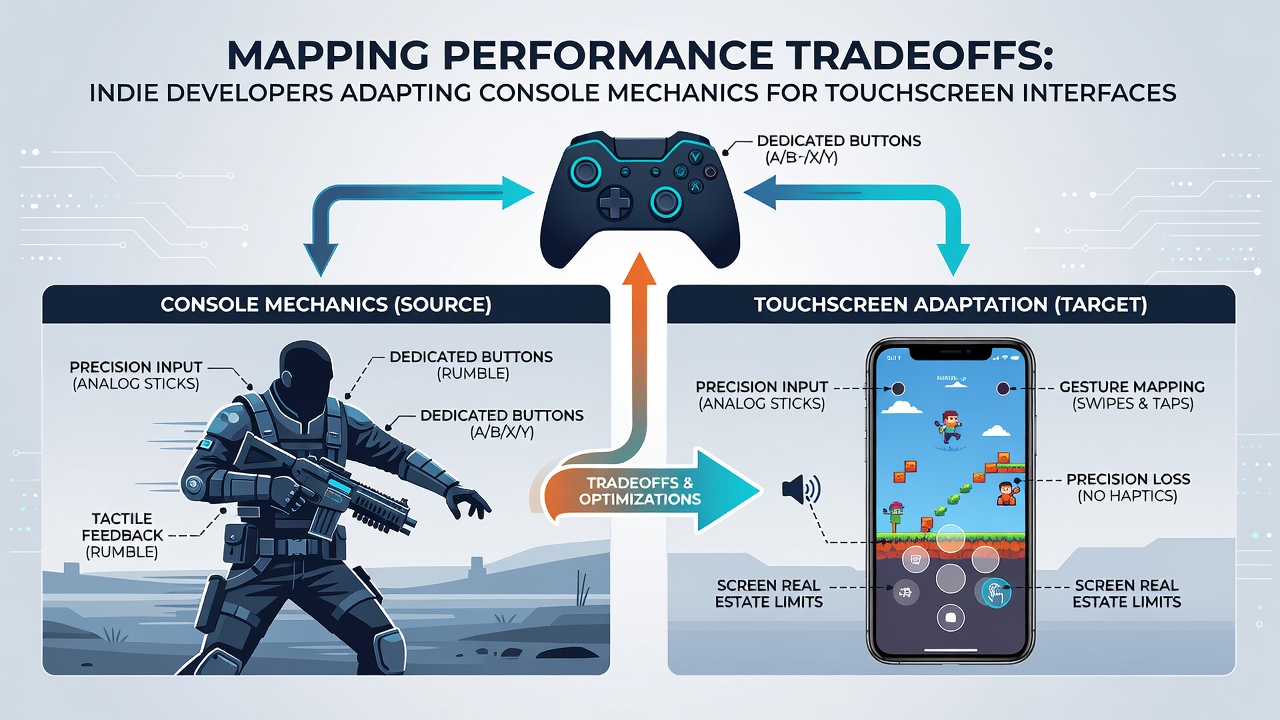
Console mechanics such as precise aiming, rapid button combinations, and analog movement mapping demand equivalent functions on touchscreens, yet developers must account for variable touch sampling rates that differ from fixed controller polling intervals. Data from cross-platform studies show that these conversions can elevate memory usage by 15 to 25 percent when virtual overlays render alongside game logic, and smaller teams without dedicated optimization staff encounter longer iteration cycles as a result.
Teams working on action titles commonly replace shoulder button triggers with edge-tap zones, and this shift alters how collision detection routines execute because touch events arrive through different API pathways than gamepad signals. Observers note that frame time spikes occur during simultaneous multi-touch inputs, especially when particle effects or physics simulations run in parallel.
Measured Impacts on Processing and Battery Life
Performance metrics collected across multiple indie releases reveal consistent patterns where touchscreen adaptations consume additional GPU cycles for rendering translucent control overlays, and this overhead compounds when dynamic resolution scaling activates under load. According to findings presented at the 2026 Game Developers Conference in July, battery drain rates rose between 12 and 18 percent on mid-range Android devices compared with their console counterparts after such ports.
Indie studios often implement gesture recognition libraries that analyze finger velocity and pressure, yet these calculations compete with core game loops for processing time. Figures from university-led mobile gaming reports demonstrate that latency between touch registration and on-screen response averages 35 milliseconds higher than wired controller input, prompting further code adjustments to maintain perceived responsiveness.
Optimization Strategies and Platform Differences
Developers apply techniques such as pooling touch event handlers and reducing overlay polygon counts to reclaim cycles, while platform-specific tools from Apple and Google allow selective disabling of certain accessibility features that otherwise interfere with custom input layers. European research institutions have documented that iOS builds sometimes exhibit lower variance in input timing than equivalent Android implementations because of tighter hardware integration, although both require separate tuning passes.
Case examples include one studio that reduced virtual button transparency and achieved a 9 percent drop in average frame times across test devices, and another that offloaded gesture prediction to background threads to stabilize 60 FPS targets during combat sequences. Such modifications illustrate how input remapping decisions directly influence overall resource allocation.
Broader Industry Patterns in 2026
Industry organizations tracking mobile development trends report that indie teams increasingly rely on middleware solutions to abstract touch versus controller differences, although these libraries still require manual calibration to avoid redundant draw calls. Data compiled through mid-2026 shows growth in hybrid input support across new releases, driven by expanding tablet markets in regions outside North America.
Academic analyses of porting pipelines highlight that early profiling of input subsystems prevents downstream bottlenecks, and teams that integrate performance budgets during the design phase encounter fewer post-launch patches related to control responsiveness. These patterns continue to shape how independent developers allocate limited engineering time between feature completeness and runtime efficiency.
Conclusion
Mapping console mechanics onto touchscreen interfaces creates measurable tradeoffs in processing load, input latency, and power consumption that indie developers must navigate through targeted code changes and platform-aware testing. Evidence from multiple sources confirms that successful adaptations depend on iterative measurement rather than one-time conversions, and ongoing platform updates will likely introduce new variables for teams to address in future projects.