Portable Semiconductor Progress Expanding Indie Studio Capabilities Across Device Ecosystems
Theo Walter · Jun 6, 2026

Portable Semiconductor Progress Expanding Indie Studio Capabilities Across Device Ecosystems
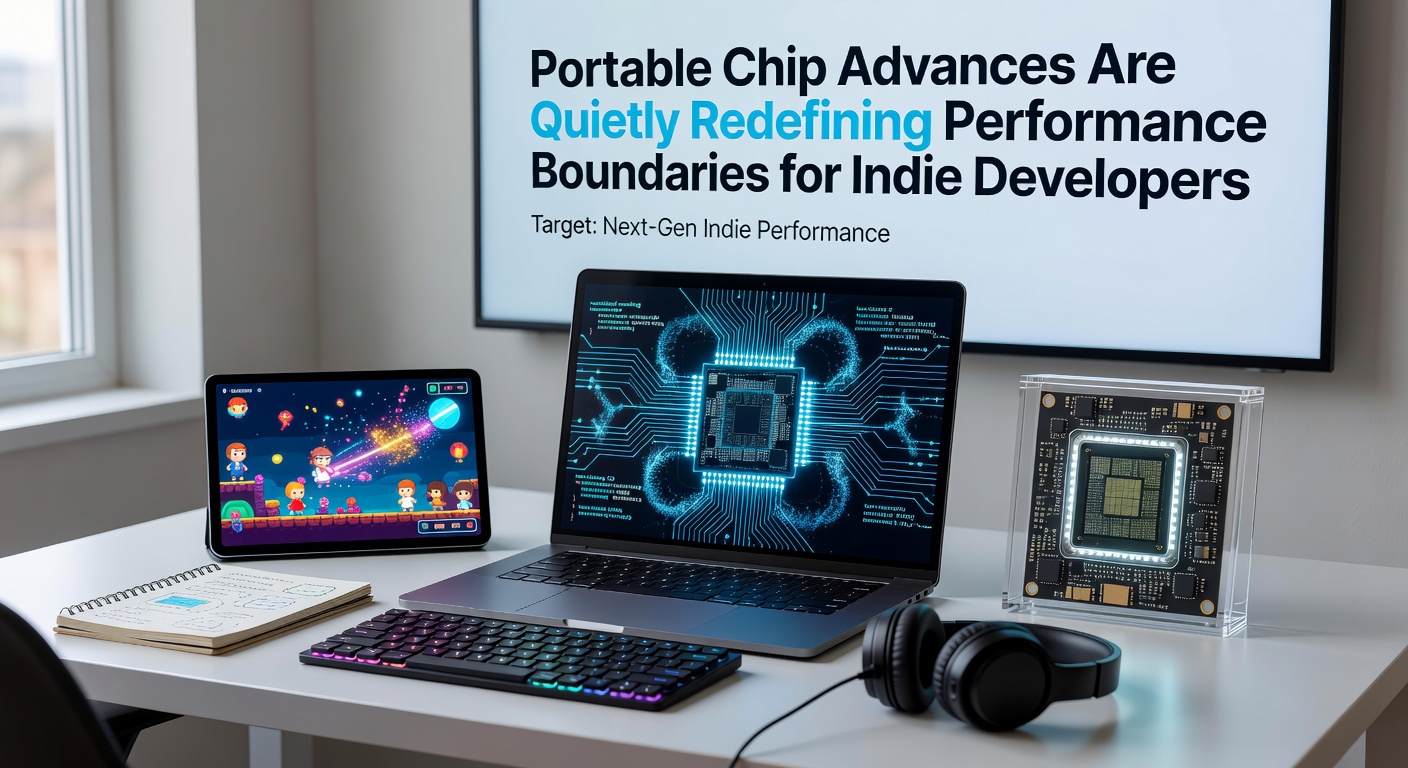
Portable chip advances continue to reshape how indie developers approach performance targets when building titles for phones, tablets, handhelds, and laptops at once. Recent processor designs incorporate higher core counts alongside improved power efficiency, allowing smaller teams to deliver consistent frame rates and visual fidelity without requiring dedicated hardware variants for each platform.
Core Architecture Shifts Driving Cross-Device Compatibility
Manufacturers have integrated unified memory architectures and advanced neural processing units into mobile silicon, which reduces the need for separate optimization passes during development cycles. Data from industry reports indicate that these components now support ray tracing features previously limited to desktop GPUs, while maintaining thermal envelopes suitable for battery-powered devices. Observers note that such integration enables developers to maintain single codebases that scale across ARM-based systems and x86 variants through middleware layers rather than complete rewrites.
Power consumption metrics have improved markedly since earlier generations, with many chips achieving 30 percent better efficiency at equivalent workloads. This matters because indie studios often lack resources for extensive profiling across dozens of device SKUs, so hardware-level gains translate directly into reduced testing overhead.
Performance Thresholds Reached in Mid-2026 Releases
By June 2026 several new mobile processors entered production with on-package memory capacities exceeding 16 gigabytes, a threshold that supports larger asset streaming buffers during gameplay. Those configurations allow developers targeting multiple device types to include higher-resolution textures and more complex physics simulations without triggering memory warnings on lower-end hardware. Research from academic institutions in Asia has documented how these memory increases correlate with faster load times in procedurally generated environments common to indie projects.
Graphics pipelines benefit from hardware-accelerated mesh shading and variable rate shading techniques now standard in portable silicon. Developers report that these features cut polygon counts by up to 40 percent in certain scenes while preserving perceived detail, freeing cycles for other systems such as AI pathfinding or network synchronization.
Practical Implications for Multi-Platform Workflows
Toolchains from major engine providers have incorporated automatic scaling routines that leverage the new chip capabilities, letting teams focus on gameplay rather than per-device tweaks. One documented case involved a studio that reduced its cross-platform certification time by half after adopting processors supporting unified shader models across mobile and handheld targets. Such efficiencies accumulate because indie groups frequently iterate on builds daily and cannot afford prolonged validation periods.
Thermal management features built into recent chips also contribute by dynamically adjusting clock speeds based on sustained loads, which prevents throttling during extended play sessions on compact devices. Studies conducted at European research centers confirm that these adaptive mechanisms maintain frame consistency within 5 percent variance across ambient temperature ranges typical for portable use.
Broader Industry Patterns Emerging from Hardware Gains
Trade data reveals increased adoption of portable processors in laptop form factors aimed at creators, extending the same silicon benefits to development machines themselves. This convergence means testing environments can mirror target hardware more closely, reducing discrepancies that once required additional emulation layers. Government technology assessments in North America have tracked how such hardware parity supports smaller enterprises competing in global markets without large capital investments.
Software abstraction layers continue to evolve alongside the silicon, incorporating machine learning models that predict device-specific bottlenecks before runtime. Teams that integrate these predictive tools report fewer post-launch patches related to performance variance across regions with differing network conditions and device fleets.
Conclusion
Portable chip progress supplies measurable improvements in efficiency, memory capacity, and graphics features that indie developers apply directly to multi-device projects. These hardware traits lower barriers for maintaining quality across phones, tablets, and dedicated handhelds while supporting streamlined production pipelines. Continued iteration in semiconductor design sustains the conditions under which smaller studios reach broader audiences through unified development approaches.