Power Grid Stability as a Key Factor in Global Esports Tournament Logistics
Carlo Peters · Jun 20, 2026
Power Grid Stability as a Key Factor in Global Esports Tournament Logistics
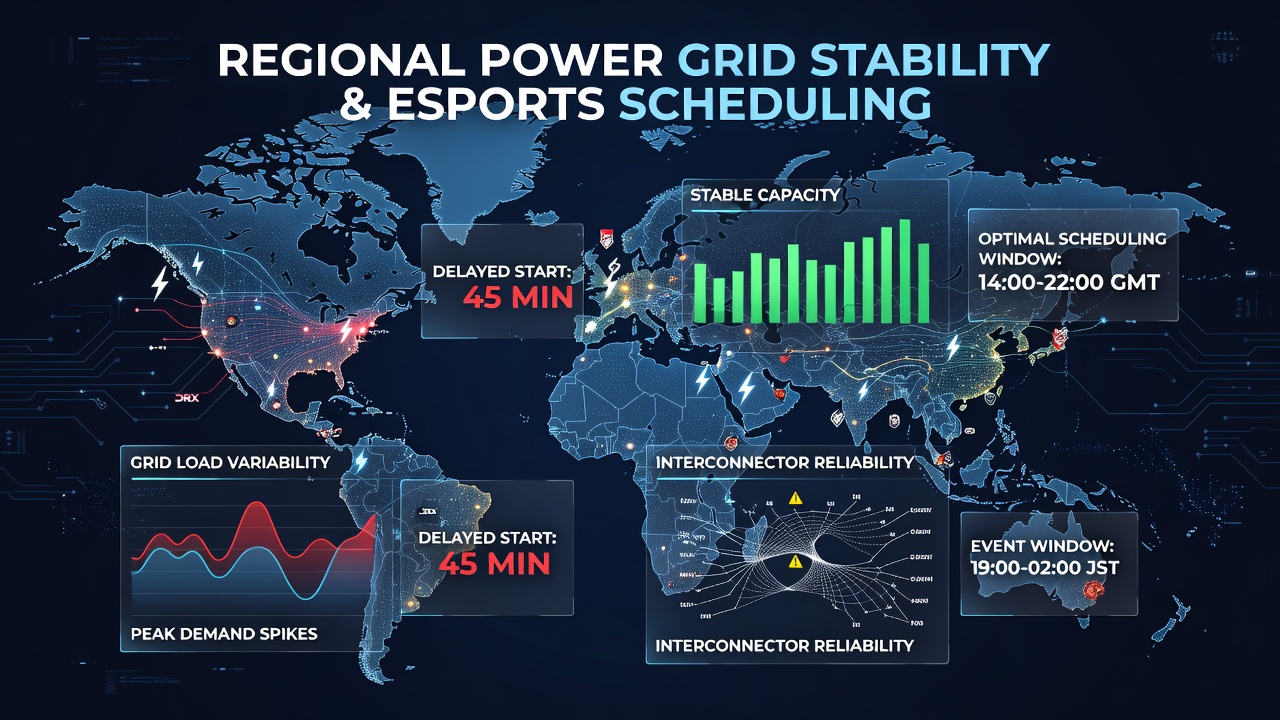
Competitive esports events depend on consistent electricity supplies because tournaments require uninterrupted power for servers, broadcasting equipment, and venue operations, and regional variations in grid reliability force organizers to adjust schedules based on infrastructure data from multiple continents. Studies conducted by transmission operators reveal that areas with frequent voltage fluctuations or seasonal demand spikes often see events shifted to off-peak months, while more stable zones host larger gatherings without additional backup investments. Data collected through 2025 indicates that planners now cross-reference historical outage reports with projected load curves before finalizing dates, and this practice has become standard across professional circuits.
North American Scheduling Patterns
Transmission systems in the United States and Canada exhibit distinct seasonal stress points, particularly during summer heatwaves when air-conditioning loads strain capacity in the Midwest and Texas grids, prompting esports leagues to avoid July and August slots for major LAN events in those corridors. Figures from the U.S. Energy Information Administration show that planned maintenance outages peak in spring and fall, so organizers route spring majors toward coastal regions with diversified generation sources while winter tournaments favor southern venues where heating demand remains lower. One documented case involved a 2024 championship series that relocated from Chicago to Miami after grid operators issued warnings about rolling brownout risks during an expected cold snap, and similar adjustments appear in 2026 calendars.
European and Eurasian Considerations
European grids managed by ENTSO-E members face different constraints tied to renewable integration targets, with wind and solar variability creating short-notice curtailment events that affect northern countries more than southern ones during winter evenings. Tournament calendars therefore cluster high-stakes matches in central and southern Europe during shoulder seasons when hydro and nuclear baseloads provide steadier output, and data from 2025 reports confirm fewer postponements in those corridors compared with Scandinavia. Observers note that cross-border interconnectors help buffer localized shortfalls, allowing events in Germany and France to maintain tighter schedules than those attempted in more isolated Baltic grids.
Asian and Oceania Venue Selection
Power infrastructure across East and Southeast Asia shows wide disparities, with dense urban centers in South Korea and Japan maintaining high reliability indices while parts of Southeast Asia experience monsoon-related disruptions that push organizers toward indoor venues equipped with dedicated substations. Research published by regional energy agencies highlights how Singapore and parts of Australia schedule major events during their drier quarters to minimize generator rental costs, and June 2026 calendars already reflect this pattern with multiple qualifiers moved away from typhoon-prone zones in the western Pacific. Those adjustments reduce insurance premiums and avoid last-minute streaming blackouts that plagued earlier events held during peak storm seasons.
Emerging Market Adjustments
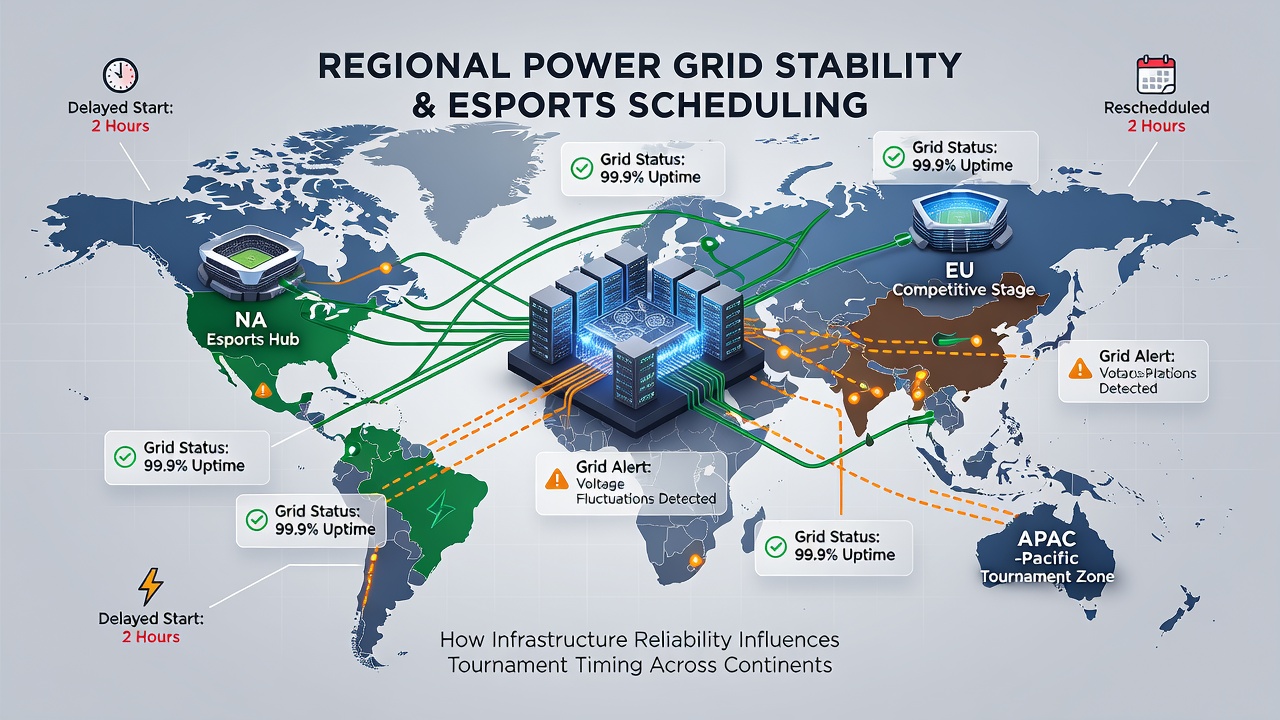
Organizers targeting South American and African markets increasingly rely on localized micro-grid assessments because national transmission networks often carry higher outage frequencies during evening peak hours. Event planners therefore favor afternoon start times in Brazilian cities where hydroelectric output remains consistent, whereas South African tournaments have shifted toward midday windows to bypass evening load-shedding cycles documented in 2025 utility reports. These timing changes allow production teams to finish broadcasts before grid stress intensifies, and comparable strategies appear in preliminary planning documents for intercontinental qualifiers scheduled through mid-2026.
Technological and Operational Responses
Backup generation and real-time monitoring systems now form standard components of venue contracts, yet their deployment costs vary sharply by continent and influence which cities bid successfully for large-scale events. Data centers hosting tournament servers incorporate uninterruptible power supplies sized to cover typical outage durations reported in each region, while mobile production units carry diesel generators rated for extended runtime in areas where grid forecasts indicate higher instability. Industry reports indicate that these layered redundancies have lowered cancellation rates by measurable margins since 2023, although the capital outlay remains a deciding factor when selecting host cities in developing markets.
Conclusion
Regional differences in power grid performance continue to shape where and when competitive esports events occur, with planners integrating outage statistics, seasonal demand forecasts, and interconnection capacities into decision frameworks that span multiple continents. Continued investment in monitoring tools and diversified generation sources may narrow reliability gaps over time, yet current patterns show that event calendars remain closely aligned with the operational realities of each local grid.