Profiling Power Consumption Patterns in Extended Mobile Gaming Sessions
Erik Lange · Jul 9, 2026
Profiling Power Consumption Patterns in Extended Mobile Gaming Sessions
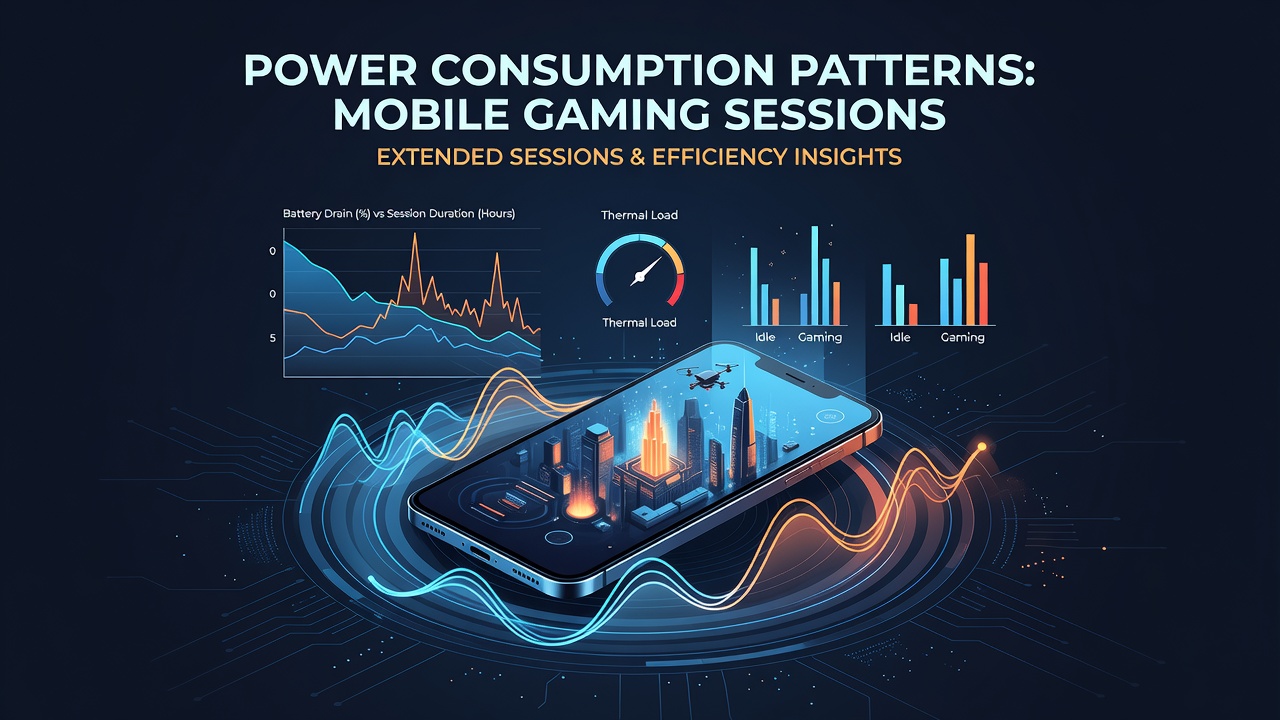
Power consumption during extended mobile gaming sessions follows distinct patterns that researchers track through hardware sensors and software logging tools, and these patterns emerge from interactions between CPU loads, GPU rendering demands, display brightness levels, and network activity. Studies conducted across multiple device models reveal that battery drain accelerates after the first ninety minutes of continuous play as thermal throttling begins to influence processor efficiency while background processes maintain connectivity features.
Core Components Driving Energy Use
Display panels account for a substantial portion of total draw in most sessions, with OLED and LCD technologies showing different consumption curves depending on refresh rate settings and content brightness. Processors shift between high-performance cores during intense gameplay segments and efficiency cores during loading screens or menu navigation, creating measurable spikes that profiling applications capture at one-second intervals. Network modules contribute additional variability when games maintain constant server connections or download assets in real time, and data collected from devices running popular titles indicate that 5G usage can increase draw by up to thirty percent compared with Wi-Fi under identical conditions.
Measurement Techniques Employed by Analysts
Engineers utilize built-in battery management APIs alongside external power monitors to record voltage, current, and temperature values throughout test periods that often extend beyond four hours. Software frameworks log frame rates, memory allocation, and thermal states simultaneously, allowing correlation between performance metrics and energy expenditure. One research team at a Canadian institution applied these methods to flag periods where background syncing and notification services added unexpected overhead during otherwise stable gameplay segments.
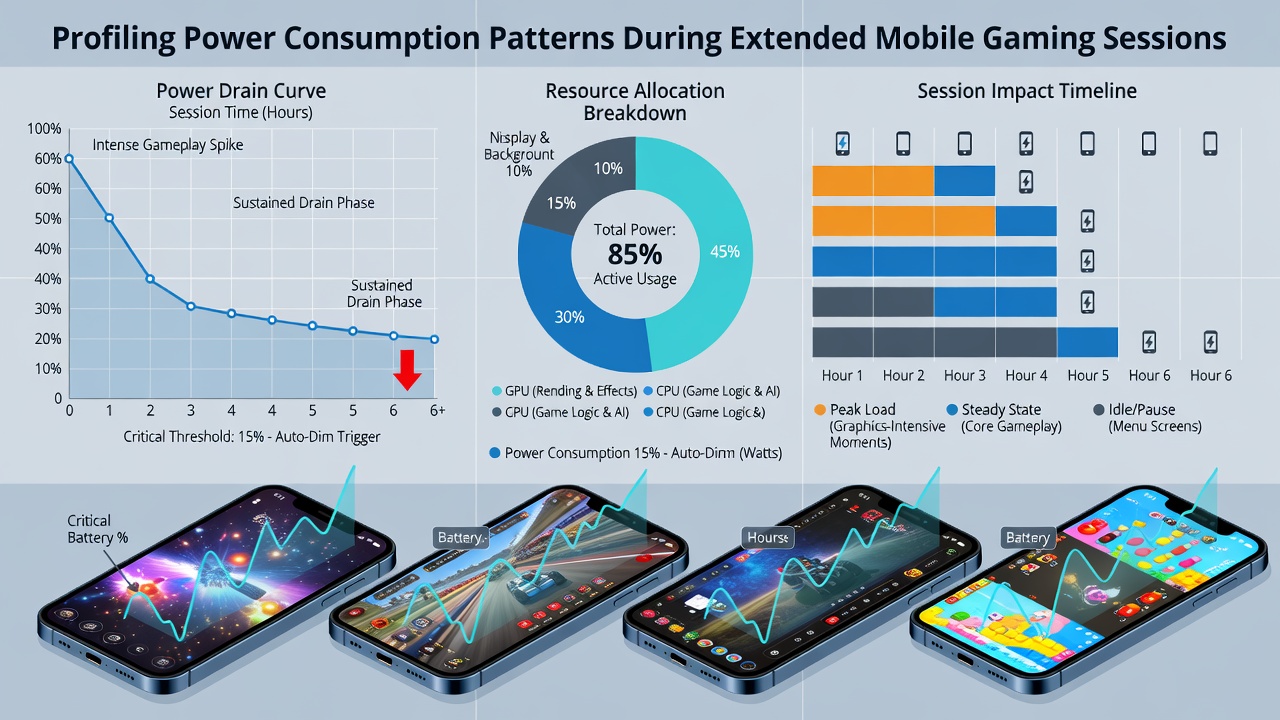
Patterns become clearer when sessions are segmented into phases such as initial loading, active play, and idle waiting times. Early phases typically show higher consumption due to asset decompression and shader compilation, while later stages reflect steady-state rendering that still varies with player movement speed and on-screen effects density. Observers note that repeated sessions on the same hardware produce consistent signatures once device temperature stabilizes, which helps developers optimize code paths that trigger unnecessary GPU work.
Findings from Recent Data Collection Efforts
Reports compiled through mid-2026 show that average battery depletion rates during extended sessions range between eight and fourteen percent per hour on flagship devices released in 2024 and 2025, with mid-range models exhibiting steeper curves after the three-hour mark. Figures from the International Energy Agency highlight how software updates addressing idle power states can reduce overall draw by five to nine percent across tested gaming applications. Thermal management routines also influence outcomes, since sustained high temperatures prompt voltage adjustments that affect both performance and longevity.
Regional variations appear when researchers compare results across different climates and charging habits, yet core trends remain similar regardless of location. Devices used in warmer environments reach throttling thresholds earlier, shortening the window of peak efficiency, while those kept in cooler settings maintain higher sustained performance at the cost of faster initial drain. Analysts at an Australian university compiled datasets demonstrating these effects across more than two hundred individual playthroughs logged during 2025 and early 2026.
Optimization Approaches Observed in Practice
Developers apply profiling insights to adjust rendering resolutions dynamically and limit particle effects once battery levels drop below defined thresholds. Operating system vendors have introduced system-level controls that cap background refresh rates and dim displays automatically after extended inactivity, measures that studies link to measurable reductions in cumulative energy use. Hardware manufacturers meanwhile refine voltage regulators and introduce more granular core parking strategies that respond faster to workload changes detected during gameplay.
Users who monitor these patterns through built-in diagnostics or third-party utilities often discover that lowering screen brightness by twenty percent and disabling unnecessary haptic feedback yields consistent savings without altering core gameplay mechanics. Such adjustments prove especially relevant during multi-hour sessions where cumulative drain becomes the limiting factor rather than outright performance.
Conclusion
Continued refinement of profiling methodologies supports more precise mapping of consumption behaviors across diverse hardware configurations and game genres. Data gathered through systematic logging continues to guide iterative improvements in both software efficiency and hardware design, helping extend usable playtime while maintaining visual and interactive quality standards expected by players.