Refresh Rate Variations and Narrative Flow in Indie Game Hybrids
Erik Lange · Jul 30, 2026
Refresh Rate Variations and Narrative Flow in Indie Game Hybrids
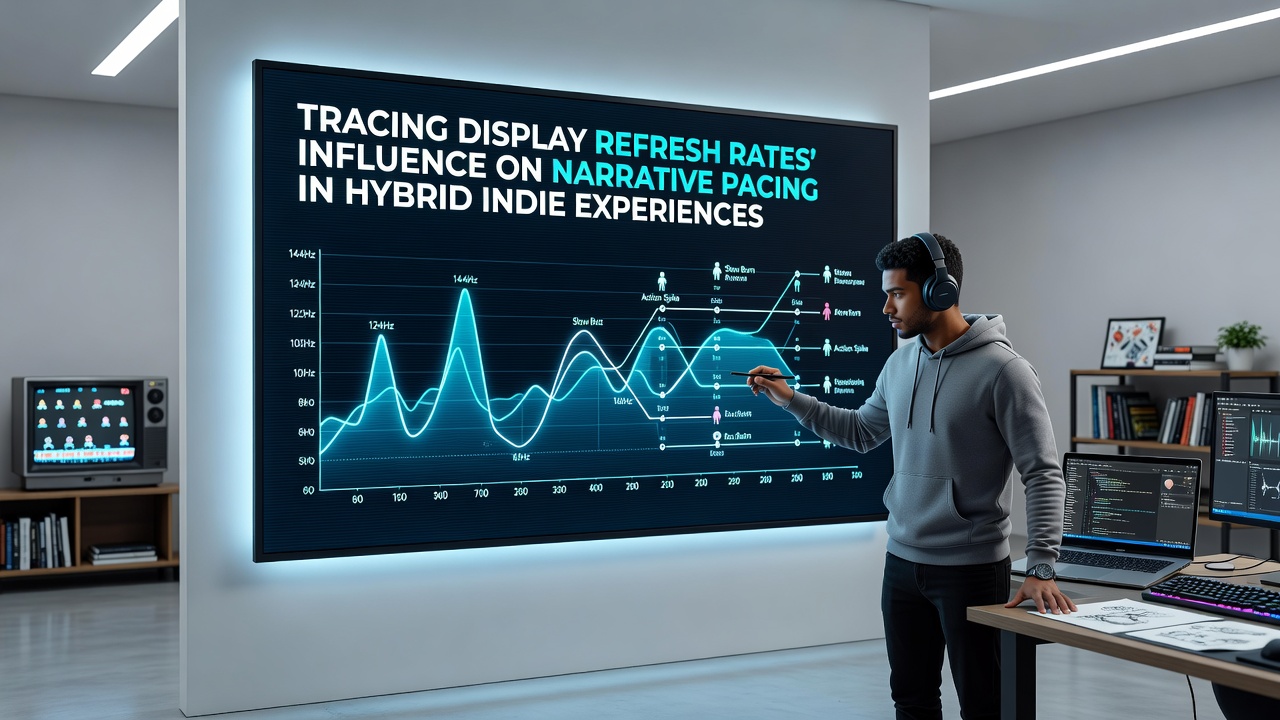
Display refresh rates have become integral to how narrative elements unfold in hybrid indie experiences, where developers blend genres such as exploration, dialogue systems, and light action mechanics across platforms. These rates, measured in hertz, determine how many times a screen updates per second and directly affect timing cues that players encounter during story sequences.
Core Mechanics of Refresh Rates in Gaming Contexts
Standard panels operate at 60Hz, yet higher configurations at 120Hz and beyond allow smoother frame delivery that alters perceived speed of character movements and scene transitions. In hybrid titles, developers often adjust animation curves to match available hardware, which means narrative beats like character revelations or environmental shifts synchronize with frame timing rather than fixed clock intervals. Data from industry reports shows that titles released after 2024 increasingly incorporate variable refresh rate support to maintain consistent pacing regardless of device capabilities.
Observers note that lower refresh rates introduce subtle judder during slow camera pans, a common technique in story-focused sections, while elevated rates reduce this artifact and permit tighter control over emotional timing. Research from the European Interactive Software Federation indicates that cross-platform indie projects allocate specific development resources to test pacing at multiple refresh settings, ensuring dialogue delivery and cutscene synchronization remain intact.
Platform Integration and Hybrid Development Challenges
Hybrid indie experiences frequently span mobile, handheld, and desktop environments, each presenting distinct refresh rate profiles that influence how stories progress. Mobile devices often cap at 90Hz, whereas dedicated handhelds and PCs support 144Hz or higher, creating discrepancies in perceived narrative tempo when players switch between systems. Developers address this through dynamic frame interpolation techniques that scale visual output without altering underlying story triggers or event queues.
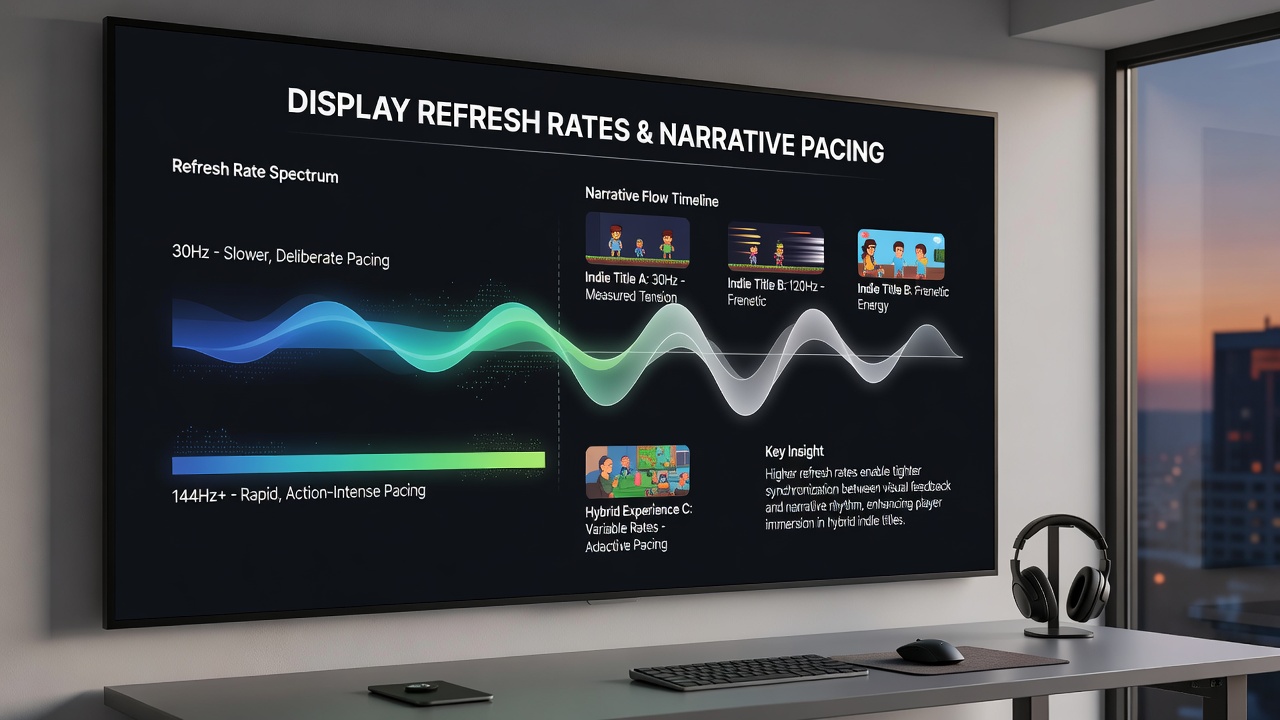
Studies conducted by Australian Centre for Digital Games Research reveal that players completing hybrid narratives on higher refresh hardware report different recall patterns for key plot points compared with those using baseline displays. The variation stems from smoother motion allowing finer attention to environmental storytelling details that might otherwise blur during transitions. As of July 2026, several engine updates have introduced tools that let small teams calibrate these effects automatically based on detected hardware profiles.
Technical Adjustments and Storytelling Outcomes
Indie teams apply targeted optimizations such as motion blur reduction and animation retiming to counteract refresh rate differences, preserving intended pacing across releases. These adjustments prevent story moments from feeling rushed or drawn out, particularly in sequences where timing influences player interpretation of character decisions. Figures from the Interactive Digital Software Association of Canada demonstrate that projects incorporating refresh-aware design pipelines achieve more uniform completion rates across device categories.
Engine middleware now includes modules that detect refresh capabilities at runtime and adjust particle effects or camera accelerations accordingly, reducing the need for separate builds. This approach maintains narrative integrity while supporting the genre mixtures typical in hybrid indie work, where quiet exploration segments alternate with brief action interludes. Those who have examined release data note consistent application of these techniques in titles that reached broader audiences through multi-platform distribution.
Conclusion
Refresh rate support continues to shape narrative delivery in hybrid indie productions through direct influence on motion smoothness and event timing. Ongoing hardware evolution, combined with accessible development tools, allows creators to align visual performance with intended story rhythms across varied player setups. Continued monitoring of cross-device metrics will further clarify these relationships as the sector advances.