Silicon Foundations Behind Expansive Indie Narratives on Pocket-Sized Screens
Carlo Peters · Jun 23, 2026
Silicon Foundations Behind Expansive Indie Narratives on Pocket-Sized Screens
Modern mobile processors have transformed how independent developers craft intricate stories that unfold across small displays, and the underlying silicon plays a central role in making those experiences possible. Chip designers continue to pack more transistors into compact packages, which allows phones to handle branching narratives, character animations, and real-time environmental changes without relying on external hardware. Data from industry reports shows that mobile gaming revenue reached substantial levels by early 2026, driven in part by these hardware gains that let smaller teams compete with larger productions.
Processor Architectures Driving Mobile Storytelling
ARM-based cores dominate smartphone silicon because they balance performance with power efficiency, a combination that supports extended play sessions filled with dialogue choices and plot twists. Manufacturers integrate specialized neural processing units alongside traditional CPU and GPU blocks, which handle tasks like procedural content generation and voice synthesis directly on the device. Observers note that this integration reduces latency during key narrative moments, keeping players immersed even when network connections vary. Researchers at academic institutions have documented how these on-chip accelerators cut rendering times for complex scenes by measurable percentages compared to earlier generations.
Graphics capabilities have advanced through dedicated mobile GPUs that support higher polygon counts and advanced shading techniques, enabling indie titles to feature detailed character models and dynamic lighting that reflect emotional states in the story. Storage technologies paired with these processors, including faster UFS standards, allow quick loading of large asset libraries containing multiple story branches and voice lines. Those who study semiconductor trends point out that yields on advanced process nodes improved steadily through 2025, lowering costs for mid-range phones that now run experiences previously reserved for premium devices.
Cross-Platform Tools and Indie Development Patterns
Developers use unified engines that target both mobile silicon and other platforms, which streamlines the creation of narratives that adapt across screen sizes while preserving core plot elements. These tools leverage hardware features such as variable rate shading and ray tracing support found in newer chipsets, letting small teams allocate resources toward writing and world-building rather than low-level optimization. Figures from trade associations reveal that the number of indie releases on mobile platforms grew consistently, with many titles incorporating save systems that sync progress across phones and tablets through cloud services tied to device processors.
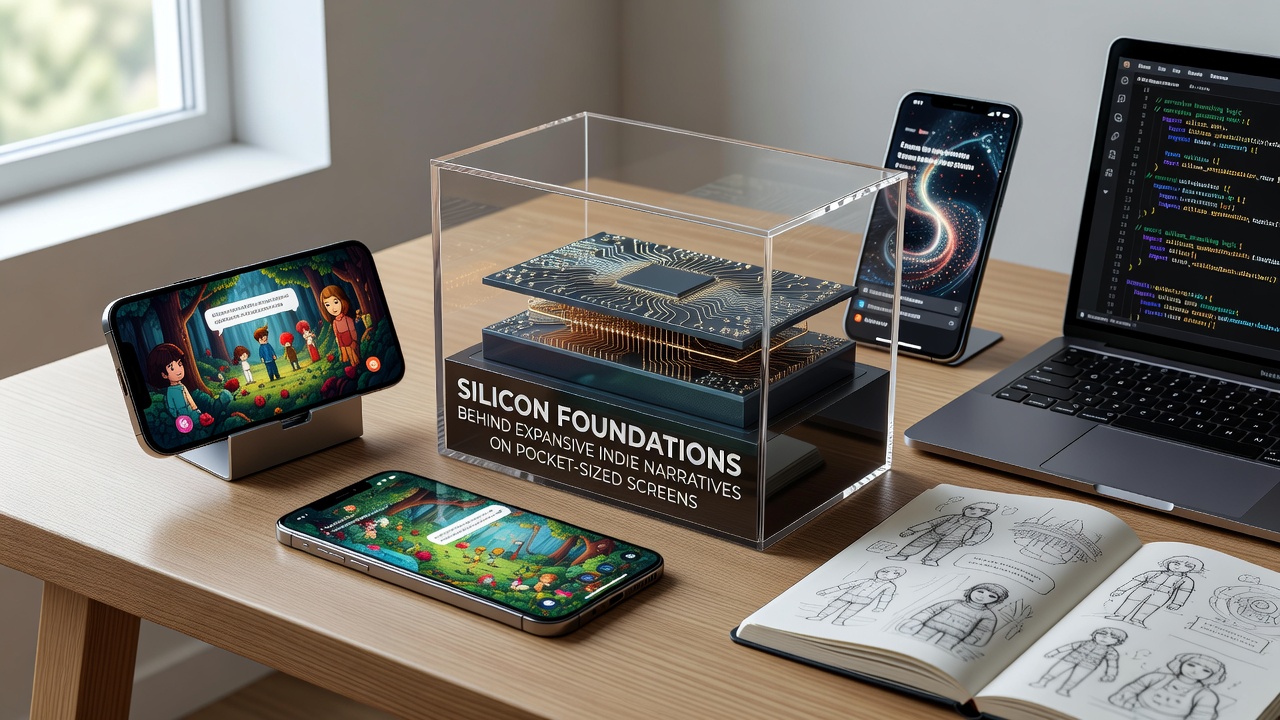
Memory configurations on contemporary phones, often featuring 8GB or more of LPDDR RAM, support simultaneous handling of game logic, audio streams, and background processes without frame drops during intense story sequences. This capacity proves essential when games employ live-updating dialogue systems or procedural elements that respond to player history. One study from a European research consortium highlighted how efficient memory management in silicon designs correlates with higher completion rates for longer narrative campaigns on portable devices.
Market Context and June 2026 Developments
By June 2026, several chipmakers announced refinements to their mobile platforms that emphasize AI-driven content personalization, allowing indie narratives to adjust pacing based on detected player engagement patterns. Regulatory bodies in the United States and Australia released guidelines on data usage within games, which influenced how developers integrate processor-based analytics without compromising privacy. These updates coincide with broader adoption of 5G and emerging 6G test networks that reduce reliance on local silicon for heavy computation, yet on-device processing remains central for responsive storytelling.
Industry organizations tracking global trends report that indie mobile games with expansive plots now account for a growing share of downloads in regions outside traditional console markets. Hardware partnerships between silicon firms and engine providers have produced optimized libraries that simplify porting, which expands the pool of creators able to deliver polished experiences. Evidence from university-led analyses indicates that power-efficient architectures extend battery life during narrative-heavy sessions, addressing a practical barrier that once limited session lengths on earlier devices.
Conclusion
The silicon foundations beneath mobile indie games continue to evolve through iterative improvements in architecture, memory, and specialized units that together support richer interactive stories. As process technologies advance and development tools mature, the range of narratives available on pocket-sized screens expands in measurable ways, supported by data from multiple geographic sources and technical studies. Those who follow semiconductor and gaming intersections recognize that these hardware elements form the base layer enabling creative output from independent teams worldwide.