The Technical Foundations of Dynamic Scaling in Multi-Generation Console Titles
Casey Werner · Jun 30, 2026
The Technical Foundations of Dynamic Scaling in Multi-Generation Console Titles
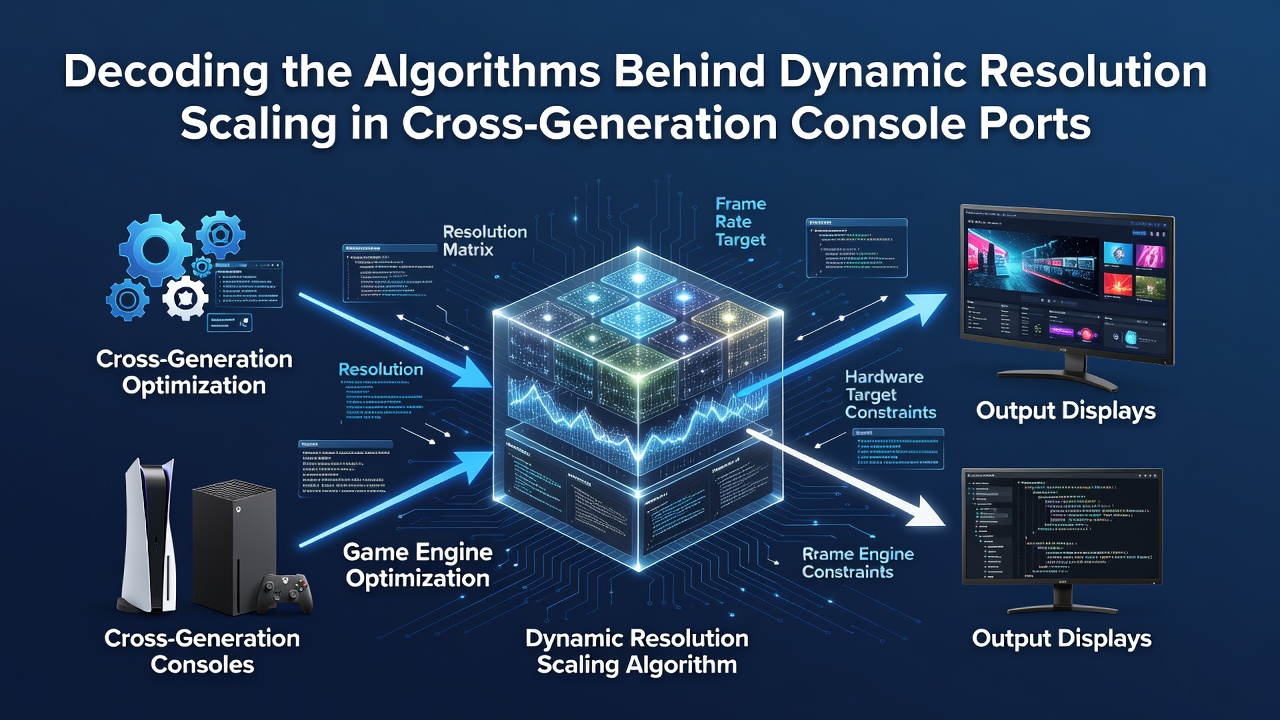
Developers have long relied on dynamic resolution scaling to balance visual fidelity against performance demands when moving games from older hardware to newer platforms, and this approach continues to evolve as cross-generation ports remain common in 2026. The process adjusts output resolution on the fly based on real-time GPU and CPU loads, which helps maintain consistent frame rates without requiring complete engine overhauls. Research from institutions such as the University of Cambridge has documented how these adjustments rely on predictive models that estimate frame rendering times several milliseconds ahead.
Core Mechanisms Driving Resolution Adjustments
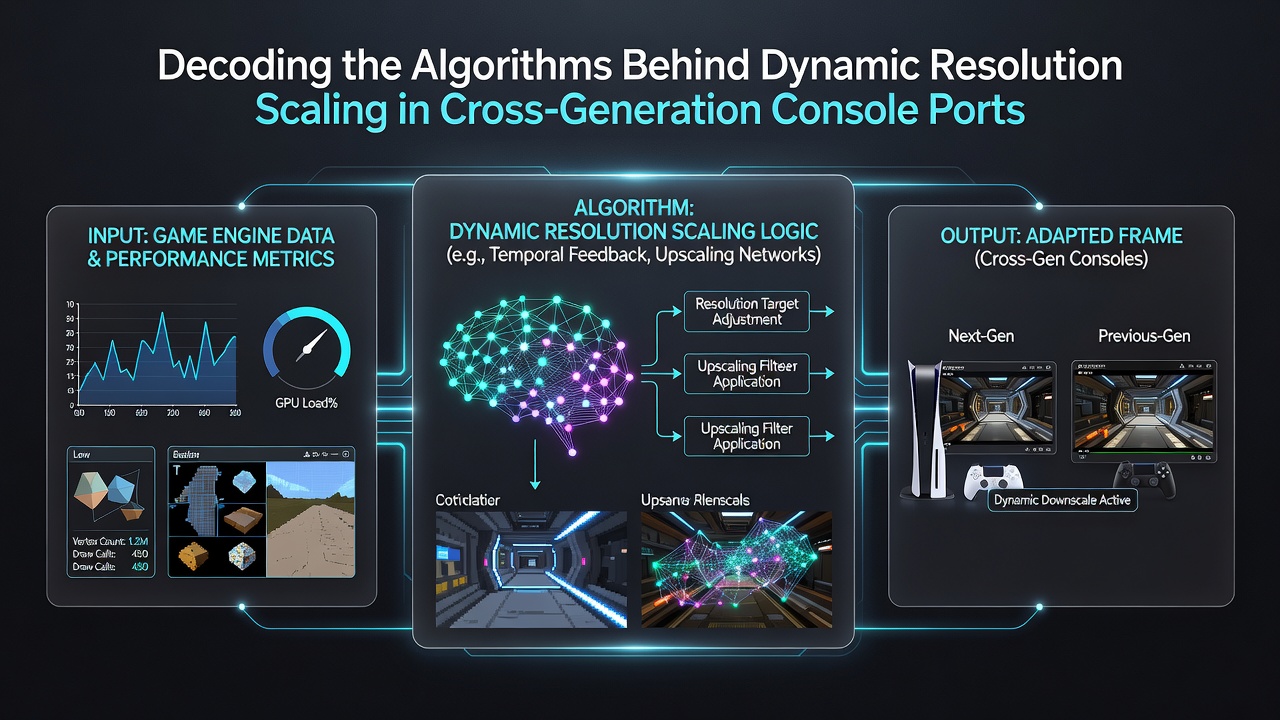
Dynamic resolution scaling operates through continuous monitoring of hardware metrics including shader occupancy, memory bandwidth utilization, and thermal throttling indicators. When load spikes occur during complex scenes, the algorithm reduces the internal render resolution by fractions such as 10 or 20 percent before upscaling the final image to the target output. This method appeared frequently in ports from PlayStation 4 and Xbox One titles to their successors, where fixed hardware differences demanded flexible rendering pipelines. Observers note that temporal upsampling techniques often pair with these adjustments to preserve edge detail and reduce aliasing artifacts that would otherwise appear at lower resolutions.
Algorithmic Approaches in Cross-Platform Development
Engineers typically implement either reactive or predictive scaling loops. Reactive systems measure the previous frame's duration and adjust resolution for the next frame, whereas predictive variants incorporate scene complexity heuristics derived from draw call counts and particle system activity. Studies conducted by research teams at Australian universities have shown that predictive models reduce frame time variance by up to 15 percent compared with purely reactive counterparts. Checkerboard rendering and variable rate shading frequently integrate with these algorithms to further optimize pixel throughput across differing console architectures. Ports involving Unreal Engine 4 and Unity have demonstrated how plugin-based implementations allow developers to toggle scaling thresholds without rewriting core rendering code.
Performance Data Across Recent Ports
Analysis of titles released between 2023 and 2025 reveals consistent patterns in resolution ranges. Many cross-generation releases maintain 1440p to 2160p outputs on PlayStation 5 and Xbox Series X while dropping to 1080p or lower during intensive sequences on last-generation hardware. Figures released in June 2026 by the Entertainment Software Association of Canada indicate that over 60 percent of multi-platform games shipped that year incorporated some form of dynamic scaling. These statistics highlight how developers leverage the technique to meet certification requirements for frame rate stability across regions with varying power standards and network conditions.
Challenges When Adapting Legacy Codebases
Older engines often lack native support for per-frame resolution changes, forcing teams to insert middleware layers that intercept render targets and apply upscaling shaders. Memory allocation patterns from original releases can create bottlenecks when resolution fluctuates rapidly, leading to texture streaming delays. Engineers address these issues through asynchronous compute queues that handle upscaling in parallel with main rendering passes. Case studies from independent studios adapting Japanese role-playing games demonstrate that careful profiling of vertex shader workloads allows resolution changes to occur without introducing noticeable pop-in effects for players moving between console generations.
Integration With Modern Upscaling Technologies
Contemporary implementations frequently combine dynamic resolution scaling with hardware-accelerated upscalers such as AMD FidelityFX Super Resolution and NVIDIA DLSS variants available on supported platforms. The combined pipeline first renders at a variable internal resolution, then applies temporal accumulation and neural reconstruction before outputting the final frame. Data from industry reports shows reduced GPU power consumption when these methods operate together, which proves useful for extended play sessions on both home consoles and portable devices. Ports targeting multiple architectures must calibrate scaling curves separately for each target GPU to avoid over-correction that could introduce shimmering or loss of fine detail.
Future Directions in Scaling Research
Academic and industry collaborations continue to explore machine learning models that anticipate player movement and camera changes to pre-adjust resolution budgets. Such approaches could minimize visible transitions during gameplay while further tightening performance margins on constrained hardware. Regulatory bodies in the European Union have begun tracking energy efficiency metrics tied to rendering techniques, which may influence how scaling algorithms are tuned in upcoming cross-generation projects. Developers already incorporate these considerations during initial port planning phases to align with emerging standards for sustainable software design.
Conclusion
The algorithms behind dynamic resolution scaling remain central to successful cross-generation console ports because they allow teams to preserve core gameplay experiences across hardware generations without exhaustive rewrites. Continued refinement through predictive modeling, hardware-specific calibration, and integration with upscaling solutions ensures these techniques adapt alongside evolving console capabilities and development practices.