Touchscreen Constraints Forge Innovative Narrative Weaving in Hybrid Game Projects
Theo Walter · Jun 25, 2026
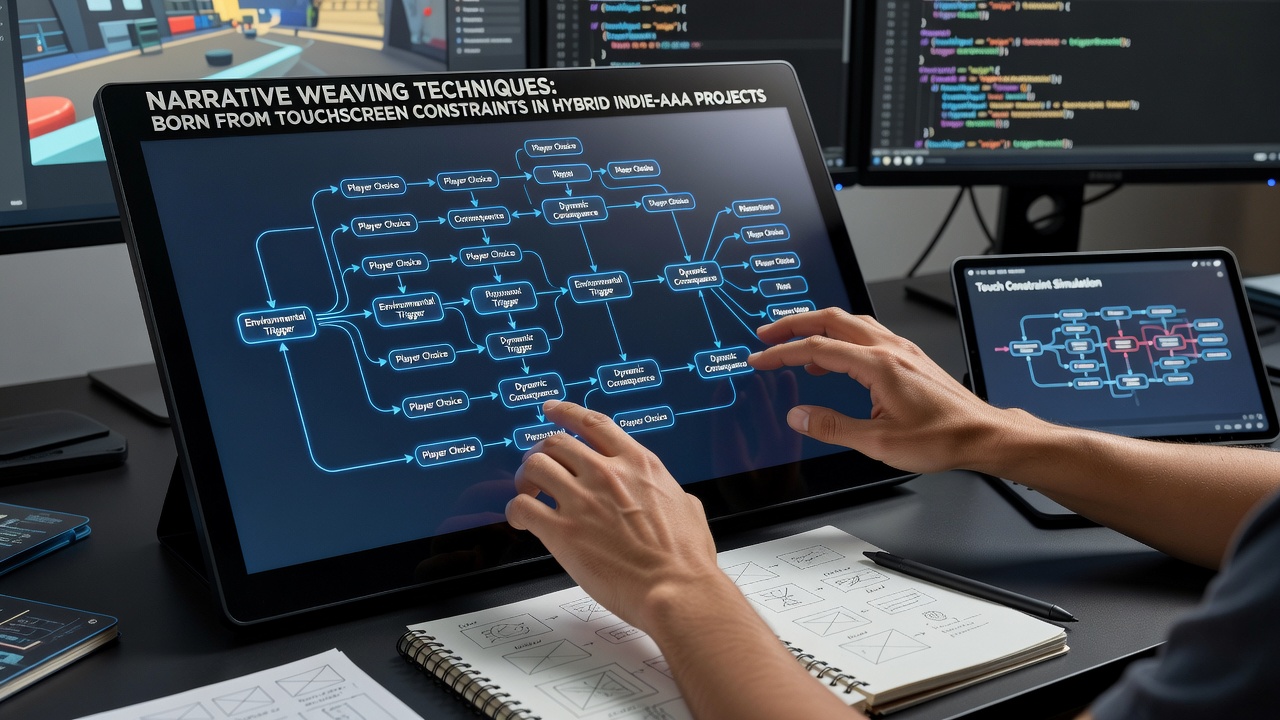
Touchscreen Constraints Forge Innovative Narrative Weaving in Hybrid Game Projects
Hybrid indie-AAA projects combine the resource depth of larger studios with the experimental flexibility of smaller teams, and touchscreen constraints have pushed developers to rethink how stories unfold across devices. Touch inputs limit precision in ways that keyboard and mouse setups do not, so narrative designers integrate gesture-based choices and environmental cues rather than traditional dialogue trees. These adaptations emerged prominently as cross-platform titles expanded into mobile markets during the mid-2020s.
Input Limitations Drive Structural Changes
Touchscreen interfaces restrict rapid command sequences and fine cursor control, which forces teams to embed story progression into swipe patterns and tap sequences that feel natural on handheld screens. Research from the University of Montreal indicates that gesture timing can signal emotional states within characters, allowing players to influence plot branches through rhythmic interactions instead of menu selections. Hybrid projects benefit because indie contributors often prototype these systems quickly while AAA partners handle the underlying animation pipelines that make gestures readable on varied screen sizes.
Developers have observed that limited screen real estate reduces the visibility of on-screen prompts, so narrative information shifts into background elements like moving shadows or changing weather patterns. This approach keeps players engaged without cluttering the display, and data from industry reports compiled by the Entertainment Software Association shows increased retention rates when environmental storytelling replaces explicit text overlays in mobile versions of hybrid titles.
Case Examples from Recent Releases
One project released in early 2025 used a dual-layer narrative where main story events played out identically across platforms, yet mobile players unlocked variant side stories by tracing specific patterns during exploration segments. Console and PC versions retained those same variants but presented them through different input methods, maintaining consistency while respecting hardware differences. Observers note that such techniques allow smaller studios to contribute distinctive writing modules that larger engines then optimize for performance.
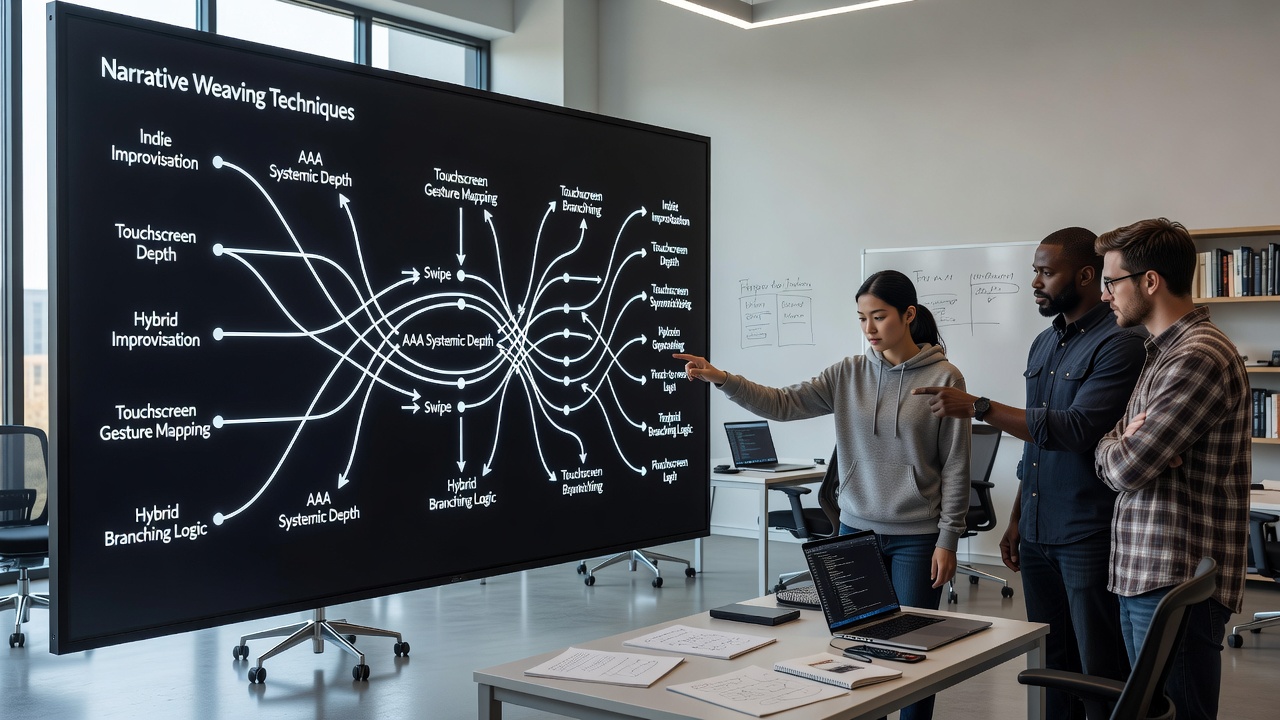
Another example involved a title where character relationships evolved based on how players held the device during key scenes, with tilt sensors detecting subtle leans that altered dialogue outcomes. This method originated from indie experimentation with accelerometer data and scaled into AAA production when engine support expanded in late 2025. Figures from European gaming associations reveal that titles employing sensor-linked narratives saw measurable upticks in session length on tablets compared to traditional control schemes.
Technical Integration Across Platforms
Hybrid workflows require narrative scripts to remain modular so that touchscreen-specific branches compile alongside controller and keyboard paths without duplicating assets. Teams achieve this by tagging story nodes with input-type flags during writing phases, then letting build tools swap presentation layers automatically. The process reduces duplication errors and lets writers focus on thematic continuity rather than platform-specific rewrites.
By June 2026, several ongoing hybrid projects had adopted shared narrative databases that track player decisions across devices through cloud synchronization, ensuring that a choice made via touch on a phone carries forward when the same account loads the game on a high-end console. This continuity relies on constraint-aware design from the outset, where story architects account for gesture vocabularies limited by finger reach and screen orientation changes.
Conclusion
Touchscreen constraints continue to shape narrative techniques in hybrid indie-AAA projects by encouraging modular, input-sensitive storytelling structures. These methods maintain coherence across platforms while leveraging the unique affordances of each device, and ongoing development cycles demonstrate how such adaptations scale from initial prototypes to full releases.