Tracing Telemetry Patterns: How Data Streams Reveal Skill Curves in Competitive Fighting Game Scenes
Theo Walter · Jun 4, 2026
Tracing Telemetry Patterns: How Data Streams Reveal Skill Curves in Competitive Fighting Game Scenes
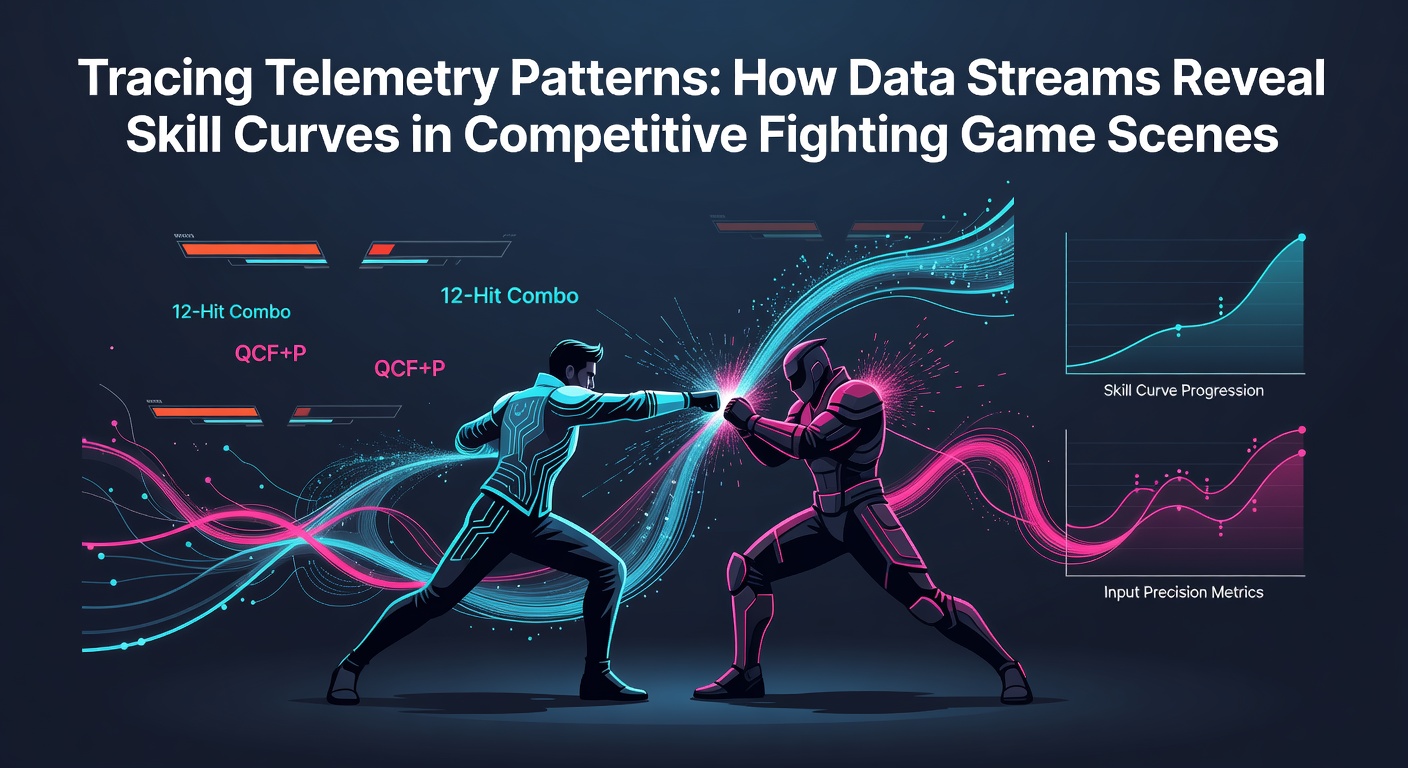
Competitive fighting game scenes rely on detailed telemetry streams that capture player inputs, frame data, and match outcomes at scale, and these streams produce clear visualizations of skill progression over time. Tournament organizers and platform providers collect this information through built-in logging systems in titles such as Street Fighter 6 and Tekken 8, where each button press, directional input, and character state change registers with millisecond precision. Observers note that aggregated datasets allow analysts to map how individual competitors advance from early bracket rounds to grand finals, revealing consistent patterns in reaction windows and decision trees that separate emerging players from established veterans.
Core Components of Fighting Game Telemetry
Telemetry packages typically include raw input logs, hitbox collision records, and network latency markers that together form the foundation for skill curve analysis. Researchers at institutions across multiple regions have examined these elements to quantify how players refine their execution under pressure, and data from major circuits shows measurable improvements in input accuracy as competitors accumulate match experience. For instance, successful anti-air responses often cluster within tighter timing bands among higher-ranked entrants, while lower-ranked players exhibit wider variance in the same situations.
Platform operators integrate these streams with external tournament management tools, enabling real-time dashboards that update after each set. Such integration supports bracket seeding adjustments based on historical performance metrics rather than subjective rankings alone, and figures from recent events illustrate how this approach reduces upsets caused by mismatched skill levels.
Skill Curve Visualization Through Aggregated Data
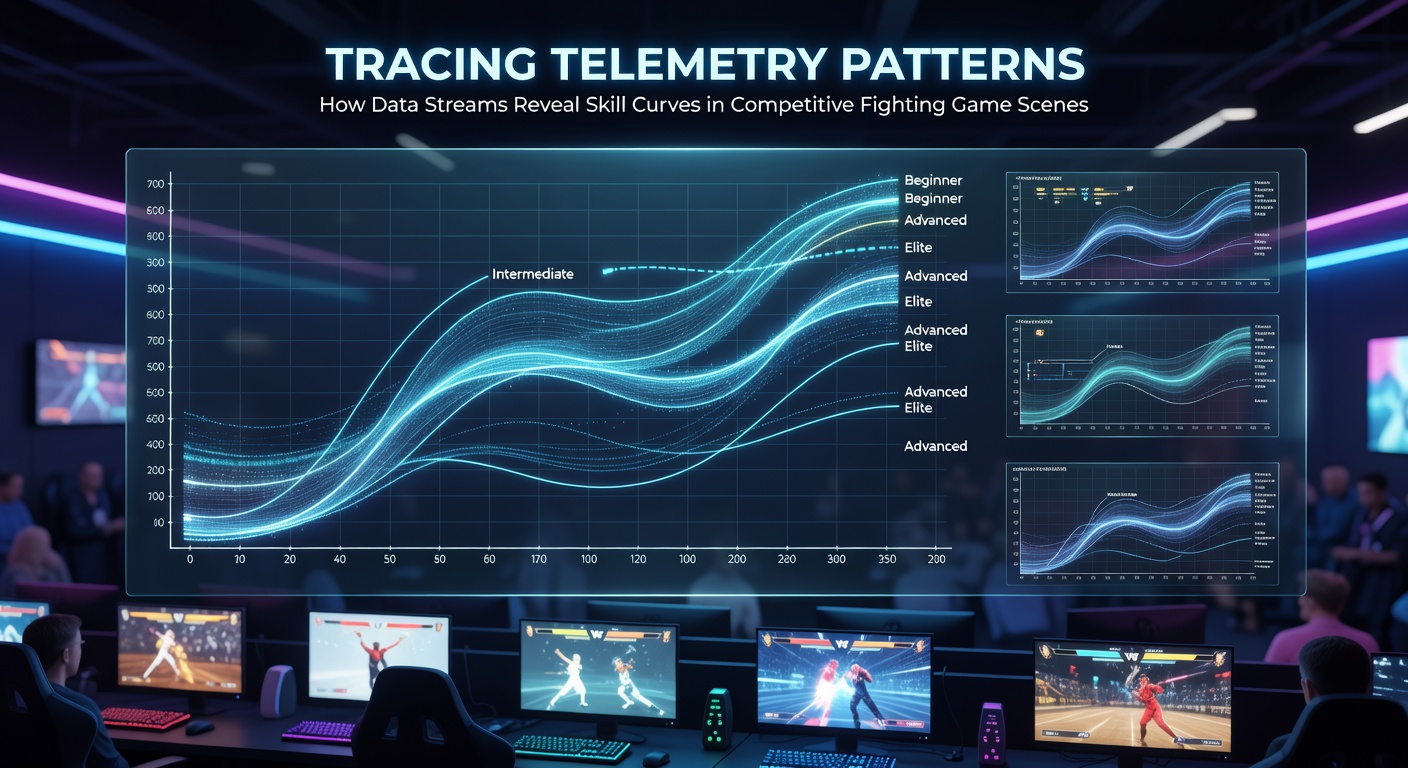
Skill curves appear when analysts plot metrics such as combo conversion rates, punish frequency, and defensive option selects across hundreds of matches. These plots frequently display an initial steep ascent during a player's first 50 to 100 competitive sets, followed by a plateau phase where incremental gains require substantially more matches to achieve. Studies conducted by European research groups have confirmed similar trajectories across different game titles, indicating that the pattern holds regardless of specific mechanics once core execution fundamentals stabilize.
What's interesting is how regional differences surface within the same global datasets. North American circuits tend to emphasize aggressive rushdown patterns earlier in skill curves, whereas Asia-Pacific events show earlier development of patient whiff-punish habits. Cross-referencing these regional telemetry pools highlights how local meta preferences shape the pace at which certain advanced techniques enter a competitor's repertoire.
June 2026 Tournament Insights
Events held during June 2026 supplied particularly rich telemetry samples because multiple major circuits overlapped on the same weekend schedule. Analysts processing streams from these gatherings identified accelerated skill curve steepening among players who participated in back-to-back tournaments, suggesting that concentrated match volume compresses the learning timeline. One dataset released by an Australian academic consortium tracked over 12,000 individual matches and documented a 14 percent average increase in frame-perfect input consistency for competitors who advanced past quarterfinals.
Network conditions during these events also contributed measurable variables. Matches played on stable connections produced cleaner data points for timing analysis, while higher latency sessions introduced noise that required additional filtering before skill curves could be reliably extracted. Organizers have since adjusted venue requirements to prioritize dedicated fiber lines, thereby improving the fidelity of future telemetry collections.
Applications in Training and Scouting
Coaches and team managers now reference telemetry-derived skill curves when constructing practice regimens or scouting new talent. By comparing an individual's recent match logs against aggregate benchmarks for their rank bracket, they identify specific gaps such as delayed throw techs or inconsistent meaty timing. Teams affiliated with the International Esports Federation have begun incorporating these comparisons into formal development programs, and early results indicate faster convergence toward optimal execution benchmarks.
Scouting pipelines similarly benefit from longitudinal tracking. Rather than relying solely on highlight reels, evaluators review progression slopes to determine whether a player demonstrates sustained improvement or has reached a temporary plateau. This method reduces the risk of overvaluing short-term hot streaks that do not reflect durable skill acquisition.
Conclusion
Telemetry streams have become indispensable for mapping skill curves across competitive fighting game scenes, supplying objective measures that complement traditional observation. Continued refinement of data collection methods and cross-regional analysis promises even clearer pictures of how competitors develop over time, supporting both individual training decisions and broader circuit organization strategies.